
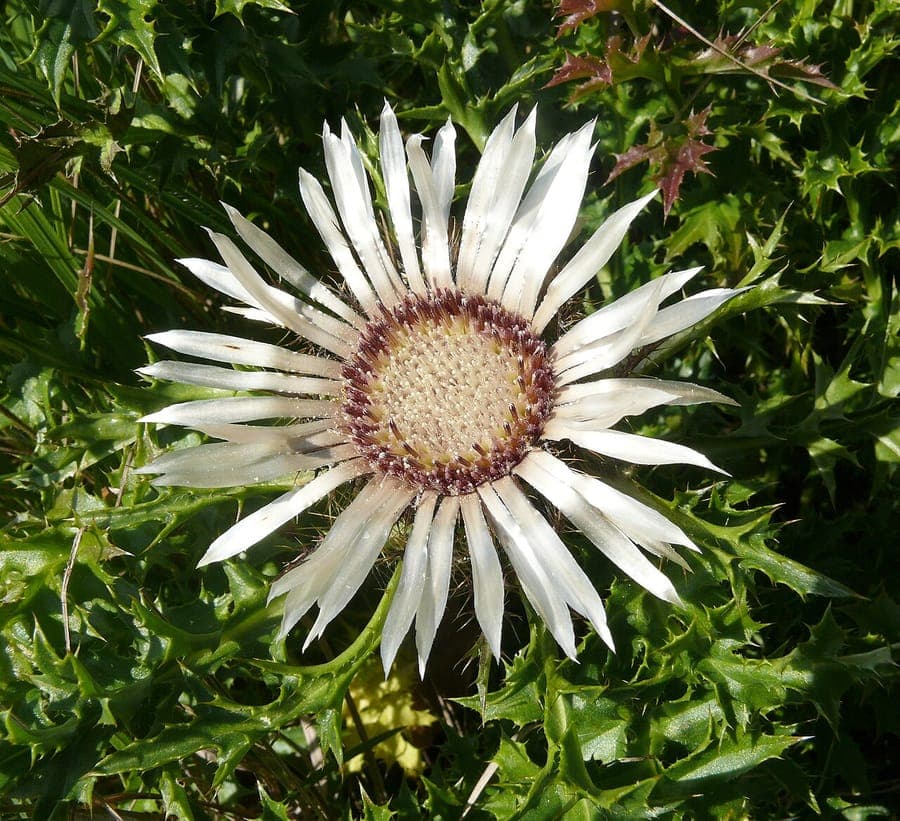
Bernd Haynold / CC BY-SA 3.0, via Wikimedia Commons
Carlina acaulis: complete guide
Carlina acaulis
¿Quieres ver Carlina acaulis: complete guide en tu jardín?
1 minuto, sin tarjeta de crédito
Overview
Carlina acaulis, known as Stemless Carline Thistle or Weather Thistle, is a unique alpine plant from the Asteraceae family. This remarkable plant grows naturally in the European Alps, from Albania to the Carpathians. The plant stands out particularly for its spectacular silvery-white flowers that seem to glow in sunlight, and its role in traditional folklore as a 'weather predictor'.
Appearance & Bloom Cycle
The Stemless Carline Thistle is a robust rosette-forming plant reaching only 5 to 10 cm height. The large flower (up to 8 cm wide) consists of long, narrow, silvery-white ray flowers surrounding a yellow center. The flowering period runs from July to August. Notably, the flower whorl shrinks in wet weather and opens in dry weather - hence the name 'weather thistle'. The leaves form a dense, low-growing rosette.
Ideal Location
This plant grows best in very sunny locations on dry, calcareous slopes. In temperate gardens, this works best on rock gardens, alpine troughs, or planting containers on sunny terraces. The plant needs virtually no shade but requires full sun throughout the day. Adequate air circulation prevents rot.
Soil Requirements
Carlina acaulis prefers very well-draining, lean soils. A pH between 6.0 and 7.5 is ideal. Mix heavy soil generously with sharp sand, gravel, and some humus. Acidity can be slightly alkaline. A thick layer of drainage material beneath the plant prevents water stagnation in the root zone. Rich garden soil is unsuitable.
Watering
Watering must be done carefully. Once established, the plant is very drought-tolerant. During the growing season (April through October), water only during extreme drought. In winter, no watering at all - the plant goes dormant. Excessive moisture is the primary cause of death. A dry winter location is essential.
Diseño gratis
¿Quieres ver Carlina acaulis: complete guide en tu jardín? Crea un diseño gratis ahora.
Pruning
Pruning is not necessary. Remove spent flowers only if you want to prevent self-seeding. The plant typically lives 4 to 5 years and then dies back, which is normal. In container culture, you can gently remove old rosette leaves.
Maintenance Calendar
April: Growth resumes after winter; keep slightly more moist.
May-June: Vegetative growth; rosettes enlarge.
July-August: Blooming; no watering needed.
September-October: Seed ripening; allow seeds to disperse.
November-February: Dormant period; keep dry; no water.
Winter Hardiness
Carlina acaulis is hardy to -20°C (USDA zone 5). It is not so much the cold that causes problems, but rather the combination of cold and moisture. A protective roof over the plant in the wet winter months prevents rot of the heart. In very wet years, protection may be needed.
Companion Plants
In rock garden plantings, Carlina acaulis works well with other alpine specialists such as Houseleek (Sempervivum), Dragon's Blood (Sedum), and Saxifrage. Avoid planting close to vigorous neighbors that could overgrow this delicate plant. Some isolation in an alpine plant border promotes success.
Closing
Carlina acaulis is a spectacular addition for those with the right growing conditions. Though demanding in terms of drainage and sun, the plant rewards enthusiastic gardeners with enduring beauty. Seek seeds and plants from specialized alpine nurseries or visit gardenworld.app for more ideas. Local garden centers often carry alpine plant fertilizers. This is a plant for the patient gardener.
¿Quieres ver Carlina acaulis: complete guide en tu jardín? Crea un diseño gratis ahora.
Sube una foto, elige un estilo y obtén un diseño fotorrealista con lista de plantas en menos de un minuto.
Más de 10.000 jardines diseñados
Sin tarjeta de crédito


Plantas similares
Calendula stellata: complete guide
Calendula stellata
Complete guide to Calendula stellata, the star-flowered marigold from Sicily: location, soil, watering and companion planting tips.
Korean chrysanthemum: complete guide
Chrysanthemum x rubellum
Chrysanthemum x rubellum is a hardy autumn perennial with single pink to copper flowers from August to November. Care and combinations.
Helianthus divaricatus: complete guide
Helianthus divaricatus
Helianthus divaricatus is a North American woodland sunflower with yellow summer blooms, ideal for naturalistic borders and shady edges.