
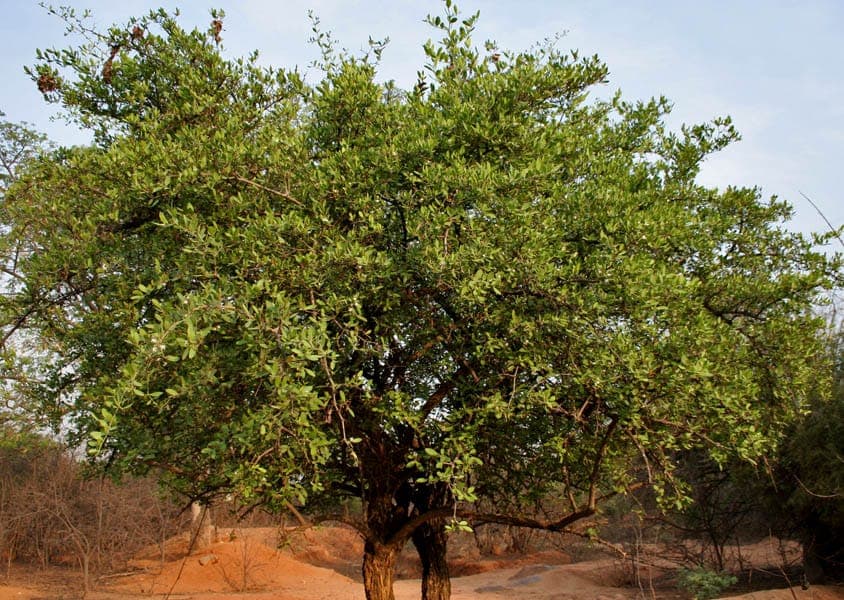
J.M.Garg / CC BY 3.0, via Wikimedia Commons
Carissa spinarum: complete guide
Carissa spinarum
¿Quieres ver Carissa spinarum: complete guide en tu jardín?
1 minuto, sin tarjeta de crédito
Overview
Carissa spinarum, commonly known as Egyptian carissa or karonda, is an exotic, thorny shrub native to Africa through Indo-China and widely cultivated in Australia and New Caledonia. This plant is valuable both for its lovely white flowers and its edible red fruits that taste somewhat like strawberry.
With its compact habit, extremely thorny branches, and evergreen nature (in warm climates), it makes an interesting choice for Mediterranean and tropical gardens. The fruits are highly nutritious and used in jams, nectars, and dried form.
Appearance and Bloom
Carissa spinarum grows as a compact shrub to approximately 1.5 to 2 meters in height. The branches are densely covered with sharp, hardened thorns. The foliage is glossy, dark green, and leathery.
The flowers are white to pink, highly fragrant, and appear throughout the growing season. After flowering, 2-3 centimeter red, bottle-shaped fruits form. These are sweet and edible, tasting somewhere between strawberry and cranberry.
Ideal Location
Carissa spinarum grows best in full sun and warm locations. This is not a plant for cold climates except in greenhouses. In warm regions (Spain, southern France, Greece, etc.) it grows well outdoors.
The plant tolerates shade but flowers less abundantly. Provide protection from strong winds.
Soil
Carissa spinarum grows in virtually all soil types but prefers well-draining, nutrient-rich soil. It accepts sand, silt, and clay provided good drainage is assured.
The plant tolerates both acidic and alkaline soils well (pH 5.5 to 7.5).
Watering
Carissa spinarum loves regular moisture during the growing season. Water deeply and regularly during summer. During dormancy (winter) give less water.
Once established, the plant tolerates moderate drought. Avoid waterlogging.
Diseño gratis
¿Quieres ver Carissa spinarum: complete guide en tu jardín? Crea un diseño gratis ahora.
Pruning
Pruning can take place in spring to keep the shrub in bounds. Work carefully due to thorns. The plant responds well to pruning and forms dense, compact crowns.
Remove dead wood and leggy branches in March/April.
Maintenance Calendar
March-April: Begin growing season. Prune if needed. Water regularly.
May-September: Flowering period. Water well, add liquid fertilizer monthly.
October-November: Water less. Plant prepares for winter.
December-February: Minimal activity. Water only when soil dries.
Winter Hardiness
Carissa spinarum is not cold-hardy. It tolerates temperatures above 10-12 degrees Celsius without damage. In colder climates it must be overwintered indoors or protected with airy covering.
Companion Plants
Carissa spinarum combines well with other warm-loving plants:
- Citrus varieties (Orange, lemon)
- Manihot esculenta (Cassava)
- Psidium guajava (Guava)
- Manilkara zapota (Sapodilla)
- Ricinus communis (Castor bean)
Harvesting Fruits
Fruits ripen from red to dark red and become edible when soft. Harvest when fully red and soft. Fruits can be eaten fresh, made into jam, or dried like raisins.
Fruit production is abundant under good growing conditions.
Closing Thoughts
Carissa spinarum is an exotic choice for gardeners in warm regions. With its adapted growth, beautiful flowers, and edible fruits, it is a multifunctional plant. Ideal for Spanish, Italian, and French gardens.
Available through specialized tropical plant nurseries. Gardenworld.app helps integrate this exotic into a Mediterranean context. Gardenworld.app inspires gardens in southern climates.
¿Quieres ver Carissa spinarum: complete guide en tu jardín? Crea un diseño gratis ahora.
Sube una foto, elige un estilo y obtén un diseño fotorrealista con lista de plantas en menos de un minuto.
Más de 10.000 jardines diseñados
Sin tarjeta de crédito


Plantas similares
Asclepias speciosa: complete guide
Asclepias speciosa
Showy milkweed: striking pink-white flowers, fragrant blooms. Essential monarch butterfly host plant.
Plumeria obtusa: complete guide
Plumeria obtusa
Discover the Singapore graveyard flower: an exotic evergreen with mesmerizing white blooms and exquisite fragrance. Expert cultivation, care, and maintenance tips.
Wrightia arborea: complete guide
Wrightia arborea
Wrightia arborea, known as doodhi, is an elegant tree from South Asia with delicate white flowers. Discover how to cultivate this exotic plant.