
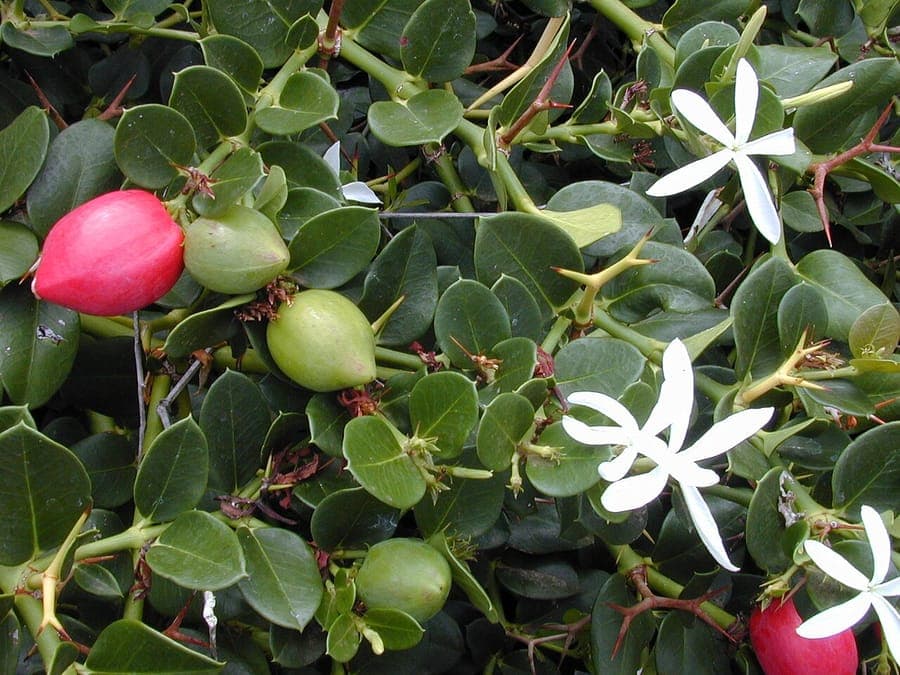
Forest & Kim Starr / CC BY 3.0, via Wikimedia Commons
Natal plum: complete guide
Carissa macrocarpa
¿Quieres ver Natal plum: complete guide en tu jardín?
1 minuto, sin tarjeta de crédito
Overview
The Natal plum (Carissa macrocarpa) is a beautiful ornamental shrub originating from South Africa. This plant is also known as amatungulu and carissa. The plant grows into an attractive shrub with glossy foliage, white fragrant flowers, and red edible fruits. In warm climates, this is an absolute must-have for your garden.
Appearance and bloom
Carissa macrocarpa is a semi-evergreen shrub that can reach 1.5 to 3 meters in height. The plant features opposite, oval leaves that are glossy dark green. The flowers are small, white to pink, and highly fragrant. They appear in clusters throughout the growing season. The fruits are apple-like, red, and approximately 3 to 4 centimeters in diameter.
Ideal location
This plant thrives in sunny to partially shaded locations. A spot with at least 4 hours of daylight is desirable. The plant grows well against south-facing walls and protected corners. Protect from strong winds and frost. In cold climates, indoor overwintering is necessary.
Soil
Carissa macrocarpa grows well in standard garden soil. Ensure good drainage - wet feet are not desired. The plant tolerates fertile soil better than lean soil. Add planting material and compost when planting. The plant prefers neutral to slightly acidic soil.
Watering
Keep the soil regularly moist but not waterlogged. Water when the top layer feels dry. During the growing period (May-September), water regularly. In winter, water much less frequently. Excessive water causes root rot. Ensure water drains properly.
Diseño gratis
¿Quieres ver Natal plum: complete guide en tu jardín? Crea un diseño gratis ahora.
Pruning
Pruning can be done to maintain the shrub's form. Best pruning occurs in early spring (March). Remove long shoots and side branches. This promotes denser growth. Pruning after fruit harvest encourages regrowth and blooming.
Maintenance calendar
March-April: shape the shrub, provide nutrients. May-June: enjoy blooming and vigorous growth. July-August: harvest fruits and enjoy. September-October: water management, plant gradually dormant. November-February: minimal care, overwintering.
Winter hardiness
Carissa macrocarpa can tolerate temperatures down to approximately -5 to -2°C. In warmer regions (zones 9-11), outdoor overwintering is possible. In colder areas, container cultivation and overwintering indoors is necessary. The plant responds poorly to frost periods. Protect from frost with mulch or covers.
Companion plants
This plant pairs beautifully with other exotic plants. Try combinations with bougainvillea, lantana, and hibiscus. Succulents and palms also form attractive combinations. In containers, it works well with other South African plants.
Conclusion
Carissa macrocarpa offers beauty, fragrance, and edible fruits. A plant for those seeking warmth and exotic charm. Purchase your specimen at specialized garden centers for professional advice.
Gardenworld.app helps you design exotic and South African plant combinations.
¿Quieres ver Natal plum: complete guide en tu jardín? Crea un diseño gratis ahora.
Sube una foto, elige un estilo y obtén un diseño fotorrealista con lista de plantas en menos de un minuto.
Más de 10.000 jardines diseñados
Sin tarjeta de crédito


Plantas similares
Asclepias speciosa: complete guide
Asclepias speciosa
Showy milkweed: striking pink-white flowers, fragrant blooms. Essential monarch butterfly host plant.
Plumeria obtusa: complete guide
Plumeria obtusa
Discover the Singapore graveyard flower: an exotic evergreen with mesmerizing white blooms and exquisite fragrance. Expert cultivation, care, and maintenance tips.
Wrightia arborea: complete guide
Wrightia arborea
Wrightia arborea, known as doodhi, is an elegant tree from South Asia with delicate white flowers. Discover how to cultivate this exotic plant.