
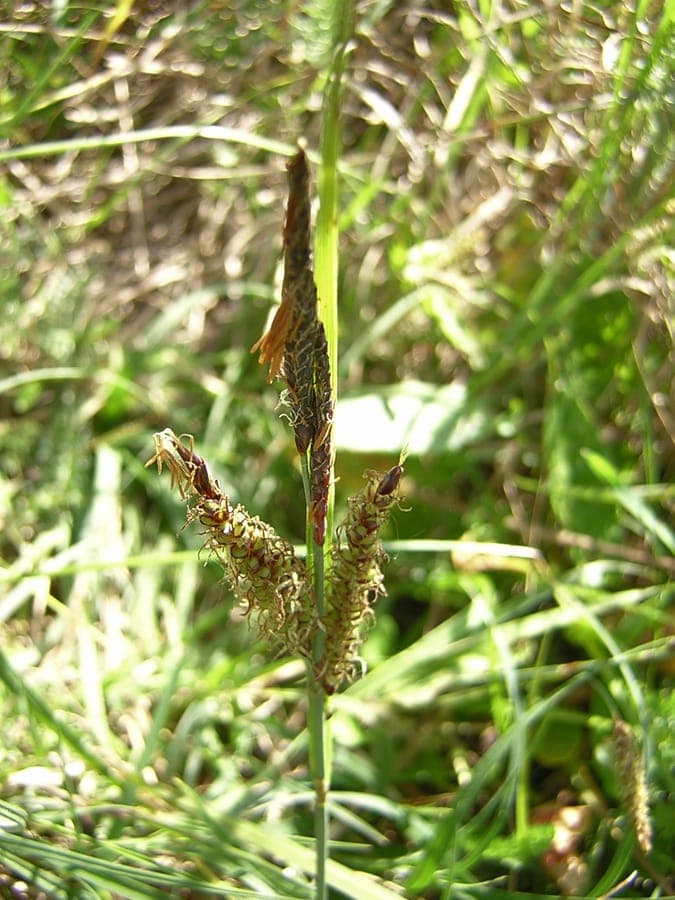
Augustin ROCHE / CC BY-SA 2.0 fr, via Wikimedia Commons
Three-nerved sedge: complete guide
Carex trinervis
¿Quieres ver Three-nerved sedge: complete guide en tu jardín?
1 minuto, sin tarjeta de crédito
Overview
Three-nerved sedge (Carex trinervis) is a striking sedge species from the Cyperaceae family, native to coasts from Denmark to Spain. This moisture-loving grass grows along sandy beaches, dune slacks, and coastal salt marshes. Extremely frost-hardy and salt-tolerant, it is ideal for coastal gardens and wetland landscapes. The plant stabilizes sandy soils and supports dune ecosystems.
Appearance & Bloom
Three-nerved sedge grows to 40-60 cm tall in dense greyish-green tufts. The leaves are linear, green to yellow-green, with three characteristic nerves (hence the name). The plant produces small, inconspicuous flower spikes. The main attraction is the graceful foliage and tuft-forming structure. Evergreen year-round.
Ideal Location
Perfect for coastal areas, dune slacks, and sandy soils. Excels in wet zones along beaches and salt marshes. Tolerates both sun and part-shade. Ideal for erosion control on sandy slopes. Suitable as border planting along water.
Soil
Grows in sandy to loamy-sandy soils, moderately moist. pH tolerance very wide (acidic to neutral). This species tolerates salt spray better than many plants. Drainage is not critical; plant thrives on moderately moist soils. Calcareous sand is ideal.
Diseño gratis
¿Quieres ver Three-nerved sedge: complete guide en tu jardín? Crea un diseño gratis ahora.
Watering
Maintain moderate moisture; no excessive watering needed. Natural rainfall sufficient in most cases. In very dry summers provide supplementary water. Winter water requirements low. Salt water (coastal spray) is well tolerated.
Pruning
Limited maintenance. Damaged leaves can be removed. In spring, prune dead material. Plant can be pruned for compact form, but this is optional. Annually remove old material to stimulate new growth.
Maintenance Calendar
Spring: Prune dead material, begin growth cycle. Summer: Minimal care, water in drought. Autumn: Reduce activity as season progresses. Winter: Minimal care; plant partly dormant but much green remains. Annually remove aged material.
Winter Hardiness
Extremely frost-hardy (down to -20C). Winter hardy zones 3-8 (USDA). Plant remains largely evergreen in winter. Snow protects shallow roots. Perfect for coastal Northern Europe.
Companion Plants
Combine with other coastal species: Marram grass (Ammophila), Cordgrass (Spartina), Beach rose (Rosa rugosa). Larger coastal shrubs provide structure. In dune effects pair with low spreaders (Carpobrotus, Sedum). Common salt tolerance makes combinations easy.
Closing
Three-nerved sedge is indispensable for coastal developers and dune enthusiasts. Highly reliable, salt-resistant, and wildlife-friendly. For more coastal garden advice, visit gardenworld.app/en or consult local landscapers.
¿Quieres ver Three-nerved sedge: complete guide en tu jardín? Crea un diseño gratis ahora.
Sube una foto, elige un estilo y obtén un diseño fotorrealista con lista de plantas en menos de un minuto.
Más de 10.000 jardines diseñados
Sin tarjeta de crédito


Plantas similares
Flat-stemmed club-rush: complete guide
Bolboschoenus planiculmis
Everything about Bolboschoenus planiculmis: growing conditions, watering, care, and use as a pond margin or wetland plant in garden design.
Great Plains flatsedge: complete guide
Cyperus lupulinus
Everything about Great Plains flatsedge (Cyperus lupulinus): growing conditions, care, garden uses, and ecological value. Tips for pond margins and dry sandy soils.
Golden beak sedge: complete guide
Rhynchospora corymbosa
Everything about golden beak sedge (Rhynchospora corymbosa): a dramatic tropical marginal for pond edges, bog gardens, and wet habitats.