
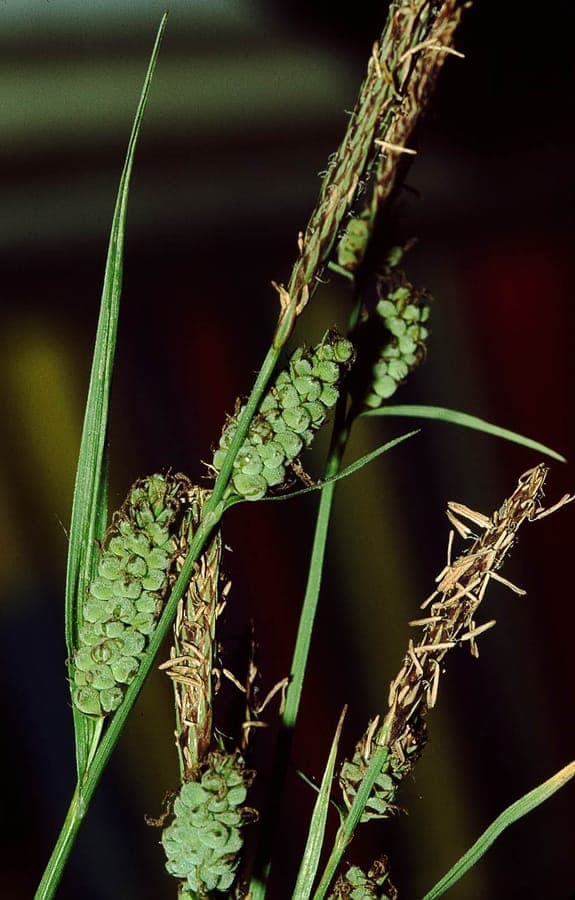
Wikimedia Commons / CC BY-SA 3.0, via Wikimedia Commons
Carex tomentosa: complete guide
Carex tomentosa
¿Quieres ver Carex tomentosa: complete guide en tu jardín?
1 minuto, sin tarjeta de crédito
Overview
Carex tomentosa, better known as Downy-fruited sedge or Felt sedge, is an elegant sedge from Europe. This plant occurs naturally from the United Kingdom to Turkey and further east to Mongolia. The plant is named after its characteristic velvet-like, hairy fruits (tomentose means hairy in Latin).
Appearance and Bloom
Carex tomentosa grows as a dense, low-growing plant, usually not taller than 40 centimetres. It forms attractive, compact tufts with fine, green leaves. The most striking feature is the fruits which are densely hairy, giving the plant its characteristic velvet-like appearance.
The flower spikes appear in May and June and are yellow to green in colour. After flowering, the hairy fruits develop which are highly decorative and remain attractive for a long time.
Ideal Location
The Downy-fruited sedge prefers partial shade to full sun. It grows optimally in locations with less intense light, making it suitable for mixed borders and under large trees. The plant can also grow in full sun on moist soils. It is very suitable for woodland edges, heathland areas and mixed plantings.
Soil
Carex tomentosa is not fussy about soil type. It grows well on acidic to neutral soils. Humus-rich, moderately moist soils are ideal. The plant also tolerates drier situations reasonably well once established. It can thrive on various soils from clay to sand.
Diseño gratis
¿Quieres ver Carex tomentosa: complete guide en tu jardín? Crea un diseño gratis ahora.
Watering
Once established, this sedge is very low-maintenance. Watering during the first growing season is important, after that it can tolerate considerable drought. Ensure the planting hole is well moistened at planting time.
Pruning
Minimal pruning is needed. Remove dead leaves in early spring (March) to keep the plant tidy. The plant requires no special pruning otherwise.
Maintenance Calendar
February to March: Remove dead leaves. April to May: Growing period, water regularly. June to August: Flowering and fruiting, highly decorative. September to October: Plant moderates activity. November to December: Rest period.
Winter Hardiness
Carex tomentosa is fully hardy throughout Europe, from Northern Europe to Southern Europe. Temperatures down to -20 degrees Celsius are no problem.
Companion Plants
Combine with other ground covers such as ivy, saxifrage, or cushion plants. With ferns it forms beautiful shade plantings. In full sun combine it well with low-growing flowering plants.
Final Thoughts
The Downy-fruited sedge is an elegant, low-maintenance plant for mixed gardens. With its hairy fruits it adds texture and interest. Available at garden centres nationwide. This is a plant with which you can do little but gain much. More plant tips at gardenworld.app.
¿Quieres ver Carex tomentosa: complete guide en tu jardín? Crea un diseño gratis ahora.
Sube una foto, elige un estilo y obtén un diseño fotorrealista con lista de plantas en menos de un minuto.
Más de 10.000 jardines diseñados
Sin tarjeta de crédito


Plantas similares
Flat-stemmed club-rush: complete guide
Bolboschoenus planiculmis
Everything about Bolboschoenus planiculmis: growing conditions, watering, care, and use as a pond margin or wetland plant in garden design.
Great Plains flatsedge: complete guide
Cyperus lupulinus
Everything about Great Plains flatsedge (Cyperus lupulinus): growing conditions, care, garden uses, and ecological value. Tips for pond margins and dry sandy soils.
Golden beak sedge: complete guide
Rhynchospora corymbosa
Everything about golden beak sedge (Rhynchospora corymbosa): a dramatic tropical marginal for pond edges, bog gardens, and wet habitats.