
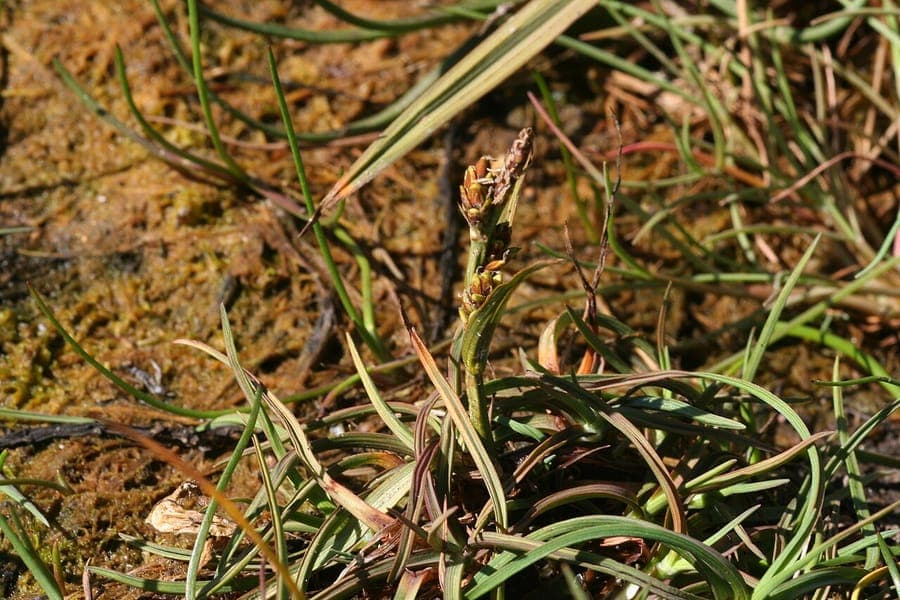
Ragnhild&Neil Crawford from Sweden / CC BY-SA 2.0, via Wikimedia Commons
Hoppner's sedge: complete guide
Carex subspathacea
¿Quieres ver Hoppner's sedge: complete guide en tu jardín?
1 minuto, sin tarjeta de crédito
Overview
Hoppner's sedge (Carex subspathacea) is a hardy arctic sedge from subarctic and arctic regions of the Northern Hemisphere. This low, densely clustering plant thrives in very wet, cold conditions where many other plants struggle. It is ideal for gardeners with naturally wet sites, bog gardens, and coastal salt marshes in cool climates.
Appearance and bloom
Hoppner's sedge reaches only 10-20 cm tall, forming tight, dense tufts. Leaves are narrow, linear, and dark green. Flowering spikes appear July-August and are subtle but architecturally interesting. The plant produces yellowish-brown seeds in papery utricles. Although understated, it offers considerable structural beauty.
Ideal location
Plant this sedge in full sun to part shade along water edges, in bog groupings, or where permanent moisture exists. It is perfect for arctic and subarctic gardens, coastal marshes. On gardenworld.app, find ideas for wetland and bog garden designs.
Soil requirements
Hoppner's sedge requires constantly wet, nutrient-rich soil or actual bog substrate. The plant adapts to acidic and alkaline conditions.
Diseño gratis
¿Quieres ver Hoppner's sedge: complete guide en tu jardín? Crea un diseño gratis ahora.
Watering
This plant demands consistently wet conditions. In fact, it performs poorly in average garden soil. Provide permanent waterlogging or plant alongside natural water sources.
Pruning
Pruning is not necessary. The plant maintains itself naturally. Dead material can be gently removed in spring.
Maintenance calendar
- April-May: growth resumes
- June-August: flowering, permanent moisture essential
- September-October: seed ripens
- November-March: dormancy, moisture remains important
Winter hardiness
Hoppner's sedge is fully hardy in USDA zones 2-7. Native to arctic regions, extreme cold poses no challenge.
Companion plants
Group with other wetland species like bog rosemary and spiraea. Perfect for arctic gardens featuring subarctic flora.
Closing
Hoppner's sedge is a bold choice for wet, cold garden sites. With its exceptional hardiness and specific habitat requirements, it provides authentic character to natural water gardens. Visit gardenworld.app for more bog plants and wetland designs.
¿Quieres ver Hoppner's sedge: complete guide en tu jardín? Crea un diseño gratis ahora.
Sube una foto, elige un estilo y obtén un diseño fotorrealista con lista de plantas en menos de un minuto.
Más de 10.000 jardines diseñados
Sin tarjeta de crédito


Plantas similares
Flat-stemmed club-rush: complete guide
Bolboschoenus planiculmis
Everything about Bolboschoenus planiculmis: growing conditions, watering, care, and use as a pond margin or wetland plant in garden design.
Great Plains flatsedge: complete guide
Cyperus lupulinus
Everything about Great Plains flatsedge (Cyperus lupulinus): growing conditions, care, garden uses, and ecological value. Tips for pond margins and dry sandy soils.
Golden beak sedge: complete guide
Rhynchospora corymbosa
Everything about golden beak sedge (Rhynchospora corymbosa): a dramatic tropical marginal for pond edges, bog gardens, and wet habitats.