
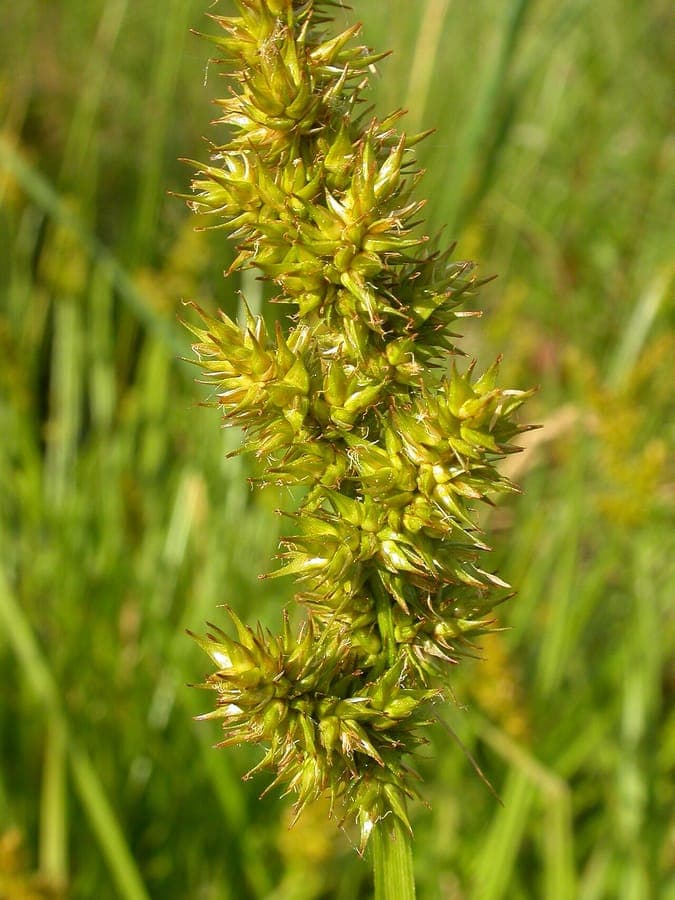
Matt Lavin from Bozeman, Montana, USA / CC BY-SA 2.0, via Wikimedia Commons
Carex stipata: complete guide
Carex stipata
¿Quieres ver Carex stipata: complete guide en tu jardín?
1 minuto, sin tarjeta de crédito
Overview
Carex stipata, commonly called awlfruit sedge or sawbeak sedge, is a robust sedge from the Cyperaceae family. This North American species grows naturally from Canada through Japan and China, and is excellent for English and Northern European gardens with moist soil. It is perfect for naturalistic gardens and biodiverse plantings, especially in restoration of damp ecosystems.
This sedge offers year-round fine texture and maintains visual interest through its upright, graminoid habit. With green foliage throughout the seasons, Carex stipata adds structural value to borders and serves as a dynamic moving element in the landscape.
Appearance and bloom
Carex stipata grows in tight clumps with densely packed, fine-stemmed leaves. The plant reaches approximately 45 to 60 centimeters in height, depending on growing conditions. The leaf texture is coarse in nature, creating nice contrast with finer-textured plant species.
Flowers appear in May and June but are not showy. The Carex genus produces small, greenish flowers that group in catkin-like structures. These flower formations are less spectacular than many other garden plants, but they do provide insect food sources.
After flowering, the plant forms characteristic fruits that are elongated and pointed (hence the name "awlfruit"). These fruits are yellow to brown and give the plant extra visual interest in autumn.
Ideal location
Carex stipata thrives in places with adequate moisture. The plant can grow in full sun but prefers partial shade in warmer climates. A location with 2 to 4 hours of sunlight daily is ideal.
In the wild, this species grows in damp woodland edges, marshes and wetland ecosystems. This helps us understand that the plant tolerates moisture well, but should not be permanently submerged in water.
Plant Carex stipata along waterside areas, in rain gardens, or in other spots where water naturally collects. It is also suitable as an underplanting for shrubs in partial shade situations.
Soil
Carex stipata grows best in well-draining soil with a pH between 4.9 and 7.9. The plant accepts both acidic and neutral soils. Moisture-retaining soil is essential, so add compost or peat substitute if your garden is very sandy.
The soil need not be particularly nutrient-rich; this sedge grows well in poor soils. However, avoid waterlogging in winter, as this can lead to root rot.
Prepare the planting hole by evenly mixing sand, gravel and organic material. This ensures optimal drainage while maintaining adequate moisture-holding capacity.
Diseño gratis
¿Quieres ver Carex stipata: complete guide en tu jardín? Crea un diseño gratis ahora.
Watering
Once Carex stipata is planted, water it regularly until well-established. This typically takes 4 to 6 weeks. Water until the soil feels moist about 5 centimeters deep.
Once established, the plant needs much less supplemental watering. Carex stipata sources deep water from rainfall. During dry periods (more than 2-3 weeks without rain), supplemental watering may be needed, especially if the plant is in full sun.
Apply water in early morning or late afternoon to minimize evaporation. Avoid wetting foliage to prevent disease.
Pruning
Carex stipata requires minimal pruning. In early spring (March-April), before the growing season begins, you can remove dead or damaged leaves. Use a clean pruning shear or even a sharp knife to carefully cut away damaged portions.
The plant grows naturally attractive without regular pruning. Only extreme form-trimming may be needed if you want to restrict the plant strongly in small gardens. Avoid pruning in autumn, as this removes bird habitat that is important in winter.
Maintenance calendar
March-April: Remove dead leaf litter, work compost around the base.
May-June: Monitor for flowering, check moisture levels.
July-August: Ensure the plant receives adequate water during drought.
September-October: Leave seed heads for bird feeding.
November-February: Minimal maintenance needed. The plant will show some dead material, which is normal.
Winter hardiness
Carex stipata is completely winter-hardy in the UK to USDA zone 3, meaning it can withstand winter temperatures down to -40 degrees Celsius. This is more than adequate for British climates. The plant will retain green leaves through most winters, though leaf edges may discolor.
No protection is needed for this species. Rather, the plant in its dried/dormant state can provide important winter food and habitat for insects and small animals.
Companion plants
Carex stipata works well with other moisture-loving species. Combine with:
- Astilbe (dwarf varieties): contrasting foliage
- Iris sibirica: elegant purple flowers
- Primula: colorful spring bloomers
- Forget-me-not: delicate blue accents
- Other sedges like Carex oshimensis: interesting textural layers
Mix sedges with broad-leaved plants like fuchsias and bergenia for textural contrast.
Closing thoughts
Carex stipata is a patient-working grass-like plant that helps fill the damper corners of the garden with natural beauty. By simply choosing the right growing location and adding water occasionally, you will enjoy this low-effort, long-lived plant species. Available at garden centers across the UK and Northern Europe.
Visit gardenworld.app for more inspiration and other plant combinations. Let sedges be part of your sustainable garden design!
Looking for this plant? Check gardenworld.app for plant advice and designs.
¿Quieres ver Carex stipata: complete guide en tu jardín? Crea un diseño gratis ahora.
Sube una foto, elige un estilo y obtén un diseño fotorrealista con lista de plantas en menos de un minuto.
Más de 10.000 jardines diseñados
Sin tarjeta de crédito


Plantas similares
Flat-stemmed club-rush: complete guide
Bolboschoenus planiculmis
Everything about Bolboschoenus planiculmis: growing conditions, watering, care, and use as a pond margin or wetland plant in garden design.
Great Plains flatsedge: complete guide
Cyperus lupulinus
Everything about Great Plains flatsedge (Cyperus lupulinus): growing conditions, care, garden uses, and ecological value. Tips for pond margins and dry sandy soils.
Golden beak sedge: complete guide
Rhynchospora corymbosa
Everything about golden beak sedge (Rhynchospora corymbosa): a dramatic tropical marginal for pond edges, bog gardens, and wet habitats.