
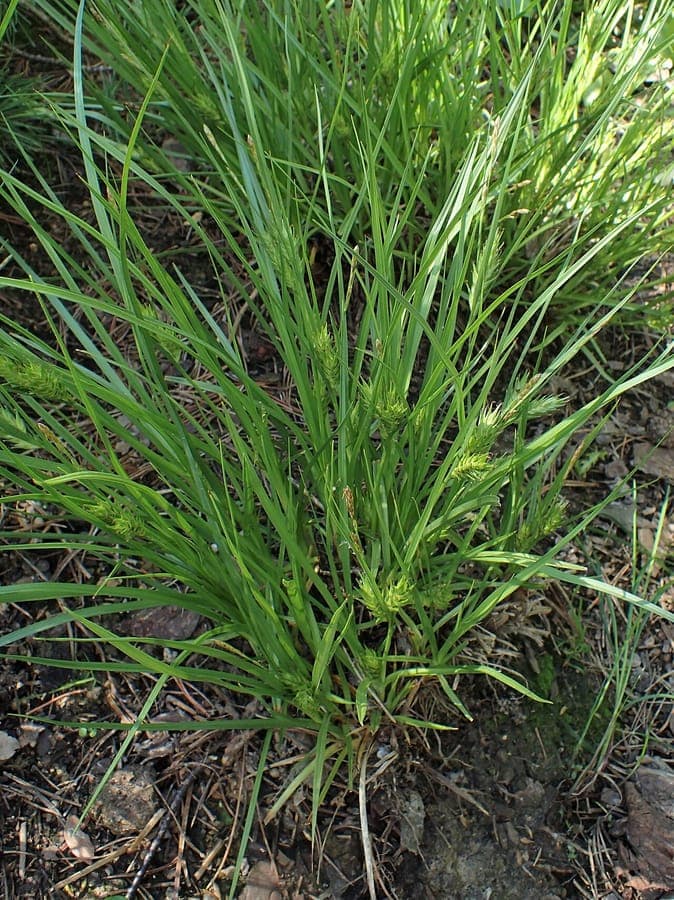
Krzysztof Ziarnek, Kenraiz / CC BY-SA 4.0, via Wikimedia Commons
Carex secalina: complete guide
Carex secalina
¿Quieres ver Carex secalina: complete guide en tu jardín?
1 minuto, sin tarjeta de crédito
Overview
Carex secalina, commonly called Rye sedge, is an elegant grass species from the Cyperaceae family. Native to temperate Europe and Central Asia, this plant thrives in moist meadows, wetlands, and stream margins. The species name 'secalina' references its striking resemblance to rye grain heads. In gardens, this sedge offers exceptional structural interest and botanical authenticity for moisture-loving designs.
Appearance and bloom
Rye sedge is distinguished by striking, drooping flower spikes that remarkably resemble rye heads. The plant reaches 40-60 centimeters tall, forming dense, architecturally interesting tufts with dark green foliage. Flowering occurs May to October with characteristic hanging ears in yellow-brown to brown tones. This unique flowering effect gives the plant both its common and botanical names.
Ideal location
This sedge performs best in full sun to partial shade. The plant appreciates open locations with good light and normal air movement. It excels in wetland plant associations, stream margins, and moisture-rich planting beds. Position this sedge where water naturally accumulates and remains for extended periods without total stagnation. Ideal for low-lying zones in the garden where water collects naturally.
Soil requirements
Carex secalina thrives in moisture-rich, nutrient-rich soil. The plant accepts heavy clay soils and even flourishes in permanently wet conditions where most plants would struggle. Enhance soil with compost or organic matter for nutrients. A neutral to slightly acidic pH is preferred. The sedge excels in nutrient-rich wetlands and margins abundant with organic material.
Watering
Consistent moisture is essential throughout the growing season. Ensure soil remains consistently moist, and the plant even tolerates seasonally flooded conditions. Water regularly during summer, especially dry periods. In very dry conditions, supplemental watering may be necessary. In wetter years, natural rainfall typically provides sufficient moisture without additional intervention.
Diseño gratis
¿Quieres ver Carex secalina: complete guide en tu jardín? Crea un diseño gratis ahora.
Pruning
Pruning requirements are minimal. Remove dead or damaged foliage in early spring (March). The characteristic rye-like spikes can remain through winter for architectural interest and bird food. Gently remove old inflorescences in spring. This material can be composted or used as mulch in the garden.
Maintenance calendar
March: Spring cleanup and light fertilizer application. April-May: Monitor soil moisture and water levels, apply balanced fertilizer. June-October: Peak growth season with regular watering and deadheading. November-February: Minimal intervention, protect from extreme conditions.
Winter hardiness
Rye sedge is completely hardy in temperate zones, surviving temperatures well below -20 degrees Celsius without difficulty. The plant retains its foliage throughout winter, offering valuable architectural structure during dormant seasons. The rye-like spikes remain visually interesting throughout the entire winter period and into spring. The species adapts excellently to temperate winter conditions.
Companion plants
Pair Rye sedge with other moisture-loving plants: Iris for vertical lines, Primula japonica for flower color, and Astilbe for textural layering. In wetland environments, Caltha palustris, Hosta, and Matteuccia species work wonderfully. The standing flower spikes create striking contrast against dark foliage or purple-leaved companions.
Closing remarks
Carex secalina offers unparalleled botanical charm with its distinctive rye-like inflorescences and elegant growth habit. For moisture-rich gardens, stream margins, and wetland designs, this sedge is invaluable. Available from quality nurseries and water garden specialists. Explore more wet garden design inspiration on gardenworld.app. This temperate species brings authentic botanical character and architectural presence to moisture-loving garden compositions.
¿Quieres ver Carex secalina: complete guide en tu jardín? Crea un diseño gratis ahora.
Sube una foto, elige un estilo y obtén un diseño fotorrealista con lista de plantas en menos de un minuto.
Más de 10.000 jardines diseñados
Sin tarjeta de crédito


Plantas similares
Flat-stemmed club-rush: complete guide
Bolboschoenus planiculmis
Everything about Bolboschoenus planiculmis: growing conditions, watering, care, and use as a pond margin or wetland plant in garden design.
Great Plains flatsedge: complete guide
Cyperus lupulinus
Everything about Great Plains flatsedge (Cyperus lupulinus): growing conditions, care, garden uses, and ecological value. Tips for pond margins and dry sandy soils.
Golden beak sedge: complete guide
Rhynchospora corymbosa
Everything about golden beak sedge (Rhynchospora corymbosa): a dramatic tropical marginal for pond edges, bog gardens, and wet habitats.