
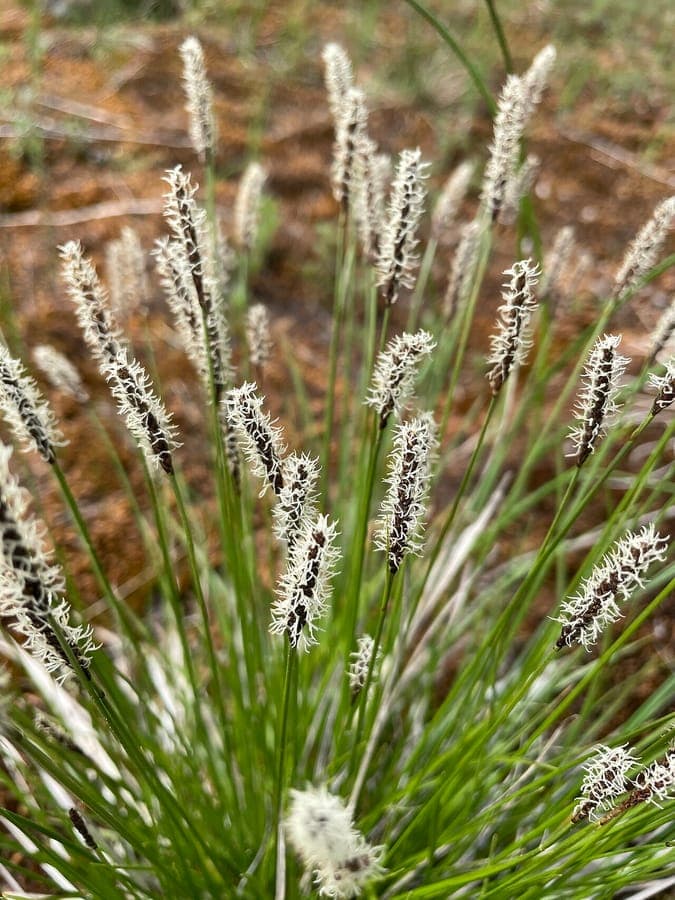
Kathleen Houlahan Chayer / CC0, via Wikimedia Commons
Northern singlespike sedge: complete guide
Carex scirpoidea
¿Quieres ver Northern singlespike sedge: complete guide en tu jardín?
1 minuto, sin tarjeta de crédito
Overview
Carex scirpoidea, commonly known as Northern singlespike sedge or Scirpus-like sedge, is a compact arctic sedge species thriving in subarctic and alpine areas. This plant originates from North America, Greenland, Norway, and Siberia. In these extreme habitats, the plant grows on alpine tundra and in moist mountain meadows. This is an exceptionally hardy, characterful plant offering winter-hardy grasslands in extreme gardening situations.
Appearance & Bloom
Northern singlespike sedge reaches only 10-20 centimeters tall and forms loose tufts of fine, gray-green leaves. The leaves are very thin, approximately 2-3 millimeters wide, with gray-green color. Flowers (male and female flowers on the same spike) appear in May and June in a single spike at the top. The spike is small, approximately 10-15 millimeters long, becoming brownish.
Ideal Location
Carex scirpoidea grows best in full to partial sun with several hours direct sunlight. This plant tolerates more shade than many other sedges. In the most alpine regions, the plant grows even at 3000 meters elevation. For gardens, a moist location with good drainage is ideal. Place this plant in moist meadows, at mountain edges, or on alpine plains.
Soil
Carex scirpoidea grows on diverse soils but prefers moist, sandy soils with good moisture retention. Naturally, the plant grows on podzolic, acidic soils with abundant organic matter. For garden cultivation, a mixture of 50% peat, 30% sand, and 20% sharp sand is ideal. A pH of 5.0 to 7.0 is optimum. Good drainage is essential; this plant does not grow in swampy ground.
Watering
Carex scirpoidea prefers moist soils during the growing season, not wet. Water regularly in dry periods but prevent stagnation. This plant grows naturally in areas with high precipitation (snow) but also on dry mountain tops. Once established, supplemental watering is needed only in extremely dry summers.
Diseño gratis
¿Quieres ver Northern singlespike sedge: complete guide en tu jardín? Crea un diseño gratis ahora.
Pruning
Pruning is practically unnecessary. This plant retains its leaves through winter in mild regions or requires only removal of dead leaves in spring. In very cold areas, all aboveground biomass may die in winter, but new shoots emerge in spring from underground rhizomes.
Maintenance Calendar
March-April: Remove dead leaves from previous year. April-May: No intensive care needed. June-July: Water if needed during drought. August-September: Check plant growth. October: Winter preparation. November-February: No care needed; plant rests.
Winter Hardiness
Northern singlespike sedge is extremely winter-hardy to -40 degrees Celsius or even colder. This plant grows naturally in arctic areas where temperatures reach -50 degrees. In Netherlands, winter hardiness is never a concern. The plant is suitable even for the most extreme mountain regions.
Companion Plants
Carex scirpoidea combines well with other alpine graminoids and rosettes. Grow together with Festuca viridis, Poa alpina, and other alpine grasses. Also beautiful alongside small alpine flowers like Silene acaulis and Armeria alpina. Sedges often form their own plant communities naturally.
Closing Thoughts
Northern singlespike sedge is an extremely hardy arctic plant tolerating extreme garden situations. This plant is ideal for alpine gardens where most normal plants fail. With its gray-green leaves and compact growth, it brings authentic mountain flair. Available from specialized plant nurseries with alpine focus.
Wish to learn more about alpine gardens? Visit gardenworld.app for inspiration and discover more at gardenworld.app/en.
¿Quieres ver Northern singlespike sedge: complete guide en tu jardín? Crea un diseño gratis ahora.
Sube una foto, elige un estilo y obtén un diseño fotorrealista con lista de plantas en menos de un minuto.
Más de 10.000 jardines diseñados
Sin tarjeta de crédito


Plantas similares
Flat-stemmed club-rush: complete guide
Bolboschoenus planiculmis
Everything about Bolboschoenus planiculmis: growing conditions, watering, care, and use as a pond margin or wetland plant in garden design.
Great Plains flatsedge: complete guide
Cyperus lupulinus
Everything about Great Plains flatsedge (Cyperus lupulinus): growing conditions, care, garden uses, and ecological value. Tips for pond margins and dry sandy soils.
Golden beak sedge: complete guide
Rhynchospora corymbosa
Everything about golden beak sedge (Rhynchospora corymbosa): a dramatic tropical marginal for pond edges, bog gardens, and wet habitats.