
Martin Vavrik / Public domain, via Wikimedia Commons
Rock Sedge: complete guide
Carex rupestris
¿Quieres ver Rock Sedge: complete guide en tu jardín?
1 minuto, sin tarjeta de crédito
Overview
Rock sedge (Carex rupestris) is an attractive alpine sedge from the sedge family (Cyperaceae). This mountain plant grows naturally on rocky slopes and alpine meadows in temperate mountain regions of Europe and Asia.
Rock sedge is renowned for its distinctive curled foliage and compact growth. It's an ideal plant for rocky areas, alpine situations, and low-growing borders.
Appearance and bloom cycle
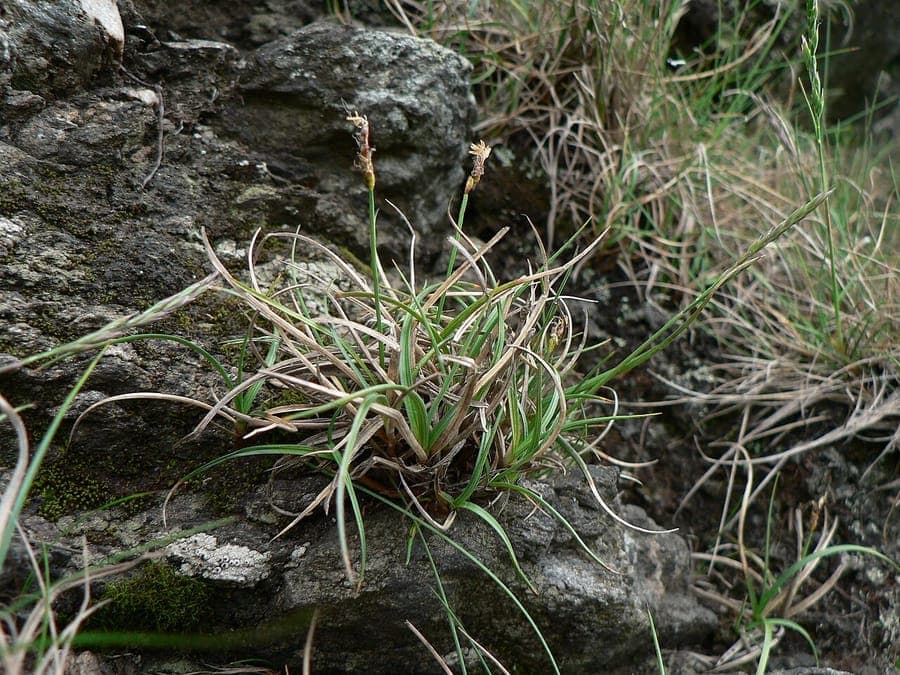
Rock sedge forms low, dense tufts 15-30 cm tall. The foliage is distinctly curled and wavy, green to yellow-green in color. These curlings give the plant a unique, elegant appearance.
Small, inconspicuous brown-green flower spikes appear in May-June. The real beauty lies in the characteristic, curled leaf texture visible year-round.
Ideal location
Rock sedge grows best in full sun to half shade. This plant loves high, dry locations with good air circulation. At least 3-4 hours of direct sun daily is ideal.
Perfect for rock gardens, alpine borders, stone gardens, and as edging or grouping plant. Also suitable for low-growing borders where drought isn't a concern.
Soil requirements
Rock sedge demands very well-drained, dry to normal soil. Heavy, wet soils are unsuitable. Sand, gravel, and lean, mineral-rich soils are ideal.
The plant tolerates poor soil. Optimal pH is neutral to slightly alkaline (pH 6.5-7.5). No extra feeding needed.
Diseño gratis
¿Quieres ver Rock Sedge: complete guide en tu jardín? Crea un diseño gratis ahora.
Watering
Once established, rock sedge is fairly drought-tolerant. Water may be needed during very dry periods. Water more frequently in container culture.
Excessive water is harmful. Better dry than wet. Ensure excellent drainage in wet winters.
Pruning
Minimal pruning needed. The plant remains compact and orderly naturally. Only occasionally remove very old or damaged foliage.
The curled foliage remains interesting year-round, even without pruning.
Maintenance calendar
March-April: New growth appears slowly. Ensure good drainage.
May-June: Flower spikes appear. Low-maintenance period.
July-August: Full growth in warmer weather. Drought-tolerant.
September-October: Plant continues growing. No feeding needed.
November-February: Winter rest. Very sparing with water.
Winter hardiness
Rock sedge is extremely hardy to USDA zone 3 (-35°C). No winter protection needed. Ideal for cold alpine areas.
Curled foliage remains decorative even under snow.
Companion plants
Combine beautifully with other low-growing alpines like dwarf sedums, sempervivums, and alpine violets. Works well with dwarf conifers.
Loveliest as a grouping plant for maximum effect. Also beautiful as edging for taller plants in alpine borders.
Closing thoughts
Rock sedge is a unique and low-maintenance choice for alpine and rocky situations. Its curled foliage provides year-round interest. Check specialist garden centers with alpine sections for these special plants. For more garden inspiration, visit gardenworld.app.
¿Quieres ver Rock Sedge: complete guide en tu jardín? Crea un diseño gratis ahora.
Sube una foto, elige un estilo y obtén un diseño fotorrealista con lista de plantas en menos de un minuto.
Más de 10.000 jardines diseñados
Sin tarjeta de crédito


Plantas similares
Flat-stemmed club-rush: complete guide
Bolboschoenus planiculmis
Everything about Bolboschoenus planiculmis: growing conditions, watering, care, and use as a pond margin or wetland plant in garden design.
Great Plains flatsedge: complete guide
Cyperus lupulinus
Everything about Great Plains flatsedge (Cyperus lupulinus): growing conditions, care, garden uses, and ecological value. Tips for pond margins and dry sandy soils.
Golden beak sedge: complete guide
Rhynchospora corymbosa
Everything about golden beak sedge (Rhynchospora corymbosa): a dramatic tropical marginal for pond edges, bog gardens, and wet habitats.