
Salix01 / CC BY-SA 4.0, via Wikimedia Commons
Carex rariflora: complete guide
Carex rariflora
¿Quieres ver Carex rariflora: complete guide en tu jardín?
1 minuto, sin tarjeta de crédito
Overview
Carex rariflora, commonly known as Looseflower Alpine Sedge, is a small alpine sedge from the Cyperaceae family. This frost-hardy graminoid plant grows naturally in Northern and Eastern Europe through the Russian Far East, and also in North America from Canada to Maine.
Looseflower alpine sedge is adapted to extreme alpine and arctic conditions. The plant grows on wetlands, wet meadows and mountain peaks above the tree line. For front yard designs with alpine themes or shaded wet areas, it is an excellent choice due to its robust character.
The plant plays an important role in alpine ecosystems through grass stabilization and erosion control on steep slopes.
Appearance & bloom
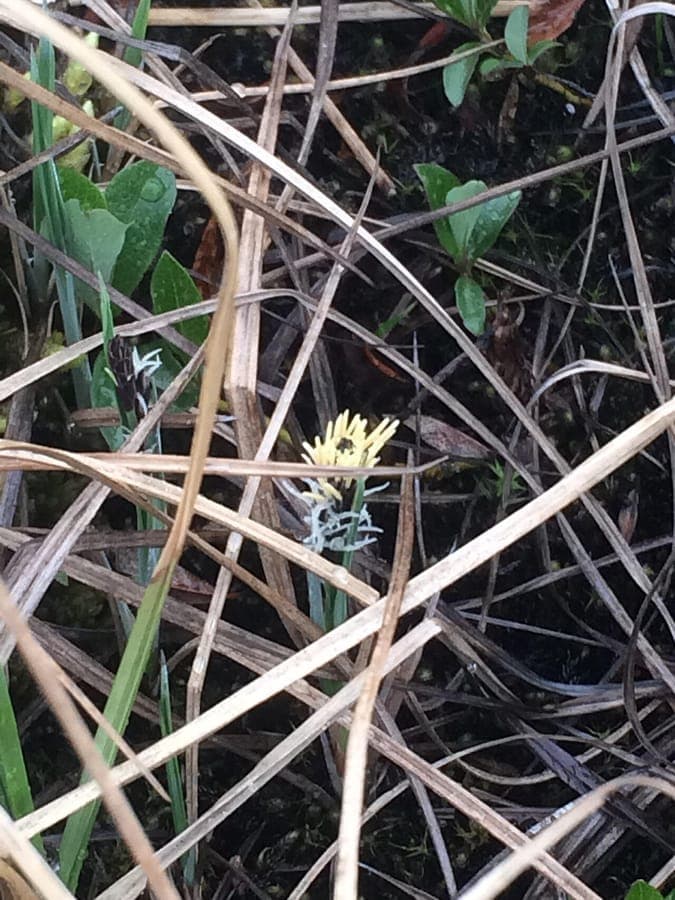
Looseflower alpine sedge forms compact, tufted growth patterns reaching 10-30 centimeters. The leaves are very fine, hair-like, growing in dense bundles. Color varies from bright to dark green.
The flower spikes are extremely characteristic and remarkably sparse (hence the name rariflora). The flowers are very small and appear in June-July as discrete plumes above the leaf mass. This flowering habit makes the plant easily recognizable.
After blooming, small seeds appear that are wind-dispersed.
Ideal location
Looseflower alpine sedge thrives in apparent alpine wetland settings. The plant accepts full sun to partial shade, though partial shade is preferred in warm areas.
The plant is extremely cold-hardy (-40 degrees Celsius and lower) and grows naturally in arctic regions. It requires no protection measures in the Netherlands or Belgium.
The plant prefers shaded wet places where many other plants do not grow.
Diseño gratis
¿Quieres ver Carex rariflora: complete guide en tu jardín? Crea un diseño gratis ahora.
Soil
Looseflower alpine sedge grows best in wet, acidic soils with abundant organic material. pH 5.5-7.0 is ideal. The plant tolerates wetness and stagnant water better than most sedges.
In home gardens, it is best to add plenty of peat moss or leaf mold for optimal acidity. Avoid limey soils.
The plant has minimal nutritional needs and grows even in poor mountain soils.
Watering
Looseflower alpine sedge requires regular moisture, especially during growing seasons. The plant tolerates wet to very wet land. During dry periods, some supplemental watering can help, but the plant survives without preventing drought stress.
Once established, it is very drought-tolerant.
Pruning
Pruning is not necessary. The plant forms compact shapes by itself. Dead foliage can be removed in spring for aesthetic reasons.
Maintenance calendar
Spring (March-May): Plant begins growth. Remove dead foliage. Ensure adequate moisture.
Summer (June-August): Blooming occurs. Minimal intervention needed. Plant self-regulates growth.
Fall (September-November): Plant prepares for winter. No action needed.
Winter (December-February): Plant sleeps. Snow is normal.
Winter hardiness
Looseflower alpine sedge is extremely winter-hardy, with native occurrence on Greenland and Alaska. No winter protection required.
Companion plants
Looseflower alpine sedge works well alongside:
- Other alpine sedges: Congeners
- Dwarf plants: Form attractive associations
- Rock cotoneasters: Interesting height contrasts
- Peat moss fields: Natural alpine habitats
Avoid heavy competitors.
Closing
Looseflower alpine sedge is a valuable plant for alpine and mountain gardens. On gardenworld.app you can integrate it into your alpine front yard design: https://gardenworld.app/en/plant-blog/carex-rariflora and https://gardenworld.app/en/plant-blog/alpine-sedges
¿Quieres ver Carex rariflora: complete guide en tu jardín? Crea un diseño gratis ahora.
Sube una foto, elige un estilo y obtén un diseño fotorrealista con lista de plantas en menos de un minuto.
Más de 10.000 jardines diseñados
Sin tarjeta de crédito


Plantas similares
Flat-stemmed club-rush: complete guide
Bolboschoenus planiculmis
Everything about Bolboschoenus planiculmis: growing conditions, watering, care, and use as a pond margin or wetland plant in garden design.
Great Plains flatsedge: complete guide
Cyperus lupulinus
Everything about Great Plains flatsedge (Cyperus lupulinus): growing conditions, care, garden uses, and ecological value. Tips for pond margins and dry sandy soils.
Golden beak sedge: complete guide
Rhynchospora corymbosa
Everything about golden beak sedge (Rhynchospora corymbosa): a dramatic tropical marginal for pond edges, bog gardens, and wet habitats.