
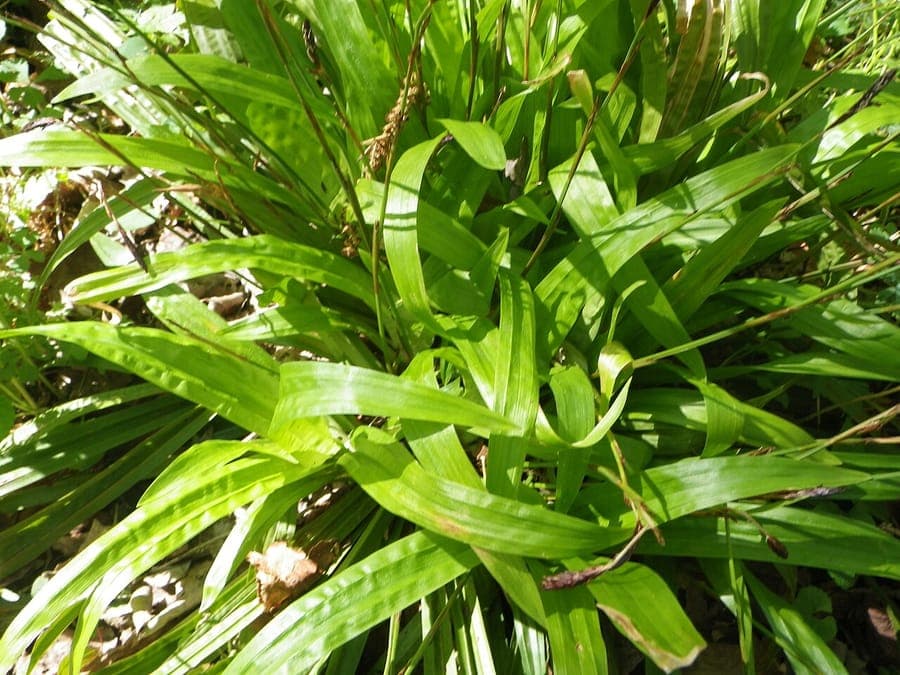
Halpaugh / CC BY-SA 3.0, via Wikimedia Commons
Carex plantaginea: complete guide
Carex plantaginea
¿Quieres ver Carex plantaginea: complete guide en tu jardín?
1 minuto, sin tarjeta de crédito
Overview
Carex plantaginea, commonly known as Plantainleaf sedge or Seersucker sedge, is a distinguished ornamental sedge from the Cyperaceae family. This remarkable grass earned its name from the distinctive broad, plantain-like leaves that set it apart from many other sedge species. Native to North America, ranging from Canada to North Carolina, it is a winter-hardy, semi-evergreen plant perfectly suited to shaded garden locations. The plant grows to approximately 30-40 cm in height, forming compact, decorative clumps that provide structure throughout the year.
Appearance and bloom
The characteristic broad foliage of Carex plantaginea represents its finest feature. The dark green, glossy leaves maintain their color year-round, making this sedge especially valuable during winter months when garden color is limited. The leaf texture displays fine linear structure with prominent veins, creating subtle visual interest. The flowers are discrete spring inflorescences, though these are certainly not the main reason for cultivation. The true value lies in the enduring leaf mass and elegantly restrained growth habit. This plant forms dense, compact clumps without spreading aggressively.
Ideal location
Carex plantaginea thrives best in well-shaded positions within the garden. The plant demonstrates excellent tolerance for varying light conditions, from full shade beneath trees to partial shade. It tolerates moderate sun exposure equally well. Shaded locations beneath deciduous trees are optimal, particularly in warm climates where some shade protects against desiccation. Avoid planting this sedge in full sun on dry sites; it will scorch and underperform.
Soil
Carex plantaginea demands moist, well-draining soil enriched with organic matter. Adding compost or leaf mold helps maintain moisture and fertility. The plant shows no special preference between acidic or alkaline conditions; it thrives in pH 4 to 7. Ensure good drainage to prevent waterlogging. Heavier clay soils improve considerably with added sand or perlite. This plant performs better on slightly moist soils than on arid sandy ground.
Diseño gratis
¿Quieres ver Carex plantaginea: complete guide en tu jardín? Crea un diseño gratis ahora.
Watering
Although hardy and reasonably drought-tolerant, Carex plantaginea performs optimally with consistent moisture. During the growing season from spring through autumn, keep soil consistently moist. Prevent complete desiccation, especially in strong sun. During rainy periods, supplemental watering becomes unnecessary; in dry summers, regular irrigation proves essential. Established winter growth requires less water, though never allow complete drying out.
Pruning
Carex plantaginea requires minimal maintenance pruning. In spring, remove dead or damaged foliage carefully with sharp pruning scissors, avoiding damage to new growth. Gently remove aged exterior leaves. Avoid severe cutbacks; this grass will not regenerate from old wood. A light spring clean-up in March suffices. Remove no living foliage unless genuinely damaged.
Maintenance calendar
FEBRUARY-MARCH: Careful removal of dead foliage, apply organic fertilizer if needed. APRIL-MAY: Peak growing season begins, provide consistent moisture. JUNE-JULY: Monitor moisture levels, water during dry spells. AUGUST-SEPTEMBER: Continue watering, first autumn color changes appear. OCTOBER-NOVEMBER: Reduce watering gradually, remove dead foliage. DECEMBER-JANUARY: Winter dormancy, minimal care needed.
Winter hardiness
This plant proves exceptionally hardy to zone 5 (below -30°C). Winter damage is extremely rare in northern climates. The semi-evergreen character means plants maintain their foliage mass during winter, providing additional cold protection. Heavy snow may briefly depress compact clumps, though plants recover fully in spring. No special winter protection is necessary.
Companion plants
Carex plantaginea combines beautifully with shade-loving associates. Pair with ferns for subtle textural contrast at ground level. Helleborus niger (Christmas rose) makes an excellent companion for snowy-white flower contrast. Hostas provide contrasting larger foliage character. Brunnera contributes lovely blue flowers overhead. Beneath tree canopies, it combines harmoniously with Geum or shorter Carex varieties.
Final thoughts
Carex plantaginea remains an understated yet indispensable plant for any shaded garden. Its extended growing season, robust character, and fine texture merit greater attention from landscape designers. Quality specimens are readily available at garden centers throughout temperate zones. Once established, this sedge will deliver years of reliable structure and elegance.
¿Quieres ver Carex plantaginea: complete guide en tu jardín? Crea un diseño gratis ahora.
Sube una foto, elige un estilo y obtén un diseño fotorrealista con lista de plantas en menos de un minuto.
Más de 10.000 jardines diseñados
Sin tarjeta de crédito


Plantas similares
Flat-stemmed club-rush: complete guide
Bolboschoenus planiculmis
Everything about Bolboschoenus planiculmis: growing conditions, watering, care, and use as a pond margin or wetland plant in garden design.
Great Plains flatsedge: complete guide
Cyperus lupulinus
Everything about Great Plains flatsedge (Cyperus lupulinus): growing conditions, care, garden uses, and ecological value. Tips for pond margins and dry sandy soils.
Golden beak sedge: complete guide
Rhynchospora corymbosa
Everything about golden beak sedge (Rhynchospora corymbosa): a dramatic tropical marginal for pond edges, bog gardens, and wet habitats.