
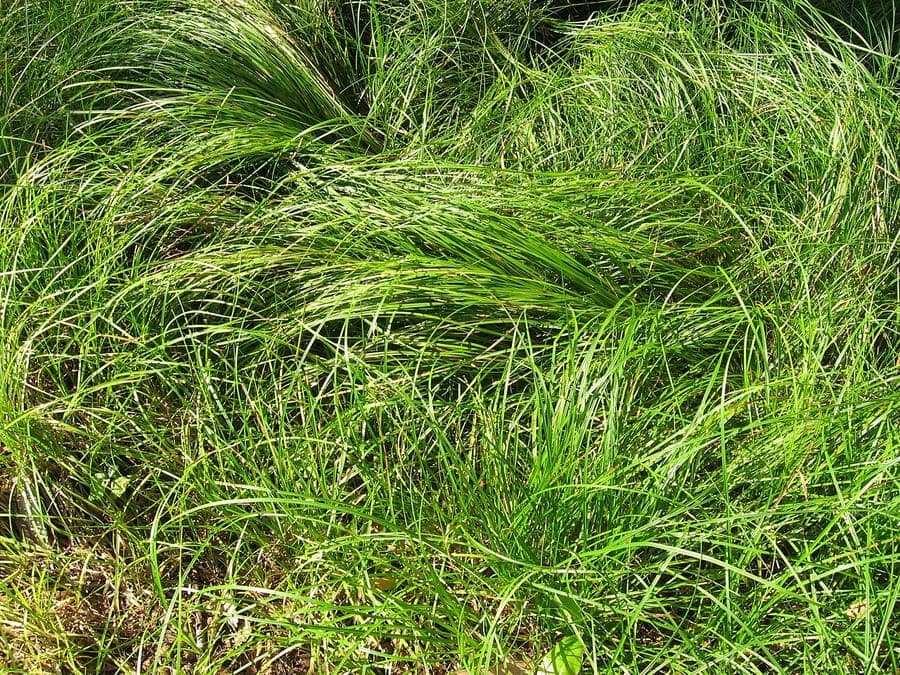
Chhe (talk) / Public domain, via Wikimedia Commons
Carex pensylvanica: complete guide
Carex pensylvanica
¿Quieres ver Carex pensylvanica: complete guide en tu jardín?
1 minuto, sin tarjeta de crédito
Overview
Carex pensylvanica, also known as Pennsylvania sedge or Penn sedge, is likely the most popular shade groundcover sedge in North American woodland gardens. This compact sedge forms dense, evergreen mats and is ideal for underplanting beneath trees and shrubs where little else thrives.
With its rapid spread, low stature, and low-maintenance nature, it is a favorite choice of landscape designers. The plant is perfect for replacing lawn in shaded areas.
Appearance and Bloom
Carex pensylvanica grows only 20-30 centimeters tall and forms dense, almost carpet-like mats. The foliage is fine, green, and elegantly formed. In winter they may develop a slight brown or yellowish tint.
The flowers are subtle - small, inconspicuous spikes appear from April through May. After flowering, tiny seed capsules develop. The true appeal of this plant is its role in overall garden composition.
Ideal Location
Carex pensylvanica is made for part shade to full shade. It grows well beneath deciduous trees, on woodland floor-like sites, and in partially shaded borders. In full sun the foliage can scorch.
The plant accepts diverse light conditions but performs best under trees.
Soil
Carex pensylvanica accepts virtually all soil types - from acidic woodland soil to slightly alkaline soils. It even grows well in nutrient-poor sand. This makes it very flexible.
The pH can range from 3.5 to 7.5 without issue. Add humus if planting in very poor ground.
Diseño gratis
¿Quieres ver Carex pensylvanica: complete guide en tu jardín? Crea un diseño gratis ahora.
Watering
Once established, Carex pensylvanica is drought-tolerant. Water regularly during the growing season (March-May), but less in summer and fall. The plant prefers moderately moist rather than very wet conditions.
During dry periods, water deeply but not daily and superficially.
Pruning
Pruning is not required. In early spring, brown or damaged foliage can be removed. This is actually the only maintenance task.
Maintenance Calendar
February-March: Check for dead foliage, clean up. Begin plant growth season.
April-May: Flowering period. Water regularly.
June-September: Minimal care needed. Water only during extreme drought.
October-November: Plant remains green. No maintenance needed.
December-January: Winter rest. Minimal activity.
Winter Hardiness
Carex pensylvanica is fully hardy to zone 3 (-37 to -29 degrees). In northern climates it is hardy without protection. The plant retains its green color during winter.
Companion Plants
Carex pensylvanica combines well with:
- Heuchera varieties (Coral bells)
- Waldsteinia ternata
- Vinca minor (Periwinkle)
- Liriope muscari
- Epimedium varieties
Closing Thoughts
Carex pensylvanica is the solution for shaded corners in your garden. With its dense mat formation, winter greenery, and exceptional low-maintenance nature, it perfectly replaces lawn in difficult conditions. Plant in groups or as groundcover beneath trees.
Available at garden centers. Gardenworld.app helps integrate this elegant grass into your shade design. Gardenworld.app incorporates woodland plants into your yard for more greenery even in shade.
¿Quieres ver Carex pensylvanica: complete guide en tu jardín? Crea un diseño gratis ahora.
Sube una foto, elige un estilo y obtén un diseño fotorrealista con lista de plantas en menos de un minuto.
Más de 10.000 jardines diseñados
Sin tarjeta de crédito


Plantas similares
Flat-stemmed club-rush: complete guide
Bolboschoenus planiculmis
Everything about Bolboschoenus planiculmis: growing conditions, watering, care, and use as a pond margin or wetland plant in garden design.
Great Plains flatsedge: complete guide
Cyperus lupulinus
Everything about Great Plains flatsedge (Cyperus lupulinus): growing conditions, care, garden uses, and ecological value. Tips for pond margins and dry sandy soils.
Golden beak sedge: complete guide
Rhynchospora corymbosa
Everything about golden beak sedge (Rhynchospora corymbosa): a dramatic tropical marginal for pond edges, bog gardens, and wet habitats.