
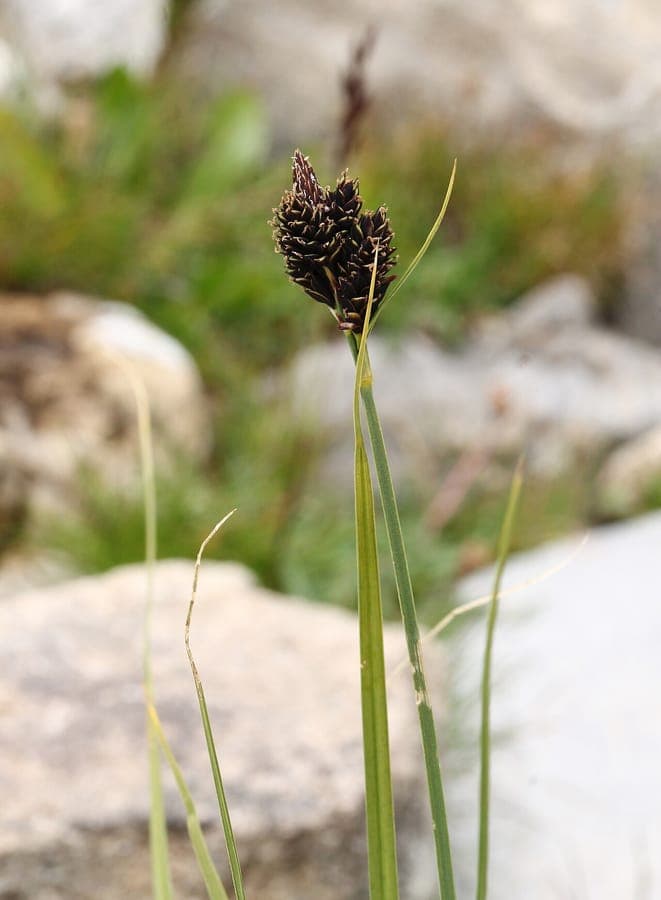
genialvegetal.net / CC BY-SA 4.0, via Wikimedia Commons
Russet sedge: complete guide
Carex parviflora
¿Quieres ver Russet sedge: complete guide en tu jardín?
1 minuto, sin tarjeta de crédito
Overview
Russet sedge (Carex parviflora) is an elegant, low-growing ornamental grass from the sedge family that is native to western and southern Europe. This grass is highly valued as groundcover and forms dense, colorful carpets.
The plant grows slowly and tolerates shade well, making it ideal for difficult locations. It offers seasonal color change and structure year-round.
Appearance and Bloom
Russet sedge reaches only 20 to 30 centimeters in height and forms compact, dense tufts. The thin leaves are dark green, sometimes with purplish tones.
Inconspicuous flowers appear in May and June. In fall, the leaves turn reddish-brown to golden-brown. This grass offers interesting color effects year-round.
Ideal Location
Russet sedge grows well in half-shade to full shade. This makes it ideal for challenging corners under shrubs or trees. Full sun is also possible, but color may be less intense.
The plant tolerates weak light better than many other grasses. Perfect for shaded gardens.
Soil
This grass grows best on well-draining, not overly fertile soil. A pH of 6.5 to 7.5 is ideal. The plant accepts poor soils as well.
Wet terrain should be avoided, though slightly moist soils are acceptable. The plant is quite flexible regarding soil types.
Diseño gratis
¿Quieres ver Russet sedge: complete guide en tu jardín? Crea un diseño gratis ahora.
Watering
Once established, russet sedge is quite drought tolerant. Water regularly until the plant is well-established. After that, minimal water is needed.
Heavy watering can cause damage. The plant prefers moderately dry to moderately moist conditions.
Pruning
Pruning is not essential. Remove dead leaf material from the previous year in early spring. This promotes fresh new growth.
The plant largely maintains itself. Annual cleaning suffices.
Maintenance Calendar
Spring: Remove dead leaves, clean out dead material from previous year. Summer: Minimal maintenance, water during dry periods. Fall: Appreciate the reddish-brown colors. Winter: Plant provides interesting structure even when frozen.
Winter Hardiness
Russet sedge is well hardy in most European regions. The plant can remain outdoors and regrows each spring.
In very cold areas, some protection may be beneficial. Overall, the plant is robust.
Companion Plants
Russet sedge works well as floor covering under trees and between rocks. Combine with helleborus or other shade plants.
The dark, compact growth contrasts nicely with brighter flowers. Plant in masses for effect.
Closing
Russet sedge is an excellent choice for shaded gardens and difficult terrain. The plant brings color and structure where nothing else grows.
Purchase plant material and plant in groups. Find more plant guides on gardenworld.app/en.
¿Quieres ver Russet sedge: complete guide en tu jardín? Crea un diseño gratis ahora.
Sube una foto, elige un estilo y obtén un diseño fotorrealista con lista de plantas en menos de un minuto.
Más de 10.000 jardines diseñados
Sin tarjeta de crédito


Plantas similares
Flat-stemmed club-rush: complete guide
Bolboschoenus planiculmis
Everything about Bolboschoenus planiculmis: growing conditions, watering, care, and use as a pond margin or wetland plant in garden design.
Great Plains flatsedge: complete guide
Cyperus lupulinus
Everything about Great Plains flatsedge (Cyperus lupulinus): growing conditions, care, garden uses, and ecological value. Tips for pond margins and dry sandy soils.
Golden beak sedge: complete guide
Rhynchospora corymbosa
Everything about golden beak sedge (Rhynchospora corymbosa): a dramatic tropical marginal for pond edges, bog gardens, and wet habitats.