
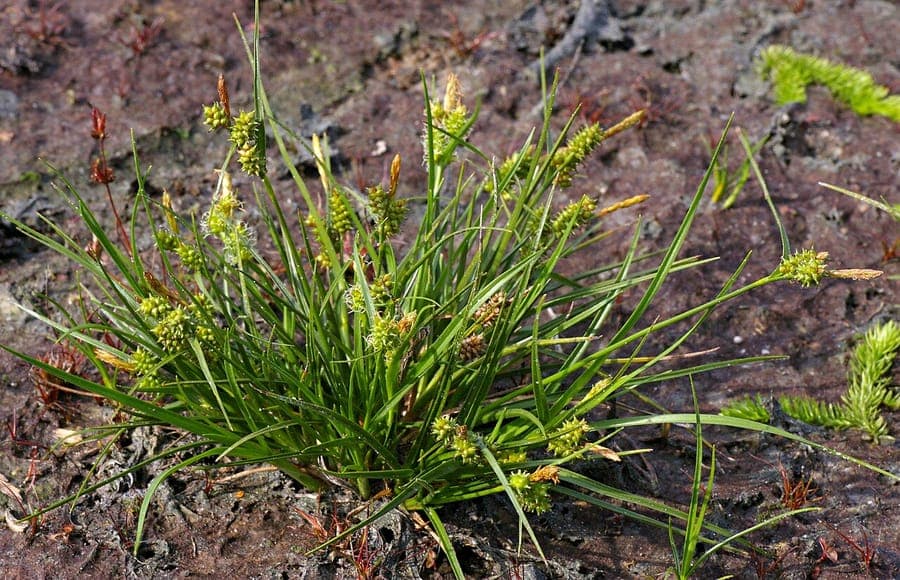
Christian Fischer / CC BY-SA 3.0, via Wikimedia Commons
Carex oederi: complete guide
Carex oederi
¿Quieres ver Carex oederi: complete guide en tu jardín?
1 minuto, sin tarjeta de crédito
Overview
Carex oederi, commonly known as yellow-sedge or dwarf sedge, is an elegant sedge from the Cyperaceae family. This compact grasslike plant grows 20-30 centimeters tall and originates from Arctic and temperate zones in the Northern Hemisphere. With fine, yellow-green structure, it forms soft, graceful tufts.
This plant is ideal for wet, marshy terrain and natural pond edges. With minimal maintenance and attractive texture, it is an excellent choice for ecological and naturalistic gardens.
Appearance and Bloom
Carex oederi grows as a compact, tufted grass with fine, linear leaves in yellow-green to green tones. Characteristic structure emerges from flower spikes (culms) that are yellow-green in May-July. Each spike is small, dense, and quite distinctive.
Foliage remains elegant throughout the growing season and forms compact, attractive tufts. Flowering adds movement and texture to garden compositions.
Ideal Location
Carex oederi thrives in full sun to light shade. Minimum 4-5 hours direct sunlight is preferred. In milder summers, dappled shade works well.
This sedge loves wet, moist places. Ideal along ponds, streams, or marshy portions of the garden. Also suitable for wet ground planes and alongside water features.
Soil
Carex oederi demands wet to very wet soil. Water-retentive ground is essential. This sedge thrives perfectly in heavy, clayey, wet earth or silty substrates.
The plant prefers slightly acidic to neutral pH (5.5-7). Nutrition is not critical; this species grows well in poor soils. Organic matter helps water retention.
Watering
Carex oederi loves abundant moisture. Place it preferably in wet areas where water is nearly always present. A location where water regularly stands or filters is ideal.
Once established, the plant requires minimal intervention. In drier periods, provide extra water. Excessive water causes no harm.
Diseño gratis
¿Quieres ver Carex oederi: complete guide en tu jardín? Crea un diseño gratis ahora.
Pruning
Carex oederi requires minimal pruning. In early spring, dead foliage from previous year can be removed. This is done by hand or carefully with pruning shears.
Minimal cutting is needed. The plant grows slowly and compactly. Damaged portions can be removed, but usually the plant remains neat.
Maintenance Calendar
Spring (March-May): Clean dead foliage. Check drainage and water levels. Beginning of growth period.
Summer (June-September): Flower production and growth. Maintain adequate moisture. Enjoy yellow-green texture.
Autumn (October-November): Growth slows. Continue watering. Prepare for winter dormancy.
Winter (December-February): Plant can be submerged. Minimal maintenance. Prevent ice formation on water surface.
Winter Hardiness
Carex oederi is very cold hardy, growing from Arctic regions to temperate zones. This plant tolerates temperatures to -30 degrees Celsius. In northern European gardens, no winter protection is needed.
The plant is better adapted to wet, cold conditions than warm, dry periods.
Companion Plants
Carex oederi grows beautifully alongside other water and wet-ground plants like Iris versicolor, Mentha aquatica, and Juncus. These groupings create natural, marshy landscapes.
Combine with perennials like Primula japonica and Astilbe for contrast. The fine texture of carex contrasts beautifully with coarser plants.
Closing
Carex oederi is a versatile ornamental grass perfect for wet, marshy terrain. With minimal maintenance and attractive yellow-green texture, it creates elegant water edges and wet borders. Plant along ponds and streams, ensure adequate moisture, and enjoy natural beauty. For inspiration and plant designs, visit gardenworld.app/en. Seek sedge suppliers at garden centers.
¿Quieres ver Carex oederi: complete guide en tu jardín? Crea un diseño gratis ahora.
Sube una foto, elige un estilo y obtén un diseño fotorrealista con lista de plantas en menos de un minuto.
Más de 10.000 jardines diseñados
Sin tarjeta de crédito


Plantas similares
Flat-stemmed club-rush: complete guide
Bolboschoenus planiculmis
Everything about Bolboschoenus planiculmis: growing conditions, watering, care, and use as a pond margin or wetland plant in garden design.
Great Plains flatsedge: complete guide
Cyperus lupulinus
Everything about Great Plains flatsedge (Cyperus lupulinus): growing conditions, care, garden uses, and ecological value. Tips for pond margins and dry sandy soils.
Golden beak sedge: complete guide
Rhynchospora corymbosa
Everything about golden beak sedge (Rhynchospora corymbosa): a dramatic tropical marginal for pond edges, bog gardens, and wet habitats.