
Petr Filippov / Public domain, via Wikimedia Commons
Carex obtusata: complete guide
Carex obtusata
¿Quieres ver Carex obtusata: complete guide en tu jardín?
1 minuto, sin tarjeta de crédito
Carex obtusata, commonly known as obtuse sedge or dryland sedge, is an elegant ornamental grass belonging to the Cyperaceae family. This species is widespread from northeastern Germany through the Russian Far East and also occurs in Canada and western North America. In Europe, it is particularly common along dry slopes, sandy riverbanks, and poor nutrient-deficient soils where many other plants struggle to survive. The plant forms tight tussocks approximately 20-40 centimeters tall with fine, grayish-green foliage that persists year-round, making it exceptionally valuable for winter landscapes.
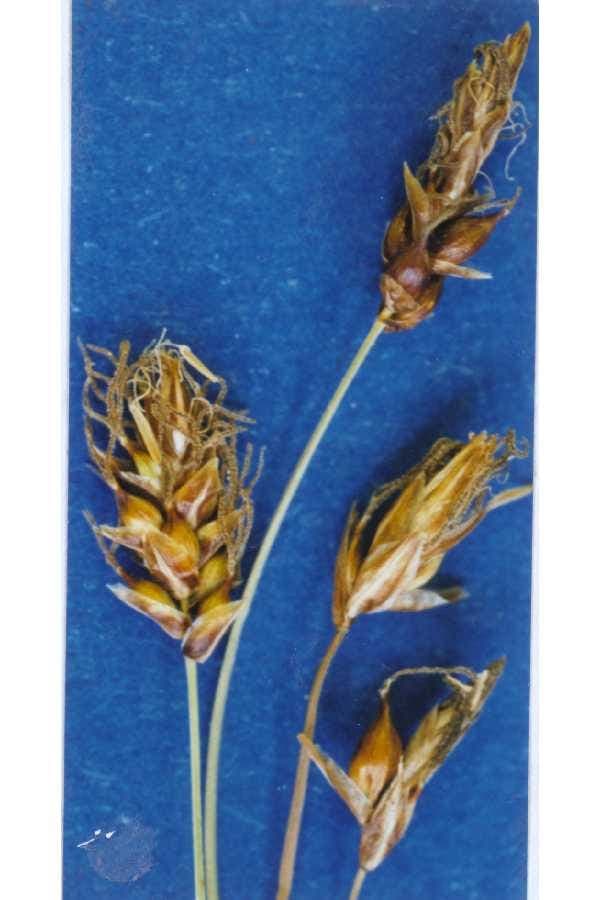
The appearance of Carex obtusata is subtle yet highly attractive to nature-conscious gardeners. The plant develops compact mounds with numerous thin, arching leaves creating a refined texture in garden settings. During late spring and early summer, characteristic spikes emerge as flowering structures that remain relatively small but distinctly visible upon closer inspection. These gray-tinted spikes measure approximately 1-2 centimeters in length. Following pollination, distinctive seed structures develop, specifically utricles, which are remarkably compact and unobtrusive. These fruits are notably blunt at the apex, explaining the botanical epithet 'obtusata'. Throughout the entire growing season, the foliage remains attractive and green, making this species particularly valuable for winter interest in cooler climates.
Successfully cultivating Carex obtusata requires understanding its preference for dry, sandy substrates. This plant achieves optimal growth on sites featuring exceptionally well-draining soil with minimal organic matter. Ideal conditions involve sandy, salt-free soil with pH ranging between 5.5 and 7.0. Ensure the plant never sits in waterlogged soil, particularly during winter when excess moisture promotes root rot. The species is remarkably tough and tolerates impoverished, nutrient-poor soils excellently. In fact, it performs better on poor soils compared to rich loams with excessive nitrogen content, which can promote excessive growth and reduced vigor.
Light requirements are moderate for Carex obtusata. The plant performs optimally in full sun to partial shade, requiring minimum 3-4 hours of direct sunlight daily. In very hot climates, partial shade may actually be preferable as it helps maintain soil moisture. Throughout the Netherlands and Belgium, the plant thrives in full sun exposure and exhibits remarkable hardiness down to minus 20 degrees Celsius. Avoid positioning in deep shade as this causes thinning and loss of the plant's attractive form.
Watering Carex obtusata demands minimal attention once established. This species demonstrates excellent drought tolerance and actually requires minimal supplemental water except during extreme dry periods. Once established in landscape, watering becomes unnecessary except in exceptional drought conditions. For newly planted containerized specimens, maintain regular moisture until roots are firmly established. After the first growing season, plants survive without supplemental irrigation. The species is perfectly suited for dry landscape design and tolerates coastal salt spray without difficulty.
Pruning is practically unnecessary for Carex obtusata. If the plant thins over time or develops damaged foliage, you can gently remove dead leaves during early spring. Simply pull away old, brown foliage gently from the plant base. Avoid aggressive pruning as this damages the plant's refined structure. Recovery following heavy pruning occurs slowly.
The maintenance calendar for Carex obtusata is remarkably simple. During early spring (February-March), remove dead foliage and lightly tidy the plant. This represents the optimal time as new growth initiates. From April through October, the growing season proceeds with characteristic leaf development and reproductive activity. During late autumn, plant moisture reserves move basipetally and foliage becomes increasingly grayish-green. Throughout winter, the plant remains green and attractive, representing one of its primary advantages in temperate climates like the Netherlands.
Carex obtusata exhibits exceptional winter hardiness, tolerating temperatures to minus 20 degrees Celsius without damage. Hard frosts do not injure the plant as it mobilizes energy reserves from below-ground structures. The species can therefore remain permanently outdoors year-round throughout all Dutch and Belgian climate zones. This characteristic makes it ideal for permanent landscape installations and garden design.
Companion plants working well with Carex obtusata include other drought-tolerant species and ornamental grasses. Excellent compatible selections include other Carex species, particularly Carex caryophyllea and Carex arenaria, along with additional ornamental grasses like Stipa capillata and Koeleria macrantha. On richer soils, combine with Potentilla species and Thymus serphyllum. Avoid moisture-loving plants like Hostas and Astilbes whose soil preferences are completely opposite.
Finally, Carex obtusata represents an excellent choice for gardeners seeking low-maintenance, wintergreen accents fitting dry landscape situations perfectly. With its refined texture and exceptional hardiness, this species provides years of beauty with minimal effort. Consult Gardenworld.app for additional information on ornamental grasses and sustainable garden plants.
¿Quieres ver Carex obtusata: complete guide en tu jardín? Crea un diseño gratis ahora.
Sube una foto, elige un estilo y obtén un diseño fotorrealista con lista de plantas en menos de un minuto.
Más de 10.000 jardines diseñados
Sin tarjeta de crédito


Plantas similares
Flat-stemmed club-rush: complete guide
Bolboschoenus planiculmis
Everything about Bolboschoenus planiculmis: growing conditions, watering, care, and use as a pond margin or wetland plant in garden design.
Great Plains flatsedge: complete guide
Cyperus lupulinus
Everything about Great Plains flatsedge (Cyperus lupulinus): growing conditions, care, garden uses, and ecological value. Tips for pond margins and dry sandy soils.
Golden beak sedge: complete guide
Rhynchospora corymbosa
Everything about golden beak sedge (Rhynchospora corymbosa): a dramatic tropical marginal for pond edges, bog gardens, and wet habitats.