
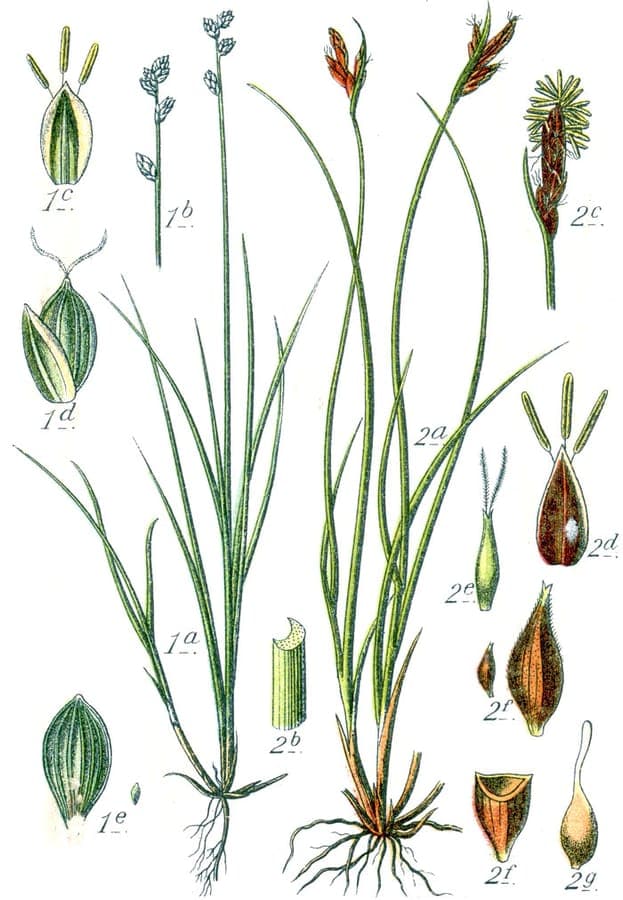
Johann Georg Sturm (Painter: Jacob Sturm) / Public domain, via Wikimedia Commons
Carex mucronata: complete guide
Carex mucronata
¿Quieres ver Carex mucronata: complete guide en tu jardín?
1 minuto, sin tarjeta de crédito
Overview
Carex mucronata, known as Spiny-pointed sedge or Laiche mucronee, is a distinctive sedge species from the Cyperaceae family. Native to alpine regions of central and southern Europe, this plant thrives at elevations between 1500-2500 meters. The species is notable for its unique spiky, brown-red utricles and distinctive flowering appearance. In gardens, it offers botanical interest and exceptional character for those seeking alpine authenticity.
Appearance and bloom
Spiny-pointed sedge is characterized by brown-red, needle-pointed utricles with prominent, sharp-tipped extensions. The plant reaches 20-40 centimeters tall, forming dense tufts with green foliage. Flowering occurs June to August with striking brown to reddish-brown flower spikes arranged in compact, spiny inflorescences. This distinctive botanical character defines the plant's visual appeal and garden presence.
Ideal location
This sedge performs best in full sun to partial shade, though more tolerant than many sedges. Alpine plants require well-drained, rocky growth environments. Position this sedge on slopes, rocky outcrops, or raised beds where water drains quickly. Good air circulation is essential for disease prevention and vigorous growth. Avoid low-lying, permanently moist sites.
Soil requirements
Carex mucronata prefers rocky, well-drained soil with moderate moisture. The plant tolerates poor to moderately fertile soil and thrives in mineral-rich, gritty substrates. Add gravel, sand, or small stones to enhance drainage. A neutral to slightly acidic pH is ideal. Unlike many sedges, this alpine species appreciates drier soils provided stagnation doesn't occur. Mimic mountain scree conditions for best results.
Watering
Once established, Carex mucronata shows remarkable drought tolerance compared to other sedges. Water regularly during the first growing season to establish roots. Thereafter, mature plants require only moderate watering, with supplemental water only during extreme drought. Prevent water accumulation around roots. In temperate climates, established plants typically need no supplemental water except during severe summer dry spells.
Diseño gratis
¿Quieres ver Carex mucronata: complete guide en tu jardín? Crea un diseño gratis ahora.
Pruning
Pruning demands are minimal. In March, gently remove last year's dead foliage, stimulating neat growth and spring emergence. Leave old flowering spikes through winter for architectural interest and protection. Hand-pruning works better than mechanical cutting for this delicate alpine species. Careful removal of damaged or diseased material maintains plant health.
Maintenance calendar
March: Remove dead foliage, light fertilizer application. April-May: Monitor drainage during rainy periods, weed control. June-August: Monitor flowering progress and bloom development. September-October: Gradually reduce fertilizer applications. November-February: Minimal intervention, avoid waterlogging.
Winter hardiness
Carex mucronata is hardy to approximately -10 to -15 degrees Celsius in temperate zones, though its alpine origin suggests preference for cooler winters with excellent drainage. In gardens, this species benefits from elevated planting where cold air drains freely. Wet, heavy clay soils combined with poor drainage during winter pose greater risk than cold temperatures. Generally overwinters successfully in well-drained sites.
Companion plants
Pair Carex mucronata with other alpines and sedges: Silene species for color contrast, Sempervivum for succulent texture, and other alpine sedges. Rock-dwelling plants like Echinacea, Verbascum, and Lavender make excellent companions. Plant among stone elements where the brown-red spikes display dramatically against grey stone. Strong architectural forms create appealing contrasts.
Closing remarks
Carex mucronata offers unique botanical character with distinctive brown-red flowers and spiky utricles. This alpine sedge adds special interest to raised beds, alpine gardens, and well-drained perennial arrangements. Available from specialized alpine plant nurseries and mountain gardening specialists. Explore more alpine plant combinations on gardenworld.app for your next garden project. This rare sedge brings authentic alpine character to temperate gardens.
¿Quieres ver Carex mucronata: complete guide en tu jardín? Crea un diseño gratis ahora.
Sube una foto, elige un estilo y obtén un diseño fotorrealista con lista de plantas en menos de un minuto.
Más de 10.000 jardines diseñados
Sin tarjeta de crédito


Plantas similares
Flat-stemmed club-rush: complete guide
Bolboschoenus planiculmis
Everything about Bolboschoenus planiculmis: growing conditions, watering, care, and use as a pond margin or wetland plant in garden design.
Great Plains flatsedge: complete guide
Cyperus lupulinus
Everything about Great Plains flatsedge (Cyperus lupulinus): growing conditions, care, garden uses, and ecological value. Tips for pond margins and dry sandy soils.
Golden beak sedge: complete guide
Rhynchospora corymbosa
Everything about golden beak sedge (Rhynchospora corymbosa): a dramatic tropical marginal for pond edges, bog gardens, and wet habitats.