
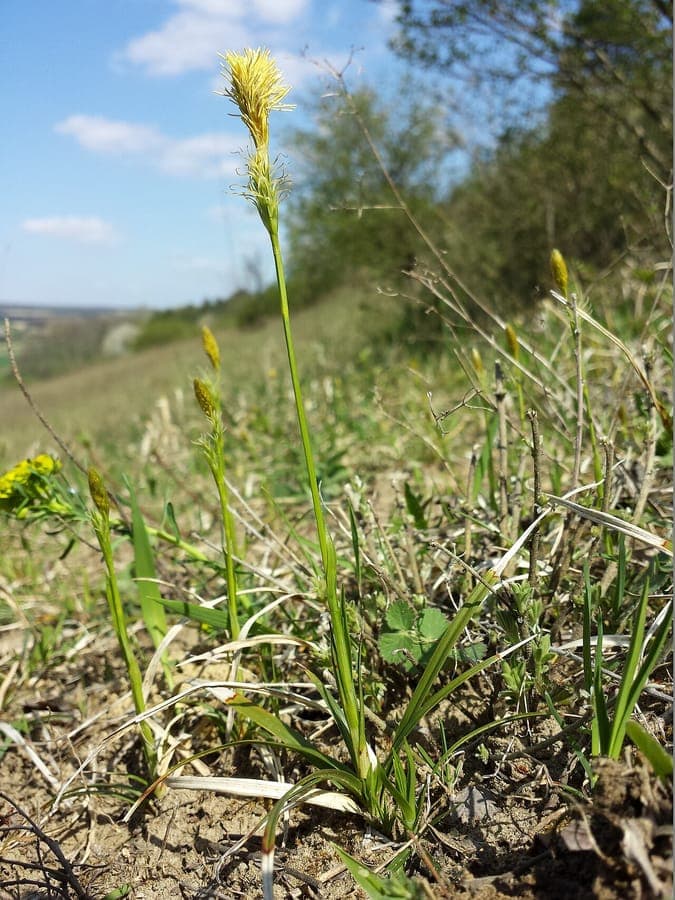
Stefan.lefnaer / CC BY-SA 4.0, via Wikimedia Commons
Carex michelii: complete guide
Carex michelii
¿Quieres ver Carex michelii: complete guide en tu jardín?
1 minuto, sin tarjeta de crédito
Overview
Carex michelii, commonly called Micheli's sedge or Michelis sedge, is an elegant grass species from the sedge family (Cyperaceae). This plant originates from Europe and extends to northwestern Iran, thriving in moist woodland environments. It has become increasingly popular in contemporary garden design for its refined texture and compact growth habit. In temperate gardens, this sedge offers a sophisticated solution for shaded areas and moisture-retentive soils.
Appearance and bloom
Micheli's sedge displays slender, fine-textured foliage arranged in dense tufts. The plant typically reaches heights of 30-40 centimeters, forming attractive mounds with a feathery, delicate appearance. Summer flowers are small and inconspicuous, typical of sedge species, appearing as subtle brown or reddish spikes. The plant's primary visual appeal comes from its graceful leaf arrangement and structured, fountain-like habit rather than showy flowers.
Ideal location
This sedge performs best in partial to full shade conditions. Direct sun exposure, particularly afternoon rays, can stress the plant and fade foliage color. Ideal placement is beneath deciduous trees, along north-facing walls, or in dappled shade environments. Protection from strong winds helps preserve the delicate foliage structure. The plant appreciates humid, sheltered microclimates where air circulation is gentle.
Soil requirements
Carex michelii thrives in moisture-retentive yet well-draining soil. It cannot tolerate waterlogged conditions but requires consistent moisture. Enriching soil with compost or well-rotted organic matter improves water-holding capacity while maintaining drainage. A slightly acidic to neutral pH is ideal. The sedge adapts well to loamy soils rich in organic content, mimicking its natural woodland habitat.
Watering
Consistent moisture is essential throughout the growing season (April to October). Water regularly during dry spells, ensuring soil remains moist but not waterlogged. Established plants require less frequent watering, though mulching helps retain soil moisture. Winter watering should be minimal; the plant needs only enough water to prevent complete desiccation. In temperate climates, natural rainfall often suffices, requiring supplemental watering only during extended dry periods.
Diseño gratis
¿Quieres ver Carex michelii: complete guide en tu jardín? Crea un diseño gratis ahora.
Pruning
Pruning requirements are minimal. In early spring (March), remove all dead or winter-damaged foliage using sharp, clean tools. This encourages fresh growth and maintains neat appearance. Avoid cutting back healthy green growth excessively. A light deadheading of old flowering stems after summer maintains plant vigor and appearance. This maintenance approach preserves the plant's natural, refined silhouette.
Maintenance calendar
March: Spring cleanup and application of balanced fertilizer. April-May: Monitor soil moisture, regular watering during dry periods. June-August: Peak growth phase requiring consistent watering and disease monitoring. September-October: Reduce fertilizer application, prepare for dormancy. November-February: Minimal intervention, occasional watering as needed.
Winter hardiness
Micheli's sedge is fully hardy in temperate zones, withstanding temperatures well below -15 degrees Celsius. This makes it an excellent choice for gardens in northern Europe and similar climates. The evergreen foliage provides valuable winter structure and interest. In severe winters, leaf tips may show some burn, but plants recover completely once temperatures warm.
Companion plants
Pair this sedge with shade-loving perennials including astilbe for delicate flower accents, rodgersia for bold foliage contrast, and helleborus for winter color. Ferns complement the fine texture beautifully. In moist areas, combine with ligularia, other Carex species, or Japanese anemones. Use hostas as backdrops to showcase the sedge's refined architecture and leaf detail.
Closing remarks
Carex michelii deserves a place in every shade garden. Its elegant presence, minimal maintenance requirements, and excellent hardiness make it invaluable for challenging woodland or moist sites. Available from quality garden centers and nurseries, this European treasure brings quiet sophistication to temperate gardens. Explore more plant combinations on gardenworld.app for your next garden project.
¿Quieres ver Carex michelii: complete guide en tu jardín? Crea un diseño gratis ahora.
Sube una foto, elige un estilo y obtén un diseño fotorrealista con lista de plantas en menos de un minuto.
Más de 10.000 jardines diseñados
Sin tarjeta de crédito


Plantas similares
Flat-stemmed club-rush: complete guide
Bolboschoenus planiculmis
Everything about Bolboschoenus planiculmis: growing conditions, watering, care, and use as a pond margin or wetland plant in garden design.
Great Plains flatsedge: complete guide
Cyperus lupulinus
Everything about Great Plains flatsedge (Cyperus lupulinus): growing conditions, care, garden uses, and ecological value. Tips for pond margins and dry sandy soils.
Golden beak sedge: complete guide
Rhynchospora corymbosa
Everything about golden beak sedge (Rhynchospora corymbosa): a dramatic tropical marginal for pond edges, bog gardens, and wet habitats.