
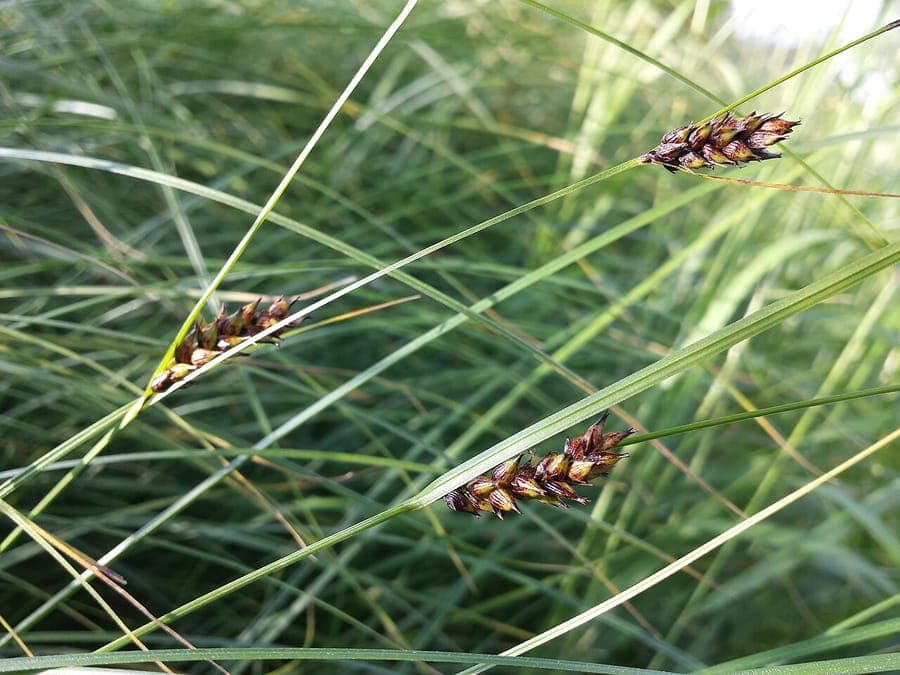
Stefan.lefnaer / CC BY-SA 4.0, via Wikimedia Commons
Great plains sedge: complete guide
Carex melanostachya
¿Quieres ver Great plains sedge: complete guide en tu jardín?
1 minuto, sin tarjeta de crédito
Overview
Great plains sedge (Carex melanostachya) is an elegant ornamental grass from the sedge family, originating from temperate zones of Europe and Asia. This grass is valued for its stiff, upright growth habit and striking dark flower spikes.
Once planted, this sedge grows readily and forms dense tufts. It is a valuable element for landscape design and offers versatile uses in gardens.
Appearance and Bloom
Great plains sedge reaches 40 to 60 centimeters tall with thin, upright leaves. The characteristic dark, nearly black spikes appear in May and June.
The plant forms thick tufts that provide structure year-round. In fall, the leaves turn reddish-brown tones.
Ideal Location
This grass grows best in locations with plenty of light. Provide at least six to eight hours of sunlight daily. The plant tolerates light shade but grows denser and fuller in full sun.
Open, wind-resistant locations are ideal. The grass is not sensitive to intense light.
Soil
Great plains sedge grows on well-draining, not overly fertile soil. A pH of 6.5 to 7.0 is ideal. The plant tolerates poor soils and chalky soils well.
Heavy clay and wet soils should be avoided. The plant prefers moderately dry conditions.
Watering
Once planted, great plains sedge is quite drought tolerant. Water regularly until the plant is well-established, then only during extremely dry periods.
Excessive water can cause damage. Ensure good drainage.
Diseño gratis
¿Quieres ver Great plains sedge: complete guide en tu jardín? Crea un diseño gratis ahora.
Pruning
Pruning is not essential. Remove dead leaves from the previous year in early spring. This promotes healthy new growth.
Aged spikes can be removed in fall, but many gardeners leave them for winter interest.
Maintenance Calendar
Spring: Remove dead leaves, add mulch around the plant. Summer: Minimal maintenance needed. Fall: Appreciate the reddish-brown colors; leave structure for winter. Winter: Plant provides interesting structure under snow.
Winter Hardiness
Great plains sedge is hardy in temperate climates. The plant can overwinter outdoors in many European regions.
In very cold areas, some protection may be helpful. The plant is generally robust.
Companion Plants
Great plains sedge combines well with other grasses and perennials. Try combinations with sage species, lavender, or other hardy perennials.
The dark spikes contrast beautifully with light flowers. Plant in groups of 3-5 for maximum effect.
Closing
Great plains sedge is a valuable addition to modern gardens with presence for structure and interest. The plant brings movement and texture to landscape elements.
Purchase plant material from garden centers and plant today. Find more plant guides on gardenworld.app/en.
¿Quieres ver Great plains sedge: complete guide en tu jardín? Crea un diseño gratis ahora.
Sube una foto, elige un estilo y obtén un diseño fotorrealista con lista de plantas en menos de un minuto.
Más de 10.000 jardines diseñados
Sin tarjeta de crédito


Plantas similares
Flat-stemmed club-rush: complete guide
Bolboschoenus planiculmis
Everything about Bolboschoenus planiculmis: growing conditions, watering, care, and use as a pond margin or wetland plant in garden design.
Great Plains flatsedge: complete guide
Cyperus lupulinus
Everything about Great Plains flatsedge (Cyperus lupulinus): growing conditions, care, garden uses, and ecological value. Tips for pond margins and dry sandy soils.
Golden beak sedge: complete guide
Rhynchospora corymbosa
Everything about golden beak sedge (Rhynchospora corymbosa): a dramatic tropical marginal for pond edges, bog gardens, and wet habitats.