
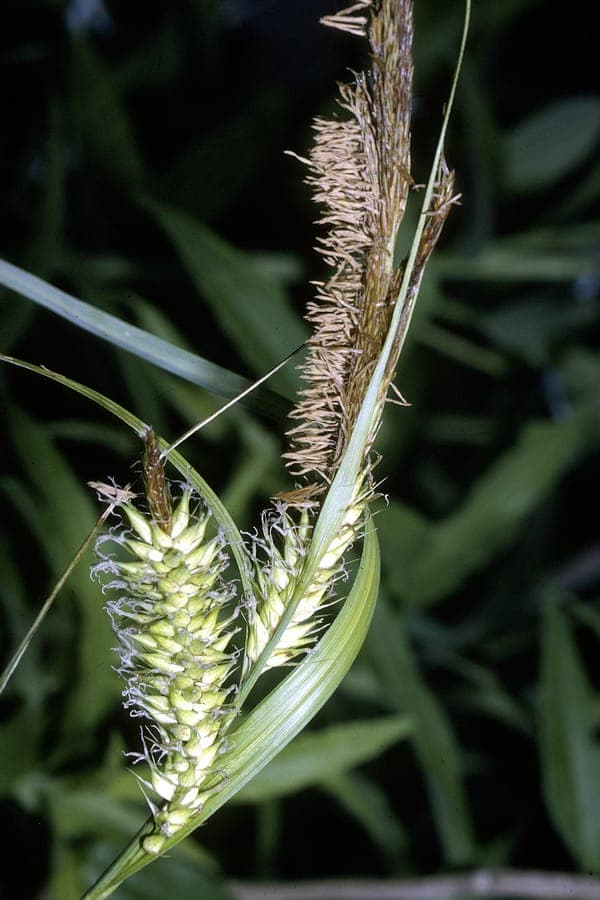
Robert H. Mohlenbrock. USDA NRCS. 1995. Northeast wetland flora: Field office guide to plant species. Northeast National Technical Center, Chester. Courtesy of USDA NRCS Wetland Science Institute. / Public domain, via Wikimedia Commons
Carex lacustris: complete guide
Carex lacustris
¿Quieres ver Carex lacustris: complete guide en tu jardín?
1 minuto, sin tarjeta de crédito
Overview
Carex lacustris, commonly known as hairy sedge or common lake sedge, is a robust and vigorous sedge that specializes in wet and water-rich environments. This North American gem grows from Canada to the central and eastern United States and is ideal for landscape designs featuring ponds, marshes, and other hydrological features.
With its strong rhizomatous root system and rapid growth, it is excellent for erosion control along waterways and for purifying contaminated waters. The plant is fully hardy and very low-maintenance.
Appearance and Bloom
Carex lacustris grows to approximately 60-90 centimeters in height and forms dense, waving mats. The foliage is coarse and thick, with a characteristic green color that can shift toward brown seasonally. The plant has an almost grass-like appearance and creates a natural impression in water-rich zones.
The flowers consist of subtle inflorescences with male spikes above and female spikes below (dioecious system). Seeds ripen in June-July and fall into the water, where they disperse. After flowering, brown seed capsules form that persist long and add texture.
Ideal Location
Carex lacustris is made for waterfronts, marshes, and seasonally wet terrains. It grows best along lake and pond edges where feet stand in water or in waterlogged sand. Avoid completely dry locations - this sedge loves being wet.
The plant tolerates full sun and part shade. Aim for at least 4-6 hours of direct sunlight for optimal growth.
Soil
Carex lacustris thrives in silty, organic soils typical of water margins. Acidic soils are acceptable to slightly alkaline soils. pH can range from 5.6 to 6.8 without issue.
Add plenty of organic matter when planting in heavy clay. The plant tolerates virtually all soil types as long as they remain sufficiently moist.
Diseño gratis
¿Quieres ver Carex lacustris: complete guide en tu jardín? Crea un diseño gratis ahora.
Watering
Watering is not needed for Carex lacustris - it grows in permanently wet conditions. Plant it directly along water or in zones that flood regularly. If growing it in gardens, provide very regular watering or drip irrigation.
The plant tolerates even brief inundation periods and is therefore ideal for low-lying areas.
Pruning
Pruning is actually unnecessary for Carex lacustris. The plant can be cut back in April/May to stimulate new, finer foliage. This is purely aesthetic.
Always clear old foliage in early spring before growth begins.
Maintenance Calendar
March-April: Remove old foliage, add organic material. Begin preparation for growing season.
May-June: Flowering period; ensure sufficient water supply.
July-August: Seeds ripen; maintain stable water levels.
September-October: Plant becomes quieter. Continue watering. Check for erosion.
November-February: Winter dormancy; plant retains complete foliage. Minimal care needed.
Winter Hardiness
Carex lacustris is extremely hardy to zone 3 (minimum temperatures -37 to -29 degrees). In northern climates it is hardy without any protection. It retains its foliage and remains decorative during winter months.
Companion Plants
Carex lacustris forms lovely combinations with other water and marsh-loving plants:
- Iris pseudacorus (Yellow flag iris)
- Phragmites australis (Common reed)
- Typha latifolia (Broadleaf cattail)
- Sagittaria latifolia (Arrowhead)
- Acorus calamus (Sweet flag)
Closing Thoughts
Carex lacustris is the ideal plant for gardens with hydrological challenges. With its rapid growth, erosion-controlling roots, and excellent hardiness, it is both a practical and beautiful solution. Use it for pond zones and low-lying garden areas.
Available through specialized plant nurseries. Gardenworld.app helps integrate this marsh grass perfectly into your water garden design. Gardenworld.app incorporates water-loving plants into your yard.
¿Quieres ver Carex lacustris: complete guide en tu jardín? Crea un diseño gratis ahora.
Sube una foto, elige un estilo y obtén un diseño fotorrealista con lista de plantas en menos de un minuto.
Más de 10.000 jardines diseñados
Sin tarjeta de crédito


Plantas similares
Flat-stemmed club-rush: complete guide
Bolboschoenus planiculmis
Everything about Bolboschoenus planiculmis: growing conditions, watering, care, and use as a pond margin or wetland plant in garden design.
Great Plains flatsedge: complete guide
Cyperus lupulinus
Everything about Great Plains flatsedge (Cyperus lupulinus): growing conditions, care, garden uses, and ecological value. Tips for pond margins and dry sandy soils.
Golden beak sedge: complete guide
Rhynchospora corymbosa
Everything about golden beak sedge (Rhynchospora corymbosa): a dramatic tropical marginal for pond edges, bog gardens, and wet habitats.