
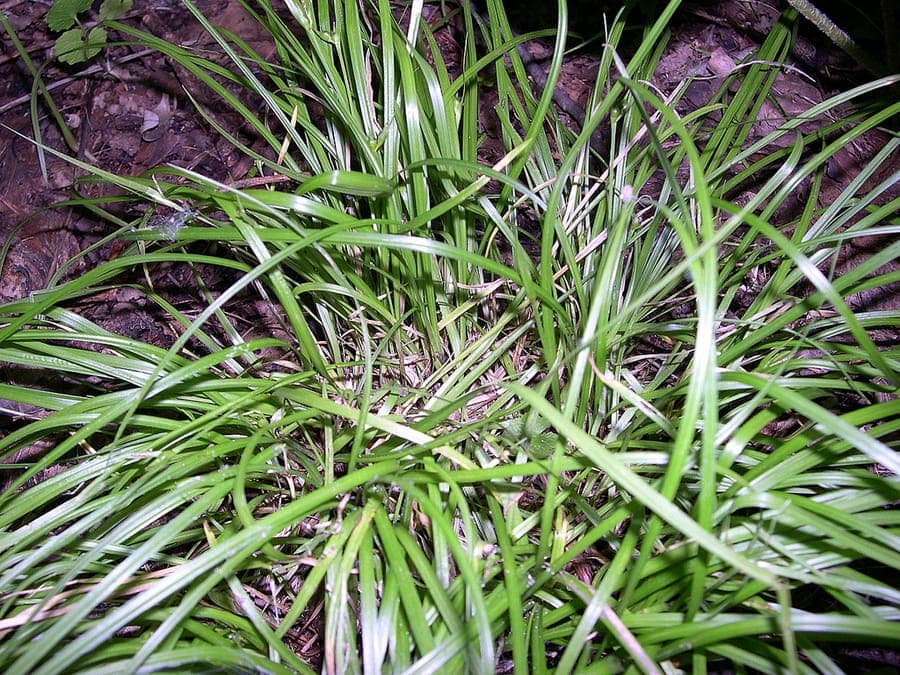
Jason Sturner from Knoxville, Tennessee, USA / CC BY 2.0, via Wikimedia Commons
Carex jamesii: complete guide
Carex jamesii
¿Quieres ver Carex jamesii: complete guide en tu jardín?
1 minuto, sin tarjeta de crédito
Overview
Carex jamesii, also known as grass sedge or James' sedge, is a North American groundcover naturally occurring from Ontario in Canada through to Texas, with concentrations in the Midwestern USA. The plant grows in moist woodland habitats, along forest edges, and in grasslands. This is a very maintenance-free sedge species well adapted to moist to normal temperate soils and partial shade.
Carex jamesii distinguishes itself through its elegant, slender foliage and ability to thrive under challenging growing conditions. For Dutch gardeners seeking maintenance-free groundcovers for partially shaded locations, this North American sedge is a good choice. The plant reaches only 10 to 25 centimeters in height and slowly forms expanding mats.
Appearance and bloom
Carex jamesii produces very fine, slender, light greenish foliage growing in dense, low mats. The leaves are approximately 2 to 3 millimeters wide, giving the plant a very elegant, grass-like texture. The plant reaches approximately 10 to 25 centimeters in height and can slowly spread to 20 to 40 centimeters in diameter.
Blooming consists of inconspicuous, brown spikelets appearing from May through June. This bloom is less interesting for bird enthusiasts than for gardeners valuing structural form. After blooming, small seed-bearing capsules form. The main attraction of this plant is its elegant, slender leaf form and its woodland-friendly appearance.
Ideal location
Carex jamesii grows best in partial shade to full shade. In its natural habitat, the plant grows along forest paths and in grasslands where moderate shade is normal. In Dutch gardens, the plant can grow under trees with 30 to 70 percent shade. The plant can also grow in full sun provided soil remains sufficiently moist.
The plant is fairly wind-resistant. Avoid extremely dry locations. A moist, partially shaded microhabitat promotes optimal growth. Under native Dutch trees, the plant forms a naturally appearing groundcover.
Soil type
A moist, well-draining, nutrient-rich soil is ideal. The plant grows naturally in woodland habitats with organic matter-rich, moderately moist soils. Dutch garden soils require minimal adjustment. Add peat if desired for better moisture retention.
A mixture of peat and sand in a 60/40 ratio is ideal for container cultivation. The plant even grows in normal garden soil provided it does not dry out. Organic matter significantly improves growth.
Diseño gratis
¿Quieres ver Carex jamesii: complete guide en tu jardín? Crea un diseño gratis ahora.
Watering
The plant prefers moist soil without waterlogging. During the growing season (April through October), water regularly. Check the soil and ensure it does not dry out. During rainy periods, supplemental water is not needed. This is one of the more moisture-loving sedges.
In container cultivation, water from below by placing the pot in a saucer of water. During dry summers, carefully water. The plant tolerates drought poorly and grows better with consistent moisture.
Pruning
Pruning is practically unnecessary. Remove only dead leaves and small dead material. This can be done carefully by hand. At season's end (February, March), all dead foliage can be carefully removed.
Damaged foliage can be removed year-round. Avoid heavy pruning that would disturb the form. The plant grows slowly and naturally forms an attractive shape.
Maintenance calendar
Spring (March-May): Remove dead foliage. Begin regular watering if drier period arrives. Summer (June-August): Water regularly, especially during dry periods. Monitor growth. Autumn (September-October): Continue watering. Check for insects. Winter (November-February): Minimize watering. No protection needed. No special attention required.
Winter hardiness
Carex jamesii is winter hardy, although not the hardiest species. The plant tolerates temperatures down to approximately minus 15 to minus 20 degrees Celsius. In the Netherlands, it overwinters outdoors without protection in most areas. In very cold regions, additional protective measures may be useful.
Moisture excess is more dangerous than frost. Ensure good drainage, especially in wet winters. In very wet climates, drainage can be improved with sand or small gravel.
Companions
Carex jamesii pairs well with other woodland and partial shade-loving plants. The slender foliage contrasts beautifully with coarse-leaved shade plants. In natural garden designs, this sedge forms an authentic woodland groundcover element.
Plant five to ten specimens approximately 30 centimeters apart for quick groundcover. Under Dutch trees (oaks, beech, alder), this plant creates a naturally appearing carpet. Combined with native woodland butterflies and fungi, this forms the basis for a dynamic forest ecosystem.
Closing
Carex jamesii is a maintenance-free, North American sedge well adapted to Dutch partial shade and moist soils. With regular water and partial shade, the plant thrives. The elegant leaf texture makes it valuable for natural garden designs. Available from various garden centers and seed dealers.
Once established, the plant requires minimal attention and provides years of maintenance-free groundcover. A good choice for gardeners wanting to create more woodland-like gardens.
¿Quieres ver Carex jamesii: complete guide en tu jardín? Crea un diseño gratis ahora.
Sube una foto, elige un estilo y obtén un diseño fotorrealista con lista de plantas en menos de un minuto.
Más de 10.000 jardines diseñados
Sin tarjeta de crédito


Plantas similares
Flat-stemmed club-rush: complete guide
Bolboschoenus planiculmis
Everything about Bolboschoenus planiculmis: growing conditions, watering, care, and use as a pond margin or wetland plant in garden design.
Great Plains flatsedge: complete guide
Cyperus lupulinus
Everything about Great Plains flatsedge (Cyperus lupulinus): growing conditions, care, garden uses, and ecological value. Tips for pond margins and dry sandy soils.
Golden beak sedge: complete guide
Rhynchospora corymbosa
Everything about golden beak sedge (Rhynchospora corymbosa): a dramatic tropical marginal for pond edges, bog gardens, and wet habitats.