
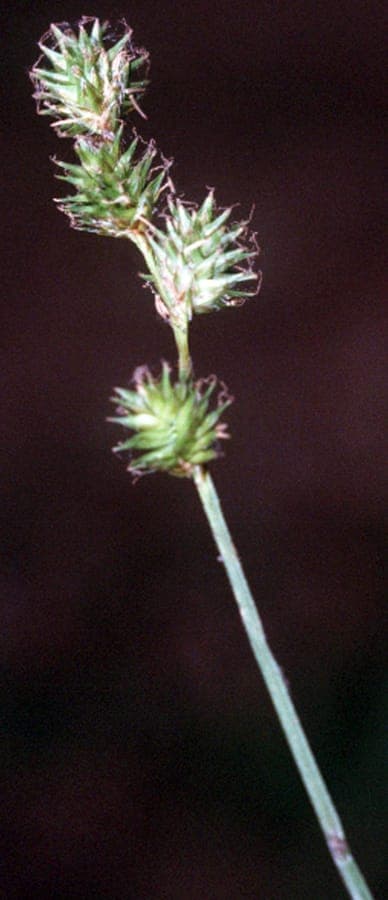
Robert H. Mohlenbrock. USDA SCS. 1989. Midwest wetland flora: Field office illustrated guide to plant species. Midwest National Technical Center, Lincoln. Courtesy of USDA NRCS Wetland Science Institute. / Public domain, via Wikimedia Commons
Fescue sedge: complete guide
Carex festucacea
¿Quieres ver Fescue sedge: complete guide en tu jardín?
1 minuto, sin tarjeta de crédito
Overview
Fescue sedge (Carex festucacea) is a grass-like plant from the sedge family (Cyperaceae), native to southeastern Canada and the central to eastern United States. This elegant plant is especially valued in ecological gardens and moist meadows where native species are desired.
Appearance and Bloom
Fescue sedge grows as a compact, grass-like plant with fine, narrow leaves that are green in color. The plant reaches moderate heights and forms dense tufts that provide good ground coverage. The inflorescence consists of characteristic sedge-type spikelets with brownish coloring. The plant is distinctive for its elegant, graceful growth habit.
Ideal Location
Fescue sedge thrives best in moist meadow and wetland environments. The plant adapts to partial shade and full sun, though partial shade is typically preferred. Place this sedge in gardens where water retention is important, especially in natural bioswales or marshes where it can grow in groups with other native wetland plants.
Soil
This sedge is known for growing on moist to wet soils. Ensure the soil remains consistently moist but not waterlogged. The plant thrives on clay and loamy soils that provide moisture buffering. Well-draining soils may result in reduced vigor, so ensure adequate water retention in the growing medium.
Watering
Watering is essential for Fescue sedge. Keep the soil consistently moist throughout the growing season. This plant is perfect for wetland areas and locations with natural water retention. During dry periods, supplemental watering supports continued growth. Once established, the plant can tolerate brief dry spells, but flowering and vigor are supported by consistently moist conditions.
Diseño gratis
¿Quieres ver Fescue sedge: complete guide en tu jardín? Crea un diseño gratis ahora.
Pruning
Fescue sedge requires minimal pruning. Remove dead or damaged leaves in spring. In cases of very dense growth, you can gently remove old foliage in early spring to encourage new shoots. Light housekeeping pruning helps keep the plant neat and healthy.
Maintenance Calendar
Spring: Remove dead leaves as new growth emerges. Check moisture levels and water as needed. Summer: Maintain consistent soil moisture. Fall: Plants may enter their natural dormant phase. Winter: In cold climates, aboveground growth may die back; protect against excess moisture accumulation from snowmelt.
Winter Hardiness
Carex festucacea is hardy in the regions where it is native (zones 3-8). The plant survives mixed winters and may remain green during milder seasons. In very cold areas, aboveground growth dies back but roots will regrow in spring.
Companion Plants
Fescue sedge combines well with other moisture-lovers such as various Iris species, Lobelia cardinalis, and other native herbaceous plants. Plant it together with water-loving ferns and other Carex species to create natural wetland groupings. These plant combinations look best in moist meadows and along water edges.
Closing
Fescue sedge is a valuable addition to ecological and moist gardens. With its fine foliage and ability to thrive in wet environments, it offers both aesthetic charm and ecological benefits. Discover more plant species on gardenworld.app and find your perfect garden design with this beautiful sedge. Create stunning landscapes that support native biodiversity.
¿Quieres ver Fescue sedge: complete guide en tu jardín? Crea un diseño gratis ahora.
Sube una foto, elige un estilo y obtén un diseño fotorrealista con lista de plantas en menos de un minuto.
Más de 10.000 jardines diseñados
Sin tarjeta de crédito


Plantas similares
Flat-stemmed club-rush: complete guide
Bolboschoenus planiculmis
Everything about Bolboschoenus planiculmis: growing conditions, watering, care, and use as a pond margin or wetland plant in garden design.
Great Plains flatsedge: complete guide
Cyperus lupulinus
Everything about Great Plains flatsedge (Cyperus lupulinus): growing conditions, care, garden uses, and ecological value. Tips for pond margins and dry sandy soils.
Golden beak sedge: complete guide
Rhynchospora corymbosa
Everything about golden beak sedge (Rhynchospora corymbosa): a dramatic tropical marginal for pond edges, bog gardens, and wet habitats.