
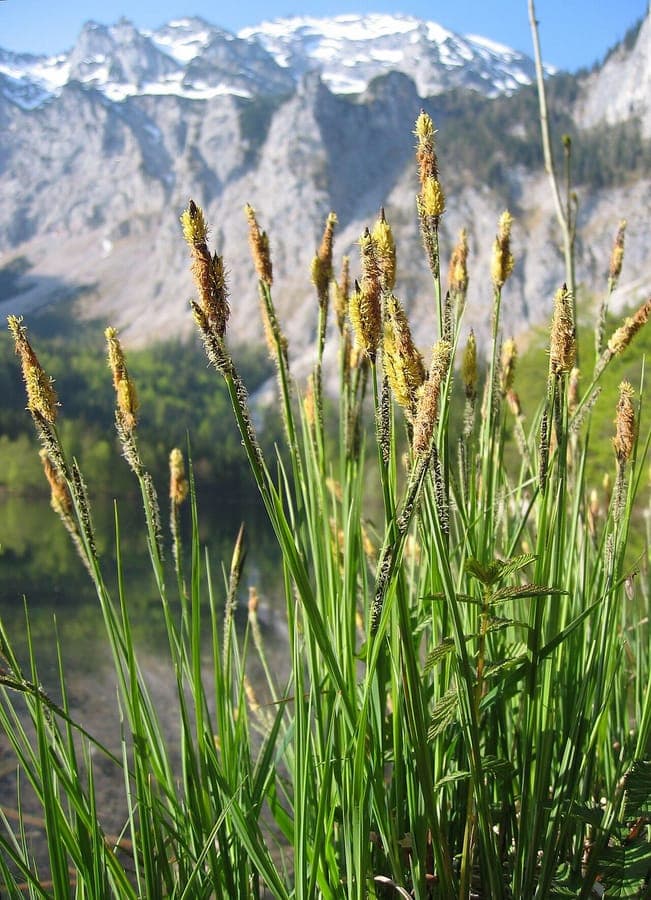
User:Tigerente / CC BY 2.5, via Wikimedia Commons
Tufted sedge: complete guide
Carex elata
¿Quieres ver Tufted sedge: complete guide en tu jardín?
1 minuto, sin tarjeta de crédito
Overview
Tufted sedge (Carex elata) is a striking water-loving sedge prized for its distinctive vertical, densely tufted growth habit. This elegant plant occurs naturally from Europe to central Asia and creates a graphically strong focal point in water gardens.
In ponds and water features, tufted sedge is a classic choice. The vertical tufts grow upright and maintain compact form, making it architecturally compelling. It works in both formal and naturalistic water gardens.
Appearance & bloom cycle
Tufted sedge grows in dense clumps 60-100 cm tall, often shorter in marginal conditions. Leaves are long, linear, and distinctly stiff - explaining the common name. Foliage remains green through winter.
Flowers are inconspicuous spikes appearing May-June. Male spikes are yellowish-brown above; female spikes below are greenish. Seed heads are architecturally interesting.
The plant forms stable clumps without spreading, distinguishing it from sedges that ramble.
Ideal location
Tufted sedge is a water-lover thriving in:
- Deep water: Submerged to 40 cm in ponds (deeper than most sedges)
- Water margins: To 15 cm water depth
- Wet soil: Permanently waterlogged areas
- Marshes: Naturalistic water edges
Full sun to half shade. 4-6 hours direct sun is ideal but tolerates light shade.
Note: This is a true water plant. It tolerates regularly wet soils but fails in dry ground.
Soil requirements
Tufted sedge demands permanently wet soil. Silt or mud rich in organic matter is ideal.
- Moisture: Permanently wet; tolerates deep water
- Texture: Silty, muddy, heavy clay with organic matter
- pH: Neutral to slightly alkaline
- Fertility: Moderately fertile (excess nutrients encourage algae)
In ponds, plant in aquatic baskets on pond floors. In gardens, position in low areas with water collection.
Diseño gratis
¿Quieres ver Tufted sedge: complete guide en tu jardín? Crea un diseño gratis ahora.
Watering
Traditional watering doesn't apply - permanent water is mandatory.
- Pond: Position at 30-40 cm depth (deeper than most sedges)
- Wet soil: Plant in low-lying areas where water collects
- Container: Place pots in water-filled saucers with constant water level
Water is non-negotiable. Drought is lethal.
Pruning
Minimal pruning needed - the plant maintains its clump form naturally.
- March: Remove last year's dead leaves from base
- June-July: Remove dead leaves from heart if desired
- October-November: Leave seed heads for winter interest
The plant is semi-evergreen; the heart may look untidy in winter.
Maintenance calendar
March: Remove dead leaves. Check water levels.
April-May: Flowering. Maintain constant water levels.
June-August: Active growth. Refill water in dry periods.
September-October: Growth slows. Maintain water levels.
November-February: Winter dormancy. Water level may lower slightly in very wet winters.
Winter hardiness
Tufted sedge is hardy to -25°C (USDA zone 4). No frost damage in most regions. In very wet winters, possible heart rot; ensure some water circulation.
Companion plants
Tufted sedge pairs well with:
- Carex acutiformis: Complementary sedges in same habitat
- Iris pseudacorus: Classic water garden combo
- Pontederia cordata (Pickerel rush): Blue flowers, same water preferences
- Nuphar lutea (Spatterdock): For deeper water zones
- Acorus gramineus: Smaller, finer texture
- Houttuynia cordata: For lower banks
Closing
Tufted sedge is a graphically strong plant enriching any water garden. The vertical clump form is distinctive and elegant. Find it at most aquatic plant nurseries.
On gardenworld.app, design a water garden with tufted sedge as a focal point. Visualize how its tufted structure anchors your pond or water feature. See how other aquatic plants integrate beautifully with this elegant sedge.
On gardenworld.app, explore complete water garden compositions built around tufted sedge as an anchor plant, discovering the perfect water garden design for your space.
¿Quieres ver Tufted sedge: complete guide en tu jardín? Crea un diseño gratis ahora.
Sube una foto, elige un estilo y obtén un diseño fotorrealista con lista de plantas en menos de un minuto.
Más de 10.000 jardines diseñados
Sin tarjeta de crédito


Plantas similares
Flat-stemmed club-rush: complete guide
Bolboschoenus planiculmis
Everything about Bolboschoenus planiculmis: growing conditions, watering, care, and use as a pond margin or wetland plant in garden design.
Great Plains flatsedge: complete guide
Cyperus lupulinus
Everything about Great Plains flatsedge (Cyperus lupulinus): growing conditions, care, garden uses, and ecological value. Tips for pond margins and dry sandy soils.
Golden beak sedge: complete guide
Rhynchospora corymbosa
Everything about golden beak sedge (Rhynchospora corymbosa): a dramatic tropical marginal for pond edges, bog gardens, and wet habitats.