
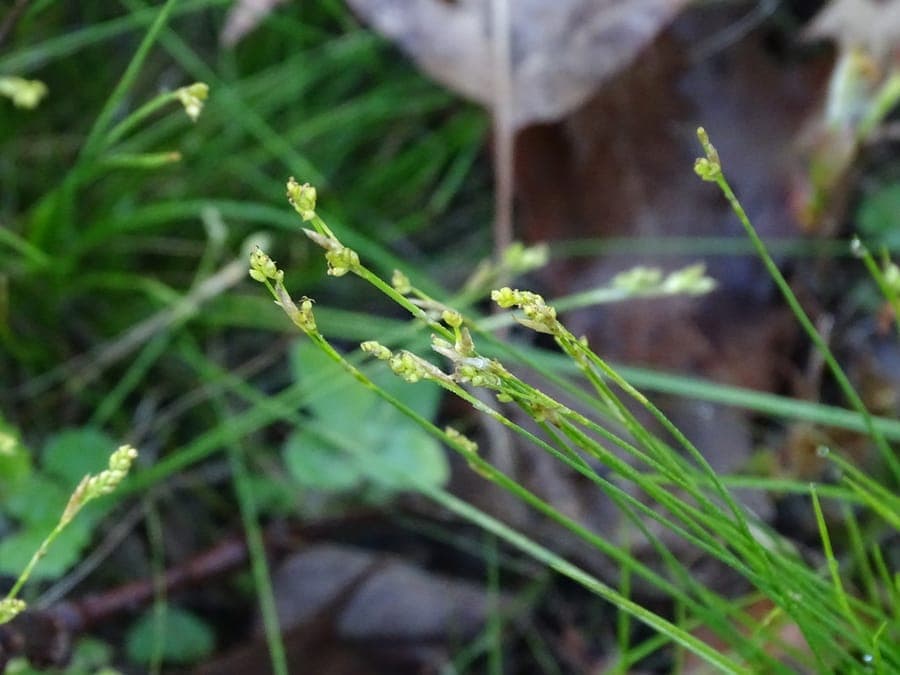
Reuven Martin / CC0, via Wikimedia Commons
Carex eburnea: complete guide
Carex eburnea
¿Quieres ver Carex eburnea: complete guide en tu jardín?
1 minuto, sin tarjeta de crédito
Overview
Carex eburnea, commonly known as Bristleleaf sedge or Ebony sedge, is an elegant and low-maintenance sedge native to North America. The plant is renowned for its fine, almost ivory-like foliage that creates striking contrast in shaded corners of any garden. With its compact growth habit and cold-hardiness to extreme climates, it makes an ideal choice for perennial borders and as groundcover beneath trees.
The plant thrives in cool and temperate zones, from subarctic America to the eastern and central United States and Mexico. This makes it particularly suitable for British and Northern European gardens with their variable seasons.
Appearance and Bloom
Carex eburnea reaches heights of approximately 30-45 centimeters and forms dense, low-growing mats. The foliage is extremely fine and delicate, with a characteristic blue-green to yellow-green coloration. It provides ornamental value throughout the year, especially when touched by winter frost, turning golden-yellow.
The flowers are subtle and inconspicuous - typical of sedges. The inflorescence consists of small, brownish spikes appearing from May through June. After flowering, tiny seeds develop that self-disperse naturally. The true beauty of this plant lies in its foliage rather than spectacular flowers.
Ideal Location
Carex eburnea performs excellently in part shade to full shade. In full sun, the foliage can scorch and discolor. Site it therefore beneath deciduous trees, along north or east-facing walls, or between taller perennials.
The plant prefers cool, moist locations, though once established it becomes quite drought-tolerant. Avoid hot, exposed sites where afternoon sun blazes directly.
Soil
Sedges like Carex eburnea are highly adaptable regarding soil type. They grow best in nutrient-rich, humus-laden soil with good drainage. Acidic soils work well too - in fact, this sedge prefers slightly acid to neutral pH.
Ensure the soil is not compacted. Add generous amounts of compost or leaf mold when planting in heavy clay soils. This improves aeration and moisture-holding capacity.
Watering
Carex eburnea loves moist conditions, especially during the growing season from March through September. Water regularly if extended dry periods occur. Once established (after the first year), the plant becomes very efficient at utilizing soil moisture.
During extremely dry summers, water deeply but less frequently than shallow watering. This encourages deeper root penetration. Avoid waterlogging - good drainage is essential.
Diseño gratis
¿Quieres ver Carex eburnea: complete guide en tu jardín? Crea un diseño gratis ahora.
Pruning
Minimal pruning is needed for Carex eburnea. In early spring (February-March), damaged or brown-tinged foliage can be removed. This stimulates new growth.
Better yet: in April/May, cut back the old leaf mass to about halfway down (to approximately 15 centimeters height). This makes room for fresh young foliage. Use an electric hedge trimmer or specialized sedge pruner, not standard secateurs.
Maintenance Calendar
March: Clear dead foliage, add compost around the plant. Begin checking for pests.
May-June: Flowering period; maintain consistent moisture. Thin out very dense clumps if needed.
July-August: Water during dry spells. Remove wilted leaves.
October-November: Foliage takes on warmer tones. Begin winter preparation - add mulch around plants.
December-February: Winter dormancy. The plant is fully hardy and remains present. Tidy only as needed.
Winter Hardiness
Carex eburnea is extremely cold-hardy to zone 2 (minimum temperatures -40 to -34 degrees Celsius). In northern climates it grows without any protection through all winters. The plant retains its foliage during winter.
In very severe winters, light damage may occur, but the plant will certainly regrow vigorously in spring.
Companion Plants
Carex eburnea forms lovely combinations with shade-loving groundcovers such as:
- Waldsteinia ternata (Barren strawberry)
- Heuchera species (Coral bells)
- Liriope muscari (Lilyturf)
- Epimedium (Barrenwort)
- Vinca minor (Periwinkle)
In borders it pairs well with shade-loving ferns, Helleborus (Christmas rose), and light Hosta varieties.
Closing Thoughts
Carex eburnea is an underappreciated gem for northern gardens. With its fine foliage, exceptionally low maintenance requirements, and excellent cold-hardiness, it's the perfect plant for shaded corners where little else thrives. Plant in groups of three or five for maximum visual impact.
Available at major garden centers. Gardenworld.app can help integrate this elegant grass optimally into your garden design. Transform your yard with practical plant selections that work for years. Gardenworld.app provides professional garden insights.
¿Quieres ver Carex eburnea: complete guide en tu jardín? Crea un diseño gratis ahora.
Sube una foto, elige un estilo y obtén un diseño fotorrealista con lista de plantas en menos de un minuto.
Más de 10.000 jardines diseñados
Sin tarjeta de crédito


Plantas similares
Flat-stemmed club-rush: complete guide
Bolboschoenus planiculmis
Everything about Bolboschoenus planiculmis: growing conditions, watering, care, and use as a pond margin or wetland plant in garden design.
Great Plains flatsedge: complete guide
Cyperus lupulinus
Everything about Great Plains flatsedge (Cyperus lupulinus): growing conditions, care, garden uses, and ecological value. Tips for pond margins and dry sandy soils.
Golden beak sedge: complete guide
Rhynchospora corymbosa
Everything about golden beak sedge (Rhynchospora corymbosa): a dramatic tropical marginal for pond edges, bog gardens, and wet habitats.