
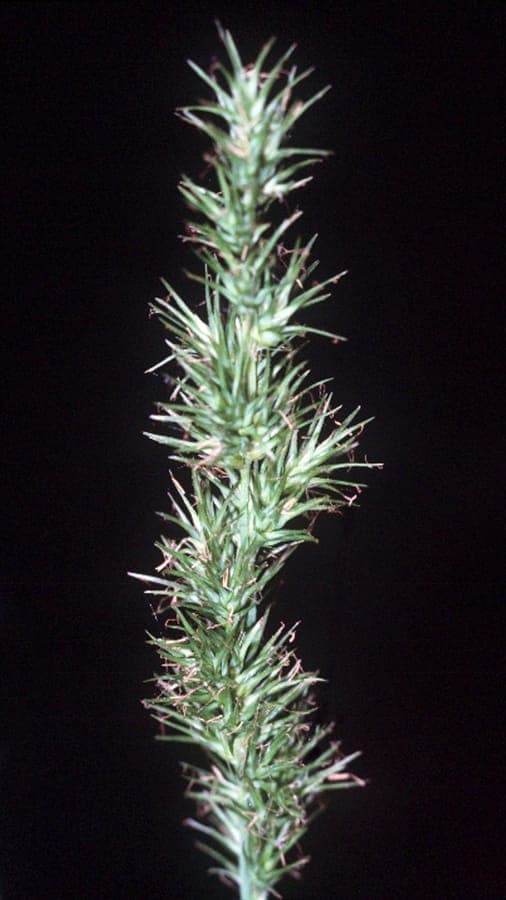
Robert H. Mohlenbrock. USDA SCS. 1989. Midwest wetland flora: Field office illustrated guide to plant species. Midwest National Technical Center, Lincoln. Provided by USDA NRCS Wetland Science Institute (WSI). / Public domain, via Wikimedia Commons
Carex crus-corvi: complete guide
Carex crus-corvi
¿Quieres ver Carex crus-corvi: complete guide en tu jardín?
1 minuto, sin tarjeta de crédito
Overview
Carex crus-corvi, known as ravenfoot sedge or crow-spur sedge, is a North American sedge species in the Cyperaceae family. This plant naturally grows from southeastern Canada through the central and eastern United States, including areas like Virginia, Tennessee, and Texas.
Its distinctive character and native status make this plant interesting for nature-friendly garden designs. For gardenworld.app designs wanting to support local ecosystems, it is an excellent choice.
Appearance and Bloom
Carex crus-corvi forms dense tufts with slender, gray-green foliage reaching up to 50-75 cm tall. The plant is semi-evergreen to semi-deciduous, depending on climate and winter temperatures. The foliage remains evergreen in mild climates.
The inflorescences appear in May-June and are not spectacularly showy but possess subtle charm. The female spikelets form interesting seed carriers. The entire plant has a natural, wild appearance perfectly suited to informal landscape styles.
Ideal Location
Carex crus-corvi grows best in partial to full shade. The plant accepts some sunlight but feels comfortable in shadowy environments. Place it under trees, in shaded corners, or in wooded understory settings.
The plant naturally grows along water banks and in moist soils, so place it near a water source or in the moist lowlands of your garden.
Soil
The plant grows in moist to wet soils with organic-rich ground. Sedges like Carex crus-corvi have no high nutrient requirements but appreciate organic matter. Ideal pH is neutral to slightly acidic (pH 5.5-7.5).
For container cultivation, use water-retentive potting soil, possibly mixed with peat or coconut fiber. The soil must be well-aerated.
Diseño gratis
¿Quieres ver Carex crus-corvi: complete guide en tu jardín? Crea un diseño gratis ahora.
Watering
This is a very water-loving plant that must remain consistently moist. The plant can tolerate wet conditions but also survive some dry periods. Water regularly, especially during the growing season.
In container cultivation, pots can sit in water-filled saucers. The plant appreciates regular misting to keep humidity levels high.
Pruning and Training
Carex crus-corvi requires minimal pruning. The plant naturally forms an attractive, compact form. Remove only damaged or dead foliage.
In March, the plant can be carefully trimmed to a few centimeters above ground to remove old foliage and stimulate new growth. This helps rejuvenate aging plants.
Maintenance Calendar
March: Light pruning, compost application. April-May: Monitor water, young foliage appears. May-July: Blooming period. July-September: Monitor water, minimal care. October-November: Prepare for winter. December-February: Dormancy period.
Winter Hardiness
Carex crus-corvi is hardy to USDA zone 5 (-29 to -15 degrees Celsius). This means it can overwinter well in many parts of the Netherlands and Belgium. In very cold years, plants may need some protection, especially in containers.
Companion Plants
Carex crus-corvi works well with other shade-loving perennials. Try combinations with other sedges, hostas, ferns, and other foliage perennials. For blooms: add shade-tolerant flowering plants like Astilbe or Helleborus.
The gray-green color of Carex crus-corvi creates good contrast with darker green plants and broader leaf forms.
Closing
Carex crus-corvi is an elegant, native sedge that transforms shaded and moist corners. It is an excellent choice for gardenworld.app designs wanting to integrate nature and native plants.
¿Quieres ver Carex crus-corvi: complete guide en tu jardín? Crea un diseño gratis ahora.
Sube una foto, elige un estilo y obtén un diseño fotorrealista con lista de plantas en menos de un minuto.
Más de 10.000 jardines diseñados
Sin tarjeta de crédito


Plantas similares
Flat-stemmed club-rush: complete guide
Bolboschoenus planiculmis
Everything about Bolboschoenus planiculmis: growing conditions, watering, care, and use as a pond margin or wetland plant in garden design.
Great Plains flatsedge: complete guide
Cyperus lupulinus
Everything about Great Plains flatsedge (Cyperus lupulinus): growing conditions, care, garden uses, and ecological value. Tips for pond margins and dry sandy soils.
Golden beak sedge: complete guide
Rhynchospora corymbosa
Everything about golden beak sedge (Rhynchospora corymbosa): a dramatic tropical marginal for pond edges, bog gardens, and wet habitats.