
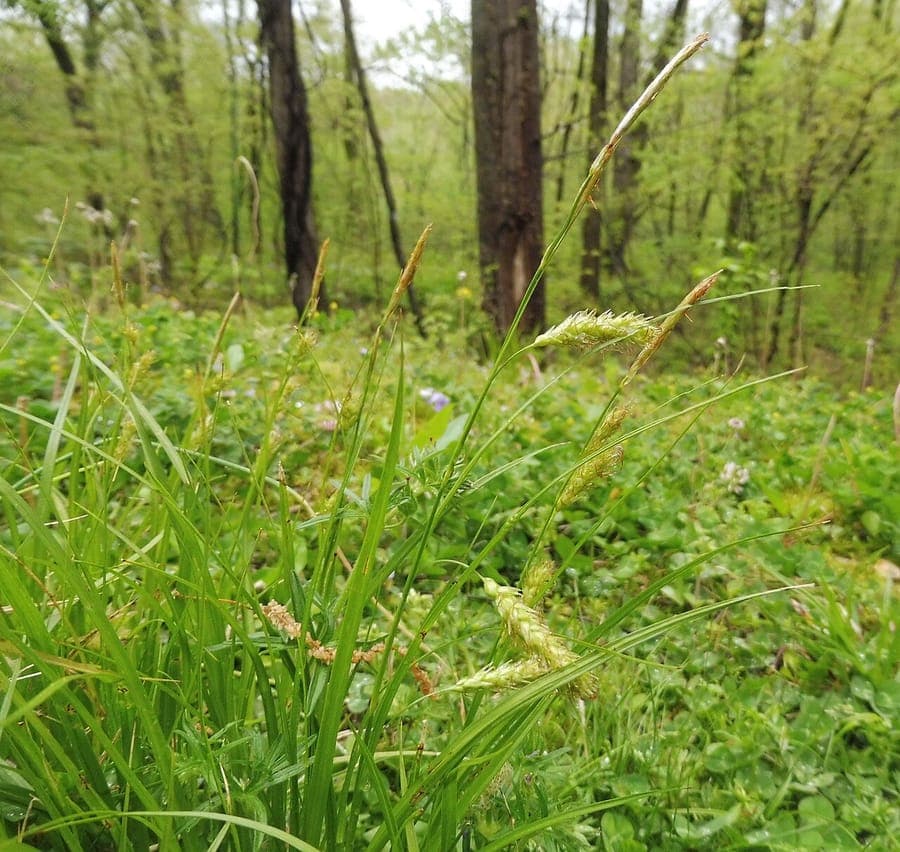
Mason Brock (Masebrock) / Public domain, via Wikimedia Commons
Carex cherokeensis: complete guide
Carex cherokeensis
¿Quieres ver Carex cherokeensis: complete guide en tu jardín?
1 minuto, sin tarjeta de crédito
Overview
Carex cherokeensis, commonly known as Cherokee sedge, is an elegant American graminoid plant native to the southeastern United States. This sedge thrives in shaded and partially shaded garden environments, providing fine, elegant leaf structure. Growing perfectly in humid, slightly moist settings, it forms attractive compact tufts.
Cherokee sedge is ideal for gardeners seeking interesting plants for shadowy locations. With its graceful structure and compact growth, it's a versatile choice for modern garden designs.
Appearance & Bloom
Carex cherokeensis produces very fine, narrow linear leaves in a beautiful mid-green color. The plant grows in compact tufts approximately 30-45 centimeters tall. The leaves are delicate and create a soft, elegant appearance.
In spring and early summer, the plant blooms with subtle, inconspicuous flowers interesting to those who appreciate botanical details. The whole plant has a graceful, fountain-like growth pattern.
Ideal Location
Carex cherokeensis thrives in partial shade to full shade, though it can also grow in partly sunny areas. The plant is flexible but performs optimally with some protection from direct afternoon sun.
Place this sedge beneath trees, along woodland edges, or in other shaded garden corners. It works well as groundcover or as accent planting in borders beneath larger plantings. Group in odd numbers for maximum design effect.
Soil
Carex cherokeensis prefers moist, well-draining soils rich in organic material. The plant grows best in moderately moist to moist conditions. Work in compost or leaf litter to improve soil.
The plant tolerates various soil types, including clayey soils, provided drainage is adequate. Ideal pH is neutral to slightly acidic. Add substantial organic material for optimal growth potential.
Diseño gratis
¿Quieres ver Carex cherokeensis: complete guide en tu jardín? Crea un diseño gratis ahora.
Watering
Water regularly in the first year after planting to promote good rooting. Once established, Carex cherokeensis loves consistent moisture, though not waterlogged conditions. Water more thoroughly during dry periods.
The plant grows particularly well in areas where regular natural moisture is available, such as near ponds or in lower garden areas. Provide extra water during extreme summer droughts. Water cautiously in winter.
Pruning
Remove dead or damaged foliage in spring. Carex cherokeensis doesn't require much pruning, but you can gently comb out old leaves using a fine-toothed rake.
Let the plant assume its natural form. In very cold climates, above-ground parts may freeze back in winter, but the plant regrows in spring. Avoid aggressive cutting.
Maintenance Calendar
February-March: Remove dead foliage. Check plant for overgrown sections.
April-May: Water regularly during dry periods. Monitor growth.
June-August: Keep consistently moist. Watch for pests.
September-October: Prepare for autumn. Check moisture levels.
November-January: Minimal care. Provide protection in extreme frost.
Winter Hardiness
Carex cherokeensis is moderately winter hardy, tolerating approximately -10 to -15 degrees Celsius. In milder regions it flourishes, but in colder climates, providing some protection during winter months is beneficial.
In areas with severe frost, above-ground parts may freeze back, but roots typically survive and the plant regrows. A light mulch in late fall provides protection.
Companion Plants
Carex cherokeensis combines beautifully with other shade-loving plants. Pair with Hosta, Heuchera, Ferns, and other shade-tolerant species. The sedge's fine texture offers beautiful contrast with larger leaves.
It also works well with blooming shade plants like Bleeding Heart and Coral Bells. The sedge provides year-round interest and creates an elegant backdrop for seasonal flowers.
Closing
Carex cherokeensis is a beautiful choice for shaded gardens where you want to add elegant texture. With its compact form and graceful foliage, it provides year-long interest. For more planting combinations and gardening advice, visit gardenworld.app to discover how sedges can transform your shadowy spaces.
¿Quieres ver Carex cherokeensis: complete guide en tu jardín? Crea un diseño gratis ahora.
Sube una foto, elige un estilo y obtén un diseño fotorrealista con lista de plantas en menos de un minuto.
Más de 10.000 jardines diseñados
Sin tarjeta de crédito


Plantas similares
Flat-stemmed club-rush: complete guide
Bolboschoenus planiculmis
Everything about Bolboschoenus planiculmis: growing conditions, watering, care, and use as a pond margin or wetland plant in garden design.
Great Plains flatsedge: complete guide
Cyperus lupulinus
Everything about Great Plains flatsedge (Cyperus lupulinus): growing conditions, care, garden uses, and ecological value. Tips for pond margins and dry sandy soils.
Golden beak sedge: complete guide
Rhynchospora corymbosa
Everything about golden beak sedge (Rhynchospora corymbosa): a dramatic tropical marginal for pond edges, bog gardens, and wet habitats.