
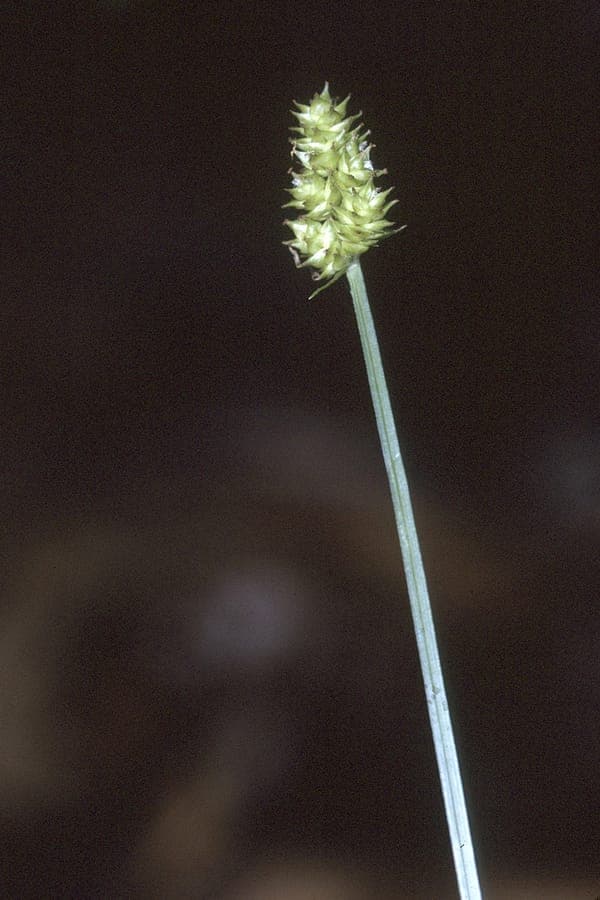
Robert H. Mohlenbrock / Public domain, via Wikimedia Commons
Carex cephalophora: complete guide
Carex cephalophora
¿Quieres ver Carex cephalophora: complete guide en tu jardín?
1 minuto, sin tarjeta de crédito
Overview
Carex cephalophora, commonly known as oval-leaf sedge or short-headed sedge, is an elegant grass-like plant from the Cyperaceae family. This North American sedge is valued for its dense, naturalistic growth pattern and remarkable ability to colonize wet, difficult soils. With evergreen foliage and subtle flowering, Carex cephalophora makes an excellent choice for modern wetland gardens and naturalistic water features.
This native plant provides valuable habitat and simplifies garden management significantly. Once established, it thrives with minimal maintenance requirements.
Appearance and Bloom
Carex cephalophora reaches heights of 30 to 45 centimeters and forms dense, compact tufts. Leaves are narrow, verdant green, giving the plant a delicate, gauzy appearance.
Flowering occurs from May to July with characteristic sedge spikes - small, brown-green flowerlets from which the plant derives its common name. These inconspicuous flowers rely on wind dispersal and produce viable seed naturally. Seedlings often self-distribute.
Ideal Location
Sedges thrive in partial to full shade. Carex cephalophora excels in moist, marshy locations where other plants struggle. Dappled shade beneath tree canopies and near water features proves ideal.
Avoid dry, sunny exposures. Shading is essential for healthy growth and foliage color. In full sun, leaves may yellow.
Soil
Carex cephalophora thrives in moist, humus-rich soils with good water retention. This sedge grows even on clayey, acidic soils without supplemental feeding. Sedges tolerate low nutrient levels and require no rich fertilization.
Add compost at planting for enhanced moisture retention. The plant prefers uncompacted, loose soils with good air infiltration.
Watering
Keep consistently moist without waterlogging. Carex cephalophora thrives in marshy conditions where water levels fluctuate seasonally. Regular water application during growth periods (spring and summer) proves essential.
Note that this is a wetland plant requiring consistently moist soils, not standing water. Optimal moisture balance is critical for vigor.
Diseño gratis
¿Quieres ver Carex cephalophora: complete guide en tu jardín? Crea un diseño gratis ahora.
Pruning
Carex cephalophora is virtually maintenance-free regarding pruning. Remove dead foliage in early spring before new growth emerges. This stimulates new shoot initiation.
Pruning is unnecessary for form maintenance, as the plant naturally develops dense, attractive growth. Dead material can be removed by simple hand harvesting.
Maintenance Calendar
Spring: Cleanup of dead foliage, moisture checking Summer: Regular watering, growth monitoring Fall: Winter preparation, seed removal (optional) Winter: Minimal intervention, moisture monitoring
Winter Hardiness
Carex cephalophora is hardy in temperate zones and tolerates frosts down to -10 to -15 degrees Celsius. The plant is native to eastern North America and adapted to thorough winter dormancy in cold climates.
In mild winters, the plant retains its evergreen character. Heavy snow loads pose no problem as the plant remains flexible.
Companion Plants
Combine Carex cephalophora with other wetland plants like Hostas, Astilbes and Brunnera. Shade-tolerant groundcovers like Vinca make excellent low companions. In water gardens, it integrates perfectly with water irises.
Water-loving plants like Rodgersia and Filipendula create fascinating layered compositions. Ferns form classic companions for sedges in shaded zones.
Closing
Carex cephalophora deserves greater attention as a structural plant in contemporary gardens. With dense growth, environmental benefits and minimal maintenance, it provides years of interest. Perfect for shade garden transformation or wetland area improvement.
Source Carex cephalophora from reputable nurseries. Discover how sedges can transform your garden design on gardenworld.app. For more inspiration, visit gardenworld.app today.
¿Quieres ver Carex cephalophora: complete guide en tu jardín? Crea un diseño gratis ahora.
Sube una foto, elige un estilo y obtén un diseño fotorrealista con lista de plantas en menos de un minuto.
Más de 10.000 jardines diseñados
Sin tarjeta de crédito


Plantas similares
Flat-stemmed club-rush: complete guide
Bolboschoenus planiculmis
Everything about Bolboschoenus planiculmis: growing conditions, watering, care, and use as a pond margin or wetland plant in garden design.
Great Plains flatsedge: complete guide
Cyperus lupulinus
Everything about Great Plains flatsedge (Cyperus lupulinus): growing conditions, care, garden uses, and ecological value. Tips for pond margins and dry sandy soils.
Golden beak sedge: complete guide
Rhynchospora corymbosa
Everything about golden beak sedge (Rhynchospora corymbosa): a dramatic tropical marginal for pond edges, bog gardens, and wet habitats.