
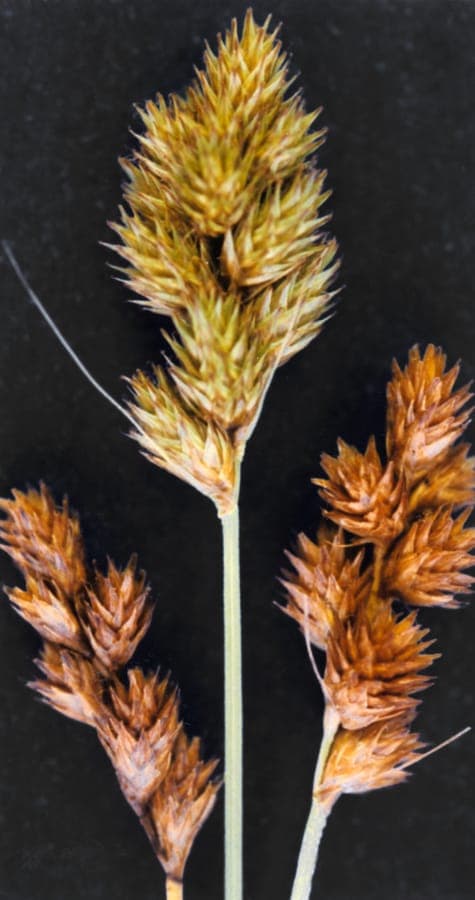
Hurd, E.G., N.L. Shaw, J. Mastrogiuseppe, L.C. Smithman, and S. Goodrich. 1998. Field guide to Intermountain sedges. General Technical Report RMS-GTR-10. USDA Forest Service, RMRS, Ogden. Courtesy of USDA FS RMRS Boise Aquatic Sciences Lab. / Public domain, via Wikimedia Commons
Carex bebbii: complete guide
Carex bebbii
¿Quieres ver Carex bebbii: complete guide en tu jardín?
1 minuto, sin tarjeta de crédito
Overview
Carex bebbii, known as Bebb's sedge, is a North American sedge species from the Cyperaceae family. This grass-like plant naturally grows in subarctic regions through central and western North America, from Alaska to Colorado and Montana.
In Europe, the plant is much less known, though growing interest from designers in native and wetland-friendly plants leads to increasing use. Carex bebbii is an elegant, fine-textured plant that can truly shine in moist, partially shaded corners of your garden.
Appearance and Bloom
Carex bebbii forms a compact, bundle-like tufting growth habit without visible stems. The leaves are narrow, gracefully green, and form a light, airy structure that can reach 30-50 cm tall. The plant has no showy flower heads but blooms in May-June with inconspicuous green flowers.
The texture of the green foliage remains attractive throughout the growing season, displaying beautiful brown tones in autumn. This makes it a truly four-season plant for designs.
Ideal Location
Carex bebbii thrives best in partial to full shade. It accepts sunny spots but feels most comfortable where light filters through trees or receives less than 4 hours of direct sunlight. For gardenworld.app designs, it is perfect for dark corners and wooded areas.
The plant grows along banks, in marshy zones, and in wet soils, so place it near water features or in specially prepared moist corners of your garden.
Soil
Carex bebbii prefers moist to wet soils with pH 4.6-7.0 (acidic to neutral). Organic-rich soil with good water retention is ideal. Sedges generally have no high nutrient requirements.
For container cultivation, use retentive potting soil, possibly mixed with some peat moss or coconut fiber. Ensure pots are well-draining, as while the plant stays moist, air circulation in the substrate is important.
Diseño gratis
¿Quieres ver Carex bebbii: complete guide en tu jardín? Crea un diseño gratis ahora.
Watering
This is a water-loving plant that must never dry out. Sedges like Carex bebbii can tolerate very wet conditions. The ideal moisture level is consistently moist to wet. Water regularly during dry periods.
In containers, pots can be placed in saucers with water, or regular misting helps maintain a microclimate close to natural moist habitats. Rainwater is preferred over tap water.
Pruning and Training
Carex bebbii requires virtually no pruning. The plant naturally forms a beautiful, compact shape. Remove only dead leaves in spring and carefully clean the center of the plant of wilted foliage.
In late winter, March, you can lightly trim the plant to a few centimeters above ground to stimulate fresh new growth. This is optional but can help rejuvenate aging plants.
Maintenance Calendar
March: Light pruning, remove dead parts, apply slow-release fertilizer. April-May: Stimulate growth, monitor water regularly. May-June: Flowering period, let plant grow. July-September: Minimal maintenance, check water, remove weeds. October-November: Prepare for dormancy, gradually reduce water. December-February: Dormancy period.
Winter Hardiness
Carex bebbii is very hardy to USDA zone 2-3 (-40 to -30 degrees Celsius). It is a North American plant that can handle all the cold of the Netherlands and Belgium. No special winter protection needed. The plant can remain outside year-round.
Companion Plants
Carex bebbii combines beautifully with other water-loving plants and sedges. Try combinations with Lobelia, water mint, hostas, or other foliage plants for structure. In wetland gardens: add Iris, fellow sedge Carex pennsylvanica.
For textural and color variety: add other grass types such as Calamagrostis, ferns, or other sedges. The fine texture of Carex bebbii creates nice contrast with larger foliage plants.
Closing
Carex bebbii is an elegant, low-maintenance plant that brings charm to shaded, moist corners. It is perfect for gardenworld.app designs that want to create natural wetland effects. Consult gardenworld.app for advice on other sedges and moisture-loving plants.
¿Quieres ver Carex bebbii: complete guide en tu jardín? Crea un diseño gratis ahora.
Sube una foto, elige un estilo y obtén un diseño fotorrealista con lista de plantas en menos de un minuto.
Más de 10.000 jardines diseñados
Sin tarjeta de crédito


Plantas similares
Flat-stemmed club-rush: complete guide
Bolboschoenus planiculmis
Everything about Bolboschoenus planiculmis: growing conditions, watering, care, and use as a pond margin or wetland plant in garden design.
Great Plains flatsedge: complete guide
Cyperus lupulinus
Everything about Great Plains flatsedge (Cyperus lupulinus): growing conditions, care, garden uses, and ecological value. Tips for pond margins and dry sandy soils.
Golden beak sedge: complete guide
Rhynchospora corymbosa
Everything about golden beak sedge (Rhynchospora corymbosa): a dramatic tropical marginal for pond edges, bog gardens, and wet habitats.