
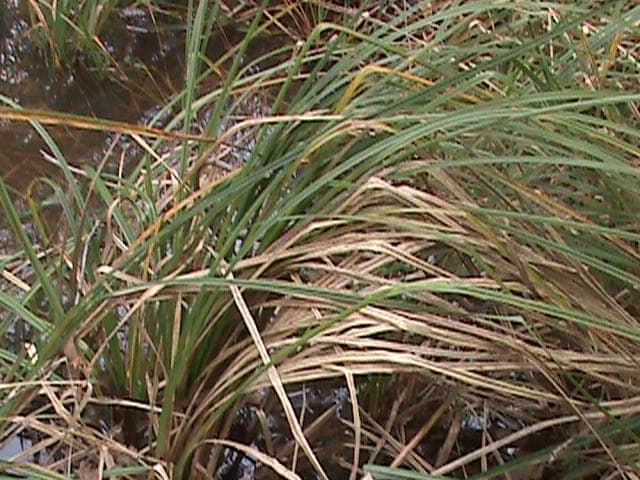
AerobicFox / CC0, via Wikimedia Commons
Carex barbarae: complete guide
Carex barbarae
¿Quieres ver Carex barbarae: complete guide en tu jardín?
1 minuto, sin tarjeta de crédito
Overview
Carex barbarae, known as Santa Barbara sedge, is an elegant grass species from western United States. This compact sedge belongs to Cyperaceae family and is beloved for its fine-textured foliage and modest growing habit. It is excellent for borders, rock gardens, containers and landscape plantings where structure is desired.
Appearance and Bloom
Carex barbarae forms dense tufts of fine foliage, reaching 20 to 45 centimeters height. Foliage is linear, delicate and fresh green, providing refined appearance. The plant flowers discreetly: blooms appear in June as inconspicuous spikelets atop thin stems. These flowers are not spectacular but add structure. The plant retains foliage year-round in temperate climates.
Ideal Location
Place Carex barbarae where it receives full to partial sun. Minimum four hours sunlight daily is desired, six hours ideal. In very warm regions, it tolerates some afternoon shade. This grass species also thrives in lightly shaded spots under woodland structures, provided it does not stand in dense shade. Good air circulation aids health.
Soil
Santa Barbara sedge grows best in well-draining soil, but is adaptable. In normal garden soil with normal moisture it grows well. Heavy clay soil? Add sand and organic matter. In containers, use standard potting soil with 20 percent additional sand. Neutral to slightly acidic pH is ideal. This plant tolerates poorer soil better than many ornamental grasses.
Watering
Once established, Carex barbarae is quite drought-tolerant. During first season, water regularly until roots are well-established. Thereafter water moderately, only in extremely dry periods. The plant prefers moderately moist soil but tolerates drier conditions. In containers, water more regularly but ensure good drainage.
Diseño gratis
¿Quieres ver Carex barbarae: complete guide en tu jardín? Crea un diseño gratis ahora.
Pruning
Carex barbarae requires very little pruning. In spring you can remove dead foliage by gently combing the plant with fingers or small rake. The plant usually retains foliage, so major pruning is unnecessary. Remove only dead or diseased-looking foliage. After several years, overgrown clumps may be divided to keep them vigorous.
Maintenance Calendar
May to July: growth drive; regular water in dry periods. August to October: growth slows; adjust watering to rain. November to March: minimal care; no feeding needed. April: prepare for season; remove dead foliage; anticipate watering when new growth appears.
Winter Hardiness
Carex barbarae is hardy to approximately minus 15 degrees Celsius, depending on frost moisture. The plant prefers dry winters over wet. In extremely moist winters in Northern Europe, light mulch may help. In containers, better to overwinter indoors in very severe climates. The plant is more robust than many ornamental grasses in wet winters provided drainage is present.
Companion Plants
Combine Carex barbarae with other structural plants like fine deciduous trees, small shrubs and other ornamental grasses. Heuchera with contrasting foliage works well. Helleborus and other groundcover form beautiful combinations. Geranium and Alchemilla make good use of similar ground moisture needs. Ensure companion plants share preference for full to partial sun.
Closing
Carex barbarae is a reliable grass for those seeking structure and elegance. Its fine-textured foliage and compact form make it ideal for small garden accents. Check specialist plant nurseries for seeds and young plants. Visit gardenworld.app for design ideas with ornamental grasses and perennial combinations. This American grass provides years of clean lines without much maintenance. Explore gardenworld.app for inspiration with grass-based landscape designs.
¿Quieres ver Carex barbarae: complete guide en tu jardín? Crea un diseño gratis ahora.
Sube una foto, elige un estilo y obtén un diseño fotorrealista con lista de plantas en menos de un minuto.
Más de 10.000 jardines diseñados
Sin tarjeta de crédito


Plantas similares
Flat-stemmed club-rush: complete guide
Bolboschoenus planiculmis
Everything about Bolboschoenus planiculmis: growing conditions, watering, care, and use as a pond margin or wetland plant in garden design.
Great Plains flatsedge: complete guide
Cyperus lupulinus
Everything about Great Plains flatsedge (Cyperus lupulinus): growing conditions, care, garden uses, and ecological value. Tips for pond margins and dry sandy soils.
Golden beak sedge: complete guide
Rhynchospora corymbosa
Everything about golden beak sedge (Rhynchospora corymbosa): a dramatic tropical marginal for pond edges, bog gardens, and wet habitats.