
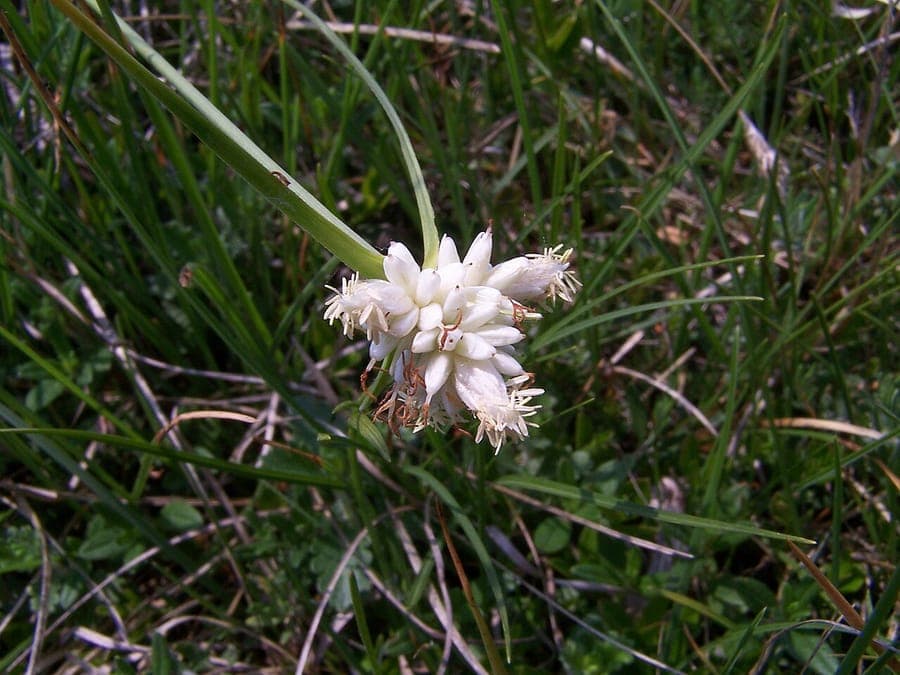
Marcobarci / CC BY-SA 3.0, via Wikimedia Commons
Monte Baldo Sedge: complete guide
Carex baldensis
¿Quieres ver Monte Baldo Sedge: complete guide en tu jardín?
1 minuto, sin tarjeta de crédito
Overview
Carex baldensis, better known as Monte Baldo sedge or the Baldo sedge, is an exceptionally rare and distinctive mountain plant that occurs endemically in the Alps, particularly the Central European Alps (Austria, Switzerland, Italy, and Germany). This plant, belonging to the sedge family (Cyperaceae), is virtually unknown in most gardens but forms a spectacular addition for those pursuing authentic alpine rock gardens.
The plant grows as a compact, fine grass mat, typically reaching 10-20 cm in height. The leaves are extremely thin, delicate, and almost hair-like, imparting an elegant, refined appearance. The plant is completely winter-hardy and remains attractive year-round, displaying subtle color shifts toward light brown tones in autumn and winter.
Appearance and Bloom
Carex baldensis possesses extremely fine, pointed leaves growing in dense grass mats. The leaves measure 1-2 mm wide and approximately 10-15 cm long, creating a very refined, hair-like texture. The color is bright green during growth periods, transitioning to lighter yellow-green and soft brown in autumn-winter.
The flowers are very modest and typical of sedges, growing in small spikes atop delicate stems. While inconspicuous, they are ecologically important. The bloom period extends from April to June, depending on elevation and climate.
Following bloom, tiny seeds form and disperse via wind.
Ideal Location
Carex baldensis thrives best in sun to partial shade, preferring at least 4-5 hours direct sunlight daily. The plant feels at home in well-ventilated, not-overly-warm environments.
The plant excels in:
- Rock and alpine gardens
- Between stones and stonework
- Screes and gravel bedding
- Alpine troughs
- Cold, well-draining understory
- Mountain groupings
- Very moisture-scarce locations
The plant proves particularly valuable for those living in mountainous environments with substantial rainfall but well-draining soils.
Soil
Carex baldensis thrives in well-draining, moisture-scarce soil with acidic to neutral pH (5.0 to 7.0). The plant feels at home in lean, lime-free soils; rich soils can result in weak growth. Sand, gravel, and rock debris form ideal growing media.
Amend heavy material with sand or gravel. The plant tolerates very dry conditions and deep soil moisture must be prevented. A light sand layer aids drainage.
Diseño gratis
¿Quieres ver Monte Baldo Sedge: complete guide en tu jardín? Crea un diseño gratis ahora.
Watering
Carex baldensis is very drought-tolerant once established. Water is primarily needed during the initial weeks following planting. During dry seasons, supplemental watering is usually unnecessary.
In very warm, dry environments, somewhat more water helps, but must be balanced carefully. Waterlogging must be avoided at all costs. In containers, water somewhat more frequently, but still with careful attention to drainage.
Pruning
Pruning is not truly necessary for Carex baldensis. The plant grows naturally compact. Only faded leaves can be removed in early spring (March-April) to maintain neatness.
In very warm seasons, leaf tips may brown; this is normal and can be carefully removed with scissors.
Maintenance Calendar
March-April: Growth starts. Remove faded leaves. Check drainage. No water needed unless exceptionally dry.
May-June: Flowering period. Plant forms spikes. No maintenance needed. Minimal water.
July-August: Growth ceases. Plant forms seed. Enjoy fine texture. No water needed.
September-October: Color changes to yellow-green and brown. Very decorative. No maintenance.
November-February: Winter dormancy. Plant remains green and decorative. Minimal maintenance. Plant is fully hardy.
Winter Hardiness
Carex baldensis is exceptionally winter-hardy, tolerating temperatures far below -20degC without difficulty. It is fully suitable for all European climate zones. The plant actually prefers harsh winters to warm, dry seasons.
Winter cold causes no harm. Snow cover is not problematic; it remains green and vital underneath. Only very warm, dry winters prove stressful.
Companion Plants
Carex baldensis pairs beautifully with:
- Saxifraga for white and yellow flower accents
- Sempervivum for contrasting succulent forms
- Androsace for pink flower details
- Silene acaulis for pink flower carpets
- Thymus alpinus for purple flower contrasts
- Sedum alpestre for reddish-brown foliage
- Festuca ovina var. glauca for blue-green grass contrast
Conclusion
Carex baldensis is an exceptional choice for authentic alpine rock gardens. With its ultra-fine texture, year-round interest, and perfect winter adaptation, it creates a unique and ecologically valuable element in stone gardens.
Seek this plant from highly specialized alpine suppliers. It is rare in cultivation, so inquire specifically about sources. Once properly positioned in well-draining, moisture-scarce soil, it will thrive for many years unchanged. For additional inspiration about alpine garden enhancement and rock work, visit gardenworld.app for professional garden advice specialized in mountain environments and alpine elements.
¿Quieres ver Monte Baldo Sedge: complete guide en tu jardín? Crea un diseño gratis ahora.
Sube una foto, elige un estilo y obtén un diseño fotorrealista con lista de plantas en menos de un minuto.
Más de 10.000 jardines diseñados
Sin tarjeta de crédito


Plantas similares
Flat-stemmed club-rush: complete guide
Bolboschoenus planiculmis
Everything about Bolboschoenus planiculmis: growing conditions, watering, care, and use as a pond margin or wetland plant in garden design.
Great Plains flatsedge: complete guide
Cyperus lupulinus
Everything about Great Plains flatsedge (Cyperus lupulinus): growing conditions, care, garden uses, and ecological value. Tips for pond margins and dry sandy soils.
Golden beak sedge: complete guide
Rhynchospora corymbosa
Everything about golden beak sedge (Rhynchospora corymbosa): a dramatic tropical marginal for pond edges, bog gardens, and wet habitats.