
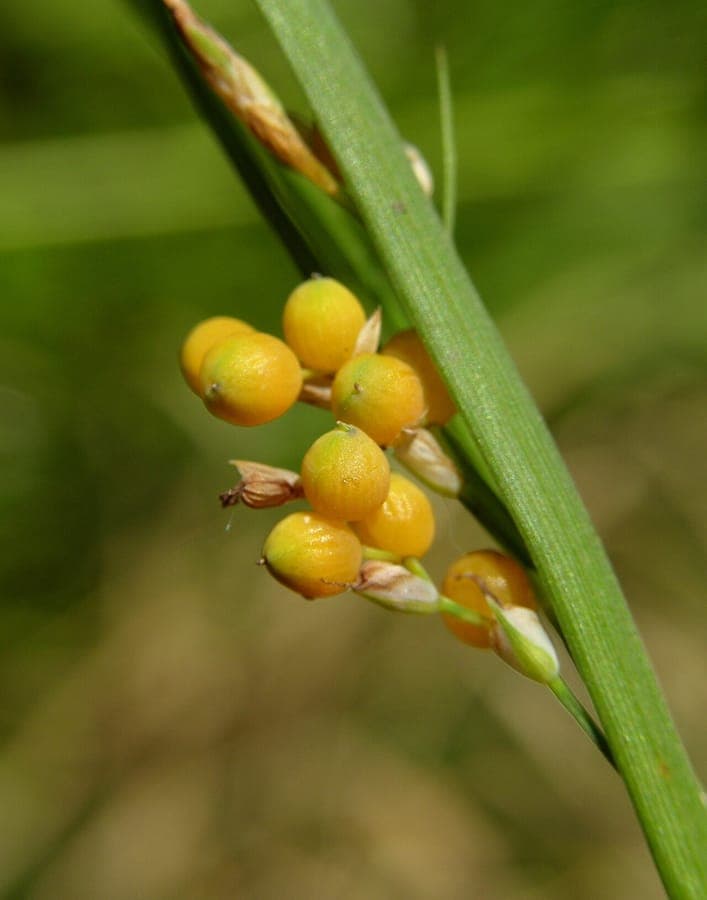
T.M.Jones / CC BY-SA 3.0, via Wikimedia Commons
Carex aurea: complete guide
Carex aurea
¿Quieres ver Carex aurea: complete guide en tu jardín?
1 minuto, sin tarjeta de crédito
Overview
Carex aurea, known as golden sedge or golden-fruited sedge, is a charming sedge from the Cyperaceae family. This moisture-loving plant grows in natural wetland areas of North America and offers elegant, upright growth form with striking golden-yellow fruits. Although not as widely cultivated as larger sedge species, golden sedge offers plenty of appeal for wildflower lovers and wetland gardens.
Appearance and Bloom
Carex aurea is a diminutive sedge that usually doesn't exceed 30-60 centimeters in height. The leaves are fine, green-colored, upright leaf clusters that grow gracefully. Probably most striking are the fruits: these are very characteristic with a golden-yellow color when ripe, which gives the plant its name. The fruits grow in compact, upright spikes. Early summer is typical fruiting time.
Ideal Location
Golden sedge flourishes in moisture-loving conditions. Half-shade is preferred, though the plant can also grow in more sunlight with adequate moisture supply. In natural conditions, it grows along riverbanks, in wet meadows, and in shallow wetlands. In cultivation, the plant can be used in garden wetlands, pond margins, or shallow water features. Protection from harsh wind is beneficial.
Soil
The plant thrives best in moisture-rich soils. However, moisture retention can remain stable through natural moisture conditions in low-placed garden spots. Organic-rich soils are preferred. Acidic to neutral pH's are suitable. The plant does not prefer excessively nutrient-rich soils.
Diseño gratis
¿Quieres ver Carex aurea: complete guide en tu jardín? Crea un diseño gratis ahora.
Watering
Carex aurea requires consistently moist conditions. In normal periods, natural soil moisture is sufficient. In extremely dry summers, supplemental watering is needed. Waterlogging is not a concern, and the plant grows well in shallow water situations. In artificial conditions, drip irrigation provides benefits for consistent moisture maintenance.
Pruning
Formal pruning is not needed. Remove dead leaves in late winter or early spring. The plant does not decline naturally, so no cleanup is needed beyond removal of withered leaf material.
Maintenance Calendar
- March-April: Plant regrows. Remove previous year's dead leaves.
- May-June: Active growth. Ensure adequate moisture.
- June-July: Spikes with fruits appear. Golden-yellow color becomes visible.
- August-September: Fruits ripen further. Plant may disperse seeds.
- October-November: Plant retreats. Keep water minimal.
Winter Hardiness
Carex aurea is winter-hardy in many areas of North America and is also suitable in temperate European conditions. In the Netherlands and German climates, the plant is fairly winter-hardy. The plant overwinters as an established clump.
Companion Plants
Golden sedge grows well among other moisture-loving plants such as other sedge species, reed grasses, and wetland herbs. The plant can be part of wetland garden composition. Avoid competing dominant-growing plants.
Closing Remarks
Carex aurea offers gardeners a unique, decorative sedge for moisture-loving conditions. With its characteristic golden-yellow fruits and elegant form, golden sedge is a valuable addition to wild or wetland gardens. Although moisture-demanding, this plant grows successfully in properly positioned locations for many years.
¿Quieres ver Carex aurea: complete guide en tu jardín? Crea un diseño gratis ahora.
Sube una foto, elige un estilo y obtén un diseño fotorrealista con lista de plantas en menos de un minuto.
Más de 10.000 jardines diseñados
Sin tarjeta de crédito


Plantas similares
Flat-stemmed club-rush: complete guide
Bolboschoenus planiculmis
Everything about Bolboschoenus planiculmis: growing conditions, watering, care, and use as a pond margin or wetland plant in garden design.
Great Plains flatsedge: complete guide
Cyperus lupulinus
Everything about Great Plains flatsedge (Cyperus lupulinus): growing conditions, care, garden uses, and ecological value. Tips for pond margins and dry sandy soils.
Golden beak sedge: complete guide
Rhynchospora corymbosa
Everything about golden beak sedge (Rhynchospora corymbosa): a dramatic tropical marginal for pond edges, bog gardens, and wet habitats.