
Gary Larson / Public domain, via Wikimedia Commons
Wheat sedge: complete guide
Carex atherodes
¿Quieres ver Wheat sedge: complete guide en tu jardín?
1 minuto, sin tarjeta de crédito
Overview
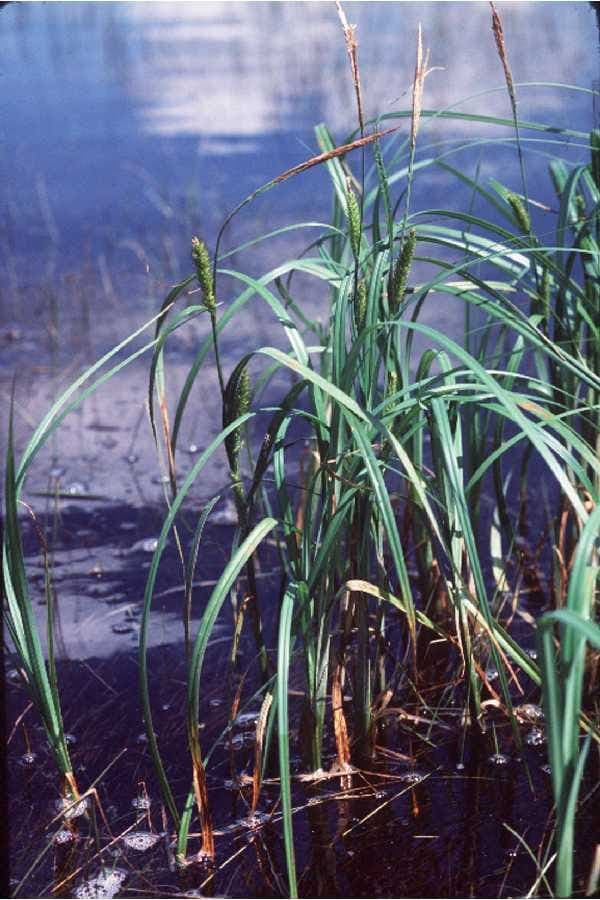
Wheat sedge (Carex atherodes) is an elegant sedge from the Cyperaceae family. Found in subarctic and temperate regions of the Northern Hemisphere, it forms delicate golden-brown plumes above fine foliage. At 40 to 80 cm tall, it provides an architectural element in moist areas and water gardens.
Appearance and growth habit
Wheat sedge forms dense clumps with narrow, green foliage providing fine texture. During summer, delicate golden-brown plumes emerge and gently sway. These plumes retain their shape long into autumn and provide structure. The plant spreads slowly via short rhizomes.
Ideal location
This sedge grows best in moist locations with at least 3 hours of sunlight daily. Full sun enhances plume coloration. Shade is tolerated but form becomes lighter. Suitable for stream banks, pond edges, and moist areas.
Soil requirements
Wheat sedge has high moisture requirements. Soil should remain moist, ideally consistently slightly wet without stagnation. Rich, moisture-retaining loam is ideal. Organic matter addition improves water retention. Neutral to slightly acidic pH is suitable.
Diseño gratis
¿Quieres ver Wheat sedge: complete guide en tu jardín? Crea un diseño gratis ahora.
Watering
Moisture consistency is essential. Ensure soil never dries completely, especially during growth. Water generously during dry periods. This plant thrives in locations where moisture would challenge other plants.
Pruning
Remove dead foliage and plumes in early spring before new growth begins. This encourages neater growth. Autumn plumes can be left for structure and bird food.
Maintenance calendar
Spring: remove dead foliage, check moisture levels. Summer: water during dry periods, monitor plume development. Autumn: can remain for winter structure. Winter: minimal care in frost-free areas.
Winter hardiness
Wheat sedge is very hardy to -30°C (USDA zone 3). This plant tolerates severe frost without damage. Ideal for cold climates.
Companion plants
Pair wheat sedge with other moisture-loving plants like hosta, veratrum, and primula. Tall specimens work well against water features. Low sedges form attractive groundcover.
Where to buy
Wheat sedge is available at garden centers specializing in water gardens and moisture-loving plants. Seek out plants with fresh green foliage. Explore more plant combinations at gardenworld.app.
¿Quieres ver Wheat sedge: complete guide en tu jardín? Crea un diseño gratis ahora.
Sube una foto, elige un estilo y obtén un diseño fotorrealista con lista de plantas en menos de un minuto.
Más de 10.000 jardines diseñados
Sin tarjeta de crédito


Plantas similares
Flat-stemmed club-rush: complete guide
Bolboschoenus planiculmis
Everything about Bolboschoenus planiculmis: growing conditions, watering, care, and use as a pond margin or wetland plant in garden design.
Great Plains flatsedge: complete guide
Cyperus lupulinus
Everything about Great Plains flatsedge (Cyperus lupulinus): growing conditions, care, garden uses, and ecological value. Tips for pond margins and dry sandy soils.
Golden beak sedge: complete guide
Rhynchospora corymbosa
Everything about golden beak sedge (Rhynchospora corymbosa): a dramatic tropical marginal for pond edges, bog gardens, and wet habitats.