
Franz Xaver / CC BY-SA 3.0, via Wikimedia Commons
Carduus pycnocephalus: complete guide
Carduus pycnocephalus
¿Quieres ver Carduus pycnocephalus: complete guide en tu jardín?
1 minuto, sin tarjeta de crédito
Overview
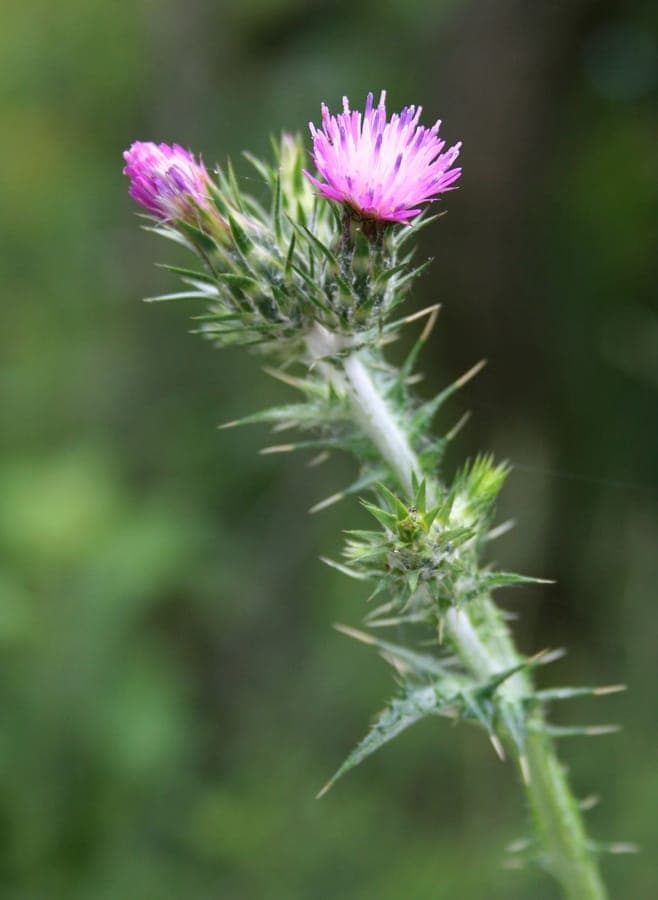
Carduus pycnocephalus, known as slender thistle or clustered-head thistle, is a biennial plant from the Asteraceae family. This robust plant grows in various conditions and is famous for its dense, compact flowering purple blooms. The plant can self-seed aggressively in wild areas, but also offers value for pollen and nectar-seeking insects.
Appearance and Bloom
This plant grows as a biennial. In the first year, it forms a low rosette of spiny leaves. In the second year, the stem rapidly rises to 60-150 centimeters and branches profusely. The stems are grooved and have strong spines along the entire length. The leaves are deeply lobed and very spiny. The flowers are small, purple to violet, and grow in densely compacted flower heads. Bloom appears from May to June.
Ideal Location
Carduus pycnocephalus grows virtually everywhere it is planted. Full sun is preferred, but the plant tolerates partial shade as well. This is not fussy about location and can grow in many different habitats from neglected to well-maintained areas. In cultivation, an open, sunny spot is preferred, though the plant can even grow in marginal areas.
Soil
The slender thistle grows in nearly all soils, from poor to highly nutrient-rich situations. The plant tolerates both heavy and light soils. Well-draining soils are preferred, however the plant can also grow in wetter situations. pH range is broad; the plant grows in both acidic and alkaline soils.
Watering
Once established, Carduus pycnocephalus is very drought tolerant. The plant can grow without supplemental water in most years. In extremely dry periods, some watering can promote growth. Ensure adequate drainage to prevent waterlogging in very wet conditions.
Diseño gratis
¿Quieres ver Carduus pycnocephalus: complete guide en tu jardín? Crea un diseño gratis ahora.
Pruning
Formal pruning is not necessary. The plant can, however, be pruned to prevent seed spread by removing flower heads before they set seed. If the plant occupies an unwanted location, the entire plant can be cut back at base level.
Maintenance Calendar
- April-May: Seedlings appear from natural seeding. Thin to desired plant spacing or remove unwanted seedlings.
- June-July: Stem grows rapidly. In cultivation, regular watering may be needed in dry periods.
- August: Flowers appear. Check for seed setting if spread is undesired.
- September-October: Seed becomes ripe. Collect or leave for natural seeding.
- November-March: Winter. Plant overwinters as rosette or is absent (annual).
Winter Hardiness
Carduus pycnocephalus is winter-hardy in many parts of Europe, including the Netherlands and Germany. As a biennial, it can overwinter as a rosette. In warm winters, the plant can bloom first-year. In very cold regions, the plant can grow as an annual.
Companion Plants
The slender thistle grows well in natural conditions with other wildflowers and grasses. The plant can, however, be suppressive to less robust species. In gardens, the plant can grow better in a separate plot or wild corner without disadvantaging other plants.
Closing Remarks
Carduus pycnocephalus offers gardeners a suitable wild thistle for natural gardens. Although the plant can self-seed aggressively, it becomes valuable for pollen and nectar-seeking insects. Manage seed setting to limit spread where needed, and enjoy this robust, flower-rich plant in the garden.
¿Quieres ver Carduus pycnocephalus: complete guide en tu jardín? Crea un diseño gratis ahora.
Sube una foto, elige un estilo y obtén un diseño fotorrealista con lista de plantas en menos de un minuto.
Más de 10.000 jardines diseñados
Sin tarjeta de crédito


Plantas similares
Calendula stellata: complete guide
Calendula stellata
Complete guide to Calendula stellata, the star-flowered marigold from Sicily: location, soil, watering and companion planting tips.
Korean chrysanthemum: complete guide
Chrysanthemum x rubellum
Chrysanthemum x rubellum is a hardy autumn perennial with single pink to copper flowers from August to November. Care and combinations.
Helianthus divaricatus: complete guide
Helianthus divaricatus
Helianthus divaricatus is a North American woodland sunflower with yellow summer blooms, ideal for naturalistic borders and shady edges.