
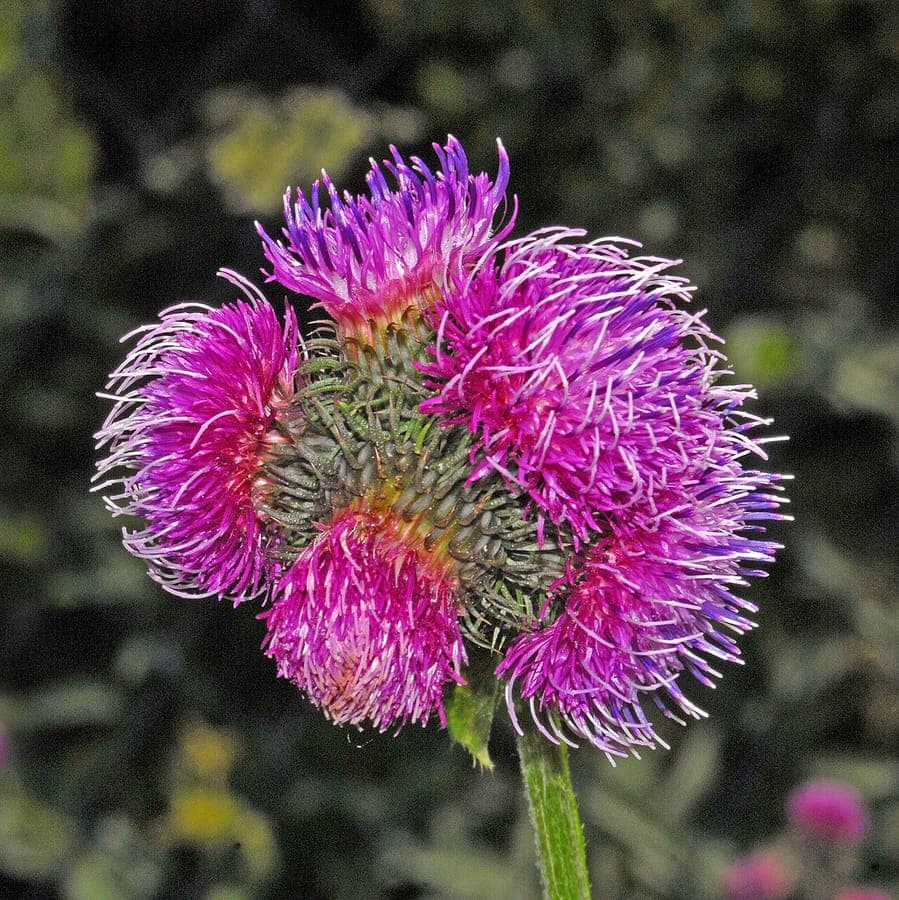
Hectonichus / CC BY-SA 4.0, via Wikimedia Commons
Carduus personata: complete guide
Carduus personata
¿Quieres ver Carduus personata: complete guide en tu jardín?
1 minuto, sin tarjeta de crédito
Overview
Carduus personata, also known as the masked thistle or mountain thistle, is a stately biennial plant native to European mountain regions. This thistle grows naturally in alpine and subalpine areas from Switzerland to Poland and beyond southeast. The plant is renowned for its robust growth, typically 60-120 centimeters tall, and its distinct purple to red flowers.
The name "personata" possibly refers to the masked appearance of certain plant parts. In temperate European regions, this is primarily a plant for wildflower meadows and rustic gardens.
Appearance & bloom
Carduus personata grows as an upright, strongly branched plant with spiky leaves and stems. The leaves are long, entire to coarsely toothed, and equipped with many strong thorns. Typically, the plant forms multiple flowering stems.
From July to September, numerous purple to reddish-purple flowers appear gathered in densely packed, spiky thistle heads at stem ends. The flowers attract butterflies and honeybees. After blooming, abundant seeds form that disperse easily on wind.
Ideal location
Full sun to partial shade works well. Carduus personata grows best in sunny locations but tolerates some afternoon shade. The plant is not particular and grows in many exposures. This mountain plant fits in wildflower meadows and rustic garden areas.
Soil
This thistle thrives on diverse soil types. It grows on nutrient-rich and moderately nutrient-poor soils, both acidic and alkaline. Well-drained soil is, however, preferred. Heavy, compacted soils can cause problems.
The plant prefers relatively nitrogen-rich soils, indicating locations with some organic material.
Diseño gratis
¿Quieres ver Carduus personata: complete guide en tu jardín? Crea un diseño gratis ahora.
Watering
Once established, Carduus personata needs little additional water. It is a drought-tolerant plant that can even flourish during dry summers. Water only in extremely dry conditions or during the first year after planting.
Pruning
Pruning is not necessary. If you want to limit the plant, you can remove spent flowers before seed formation to prevent unwanted self-seeding.
Maintenance calendar
- Spring (March-May): Plant on desired location or sow seeds.
- Summer (June-August): Monitor blooming. Significant insect activity.
- Autumn (September-October): Seeds mature. Allow seed dispersal or remove plant.
- Winter (November-February): First-year plants form rosettes.
Winter hardiness
Carduus personata is very winter-hardy. As a biennial, the first winter is survived in rosette form. This presents no problem in most European gardens. The plant dies after seed production in the second year.
Companion plants
This plant combines well with other wildflower plants like Oenothera biennis, Verbascum species, and other thistles. Avoid pairing with delicate garden plants due to strong growth pattern.
Closing thoughts
Carduus personata is a fascinating plant for wildflower enthusiasts and natural gardeners. Despite its "weedy" character, it has ecological value and insect appeal. The plant even attracts butterflies. Perfect for ecological and wildflower gardens.
You'll usually find the plant naturally if you sow wild seed mixes. For targeted cultivation, you can order seeds from wildflower seed suppliers.
Tips from gardenworld.app
On gardenworld.app, discover everything about wildflower design. Check our guide on mountain gardens and rustic gardens. Gardenworld.app helps you create a flourishing nature garden.
¿Quieres ver Carduus personata: complete guide en tu jardín? Crea un diseño gratis ahora.
Sube una foto, elige un estilo y obtén un diseño fotorrealista con lista de plantas en menos de un minuto.
Más de 10.000 jardines diseñados
Sin tarjeta de crédito


Plantas similares
Carduus crispus: complete guide
Carduus crispus
Learn about the curled thistle with its wavy spiky leaves. This European wildflower thrives in full sun on dry, well-drained locations with minimal care.
Carex frigida: complete guide
Carex frigida
Learn all about the icy sedge with fine needle-like leaves. This alpine sedge thrives in full sun on alpine soil with outstanding drainage and cool conditions.