
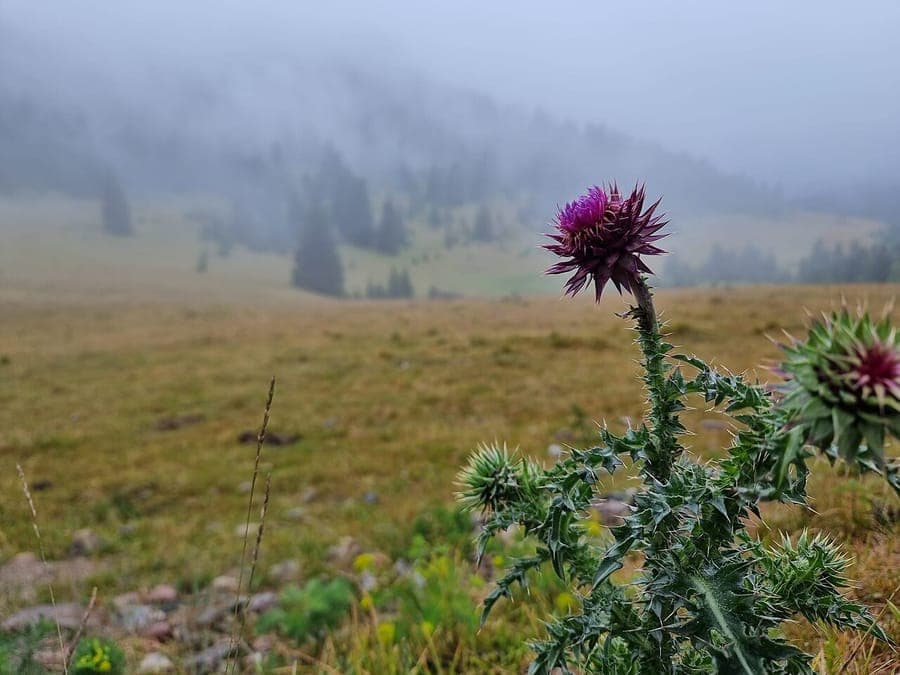
Andreiflorea993 / CC BY-SA 4.0, via Wikimedia Commons
Musk thistle: complete guide
Carduus nutans
¿Quieres ver Musk thistle: complete guide en tu jardín?
1 minuto, sin tarjeta de crédito
Overview
Musk thistle, botanically Carduus nutans, is an impressive biennial plant from the Asteraceae family (which includes sunflowers and chrysanthemums), native to Europe through Siberia. This plant is recognized for its characteristic nodding flowers and pronounced spiny structure. Although considered a weed in some regions, musk thistle offers valuable nectar sources for bees, butterflies, and other pollinators. With proper management, it can be an interesting addition to wildflower meadows or ecological gardens.
On gardenworld.app, you can design pollinator-friendly gardens where native thistles and other bee forage are prominently featured.
Appearance & bloom cycle
Musk thistle typically grows 50-150 cm tall with stiff, heavily spined leaves. Stems are softly hairy with spines that are red-tipped. The flowers are the most striking feature: purple to pink, globular, and characteristically nodding - hence the botanical name. Bloom occurs May through October. After pollination, winged seeds disperse readily on the wind.
The plant forms only a leaf collection its first year, then flowers and sets seed in the second year.
Ideal location
Musk thistle thrives in full sun (at least 6-8 hours of direct light daily). The plant adapts well to part-shade, though flowering will be less abundant. For best results: unlimited sunshine and good air movement.
Soil requirements
Musk thistle grows on virtually all soil types: sand, loam, heavy clay. The plant tolerates poor nutrition and accepts acidic to alkaline conditions. Actually thrives on nutrient-poor soils. Good drainage is desired but not essential.
Watering
Once established, musk thistle requires minimal supplemental watering. Young seedlings benefit from regular moisture during their first 4-6 weeks. Mature plants are very drought-tolerant.
Diseño gratis
¿Quieres ver Musk thistle: complete guide en tu jardín? Crea un diseño gratis ahora.
Maintenance
Musk thistle requires minimal maintenance. The plant can self-seed aggressively. To limit spread: cut flowers before full maturity or pull plants before seed set. Wear gloves when handling due to spines.
Maintenance calendar
March-April: Direct sow seeds outdoors or in containers. Transplant seedlings when large enough. May-June: Plant grows vegetatively in year one. Minimal maintenance. July-September: Year two: bloom period. Monitor for self-seeding. October-November: Seed dispersal. Cut nodding flowers before seed maturity to maintain control.
Winter hardiness
Musk thistle is hardy to USDA zones 3-4, perfect for Dutch and Belgian gardens. The plant survives cold winters without protection.
Ecological value
Musk thistle provides essential nectar sources for bees, hoverflies, and other pollinators. Many butterfly larvae use thistle species as food plants. In ecological gardens and pollinator meadows, this plant is extremely valuable.
Control & invasiveness
In some regions (notably North America), musk thistle is invasive. In Europe, control is usually unnecessary, though you can limit the plant by removing seed heads before complete maturity.
Companion plants
Musk thistle pairs well with other pollinator-friendly wildflowers like poppies, bee balm, and lavender.
Where to buy
Musk thistle seeds are readily available from seed merchants offering pollinator-friendly plants. Some specialize in ecological meadow and wildflower seeds.
Using gardenworld.app, design beautiful pollinator-friendly wildflower gardens where musk thistle serves as a true focal point while supporting vital ecosystems.
¿Quieres ver Musk thistle: complete guide en tu jardín? Crea un diseño gratis ahora.
Sube una foto, elige un estilo y obtén un diseño fotorrealista con lista de plantas en menos de un minuto.
Más de 10.000 jardines diseñados
Sin tarjeta de crédito


Plantas similares
Calendula stellata: complete guide
Calendula stellata
Complete guide to Calendula stellata, the star-flowered marigold from Sicily: location, soil, watering and companion planting tips.
Korean chrysanthemum: complete guide
Chrysanthemum x rubellum
Chrysanthemum x rubellum is a hardy autumn perennial with single pink to copper flowers from August to November. Care and combinations.
Helianthus divaricatus: complete guide
Helianthus divaricatus
Helianthus divaricatus is a North American woodland sunflower with yellow summer blooms, ideal for naturalistic borders and shady edges.