
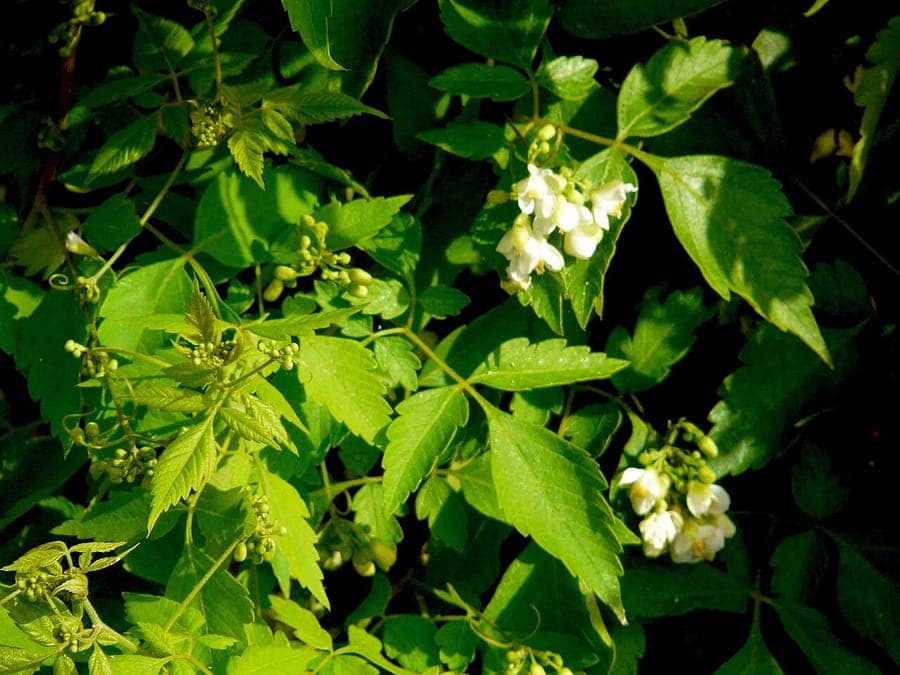
Bernd Sauerwein / CC BY-SA 3.0, via Wikimedia Commons
Balloonvine: complete guide
Cardiospermum grandiflorum
¿Quieres ver Balloonvine: complete guide en tu jardín?
1 minuto, sin tarjeta de crédito
Balloonvine (Cardiospermum grandiflorum), also known as heartseed or showy balloonvine, is an ornamental climbing plant of tropical origin from Americas and Africa. This plant is renowned for its characteristic heart-shaped seeds enclosed in papery, balloon-like fruits that immediately catch the eye.
Flowers and Fruit: The flowers of Cardiospermum grandiflorum are small, white to yellow colored, appearing in panicles. However, the main attraction is the decorative fruit display: papery, inflated pods approximately 3/4 to 1 inch across that are translucent, revealing the underlying heart-shaped seeds. This unique feature makes it a beloved accent plant.
Growth Habit and Appearance: This is a tendril-climbing plant with slender, hook-like tendrils that easily grasp support. The leaves are finely-toothed, compound leaves that are elegant in appearance. The plant can reach 6-10 feet high depending on support and conditions.
Location and Light: Balloonvine grows best in full sun to light partial shade. It requires at least 5-6 hours of direct sunlight daily for optimal growth and fruit production. Plant against a pergola, fence, or other vertical support.
Soil and Feeding: Strong preference for well-draining, nutrient-rich soil. Plant in compost-enriched soil for best performance. Once established, it can grow on moderately fertile soils, though regular feeding encourages blooming and fruiting.
Care and Maintenance: Water regularly during growing seasons, especially in warm periods. Once established, it is relatively drought-tolerant. Remove dead or damaged tendrils regularly. Balloonvine can be shaped by pinching to stimulate bushier growth.
Blooming and Fruiting: Blooms typically appear in summer, followed by the decorative fruits that can persist into fall. This makes it a long-season ornament for gardens.
Winter Hardiness: Cardiospermum grandiflorum is not winter-hardy in most temperate climates. It is grown as an annual or in containers in cooler regions, moved indoors during winter.
Availability: In English-speaking regions, find balloonvine seeds and plants at garden centres, especially in the climbing plants section. Seeds can also be ordered online from specialty suppliers.
Companion Plants: Combine with other climbing plants such as Ipomoea (morning glory) or Clematis for a combined pergola display. The unique papery fruits make it an interesting partner for other flowering climbers.
Garden Uses: Balloonvine is perfect as an annual climber for quick pergola, screen, and trellis coverage. The fruit display makes it particularly interesting in fall-focused gardens.
Closing Remarks: Balloonvine is an unconventional choice with its remarkable heart-shaped fruits. Perfect for gardeners seeking something special. For more designs and advice visit gardenworld.app.
¿Quieres ver Balloonvine: complete guide en tu jardín? Crea un diseño gratis ahora.
Sube una foto, elige un estilo y obtén un diseño fotorrealista con lista de plantas en menos de un minuto.
Más de 10.000 jardines diseñados
Sin tarjeta de crédito


Plantas similares
Acer pycnanthum: complete guide
Acer pycnanthum
Acer pycnanthum, the Japanese swamp maple, is a fast-growing tree with early red flowers and brilliant autumn color, ideal for damp garden settings.
Freeman maple: complete guide
Acer × freemanii
Everything about the Freeman maple (Acer x freemanii): a fast-growing shade tree with spectacular autumn colour for large gardens.
Wild ackee: complete guide
Cupania americana
A comprehensive guide to Cupania americana, a tropical tree from the Sapindaceae family with conspicuous white flowers and brown fruits, native to tropical America.