
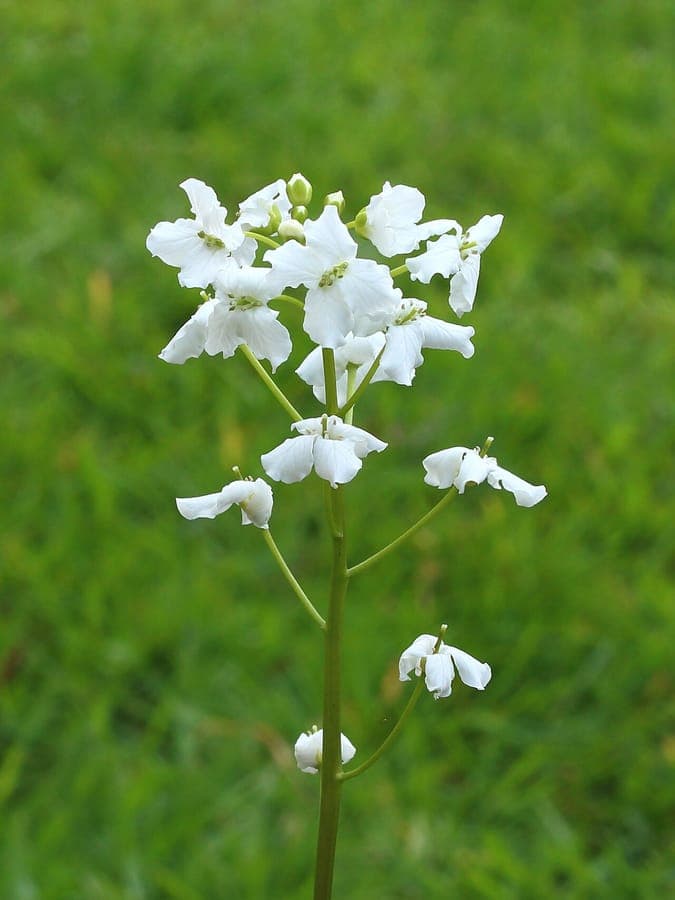
Dominicus Johannes Bergsma / CC BY-SA 3.0, via Wikimedia Commons
Cardamine trifolia: complete guide
Cardamine trifolia
¿Quieres ver Cardamine trifolia: complete guide en tu jardín?
1 minuto, sin tarjeta de crédito
Overview
Cardamine trifolia, commonly known as three-leaved bittercress or trefoil cress, is a delightful spring ephemeral native to Central Europe. Growing naturally in the woodlands of Austria, Italy, Poland, and former Yugoslavia, this elegant plant thrives in moist, shaded environments. The name 'trifolia' refers to the characteristic three-leafed structure that resembles clover - a unique trait making this plant immediately recognizable.
In Northern European gardens, this plant remains relatively uncommon, yet it offers exceptional value for woodland schemes and shaded borders. With subtle charm and modest growth habits, Cardamine trifolia fits perfectly into naturalistic garden designs seeking frost-hardy, early-flowering ground covers that deliver seasonal structure and interest.
Appearance and bloom
Cardamine trifolia grows to approximately 25-30 centimetres in height, forming compact, spreading mats. The most distinctive feature is its trifoliate leaves - each leaf consists of three small, rounded leaflets that become progressively lighter as they mature. The foliage texture is pleasingly fine, maintaining green colouration well into summer.
In April and May, elegant flowers appear in dense racemes. The blooms are soft white with four petals characteristic of the Brassicaceae family. These flowers attract early pollinators and maintain an extended, patient flowering period lasting into June. Once flowers fade, small seed pods develop, enabling natural proliferation via self-seeding.
Ideal location
Cardamine trifolia is a classical shade plant performing optimally under deciduous trees where dappled light filters through. The plant tolerates complete shade admirably, though it also grows acceptably in partial shade. Avoid direct afternoon heat, which can cause leaf scorch.
The plant excels in:
- Shaded woodland schemes beneath mature trees
- Natural underplanting in naturalistic gardens
- Along wooded margins and shaded pathways
- As ground cover beneath shrubs and deciduous perennials
In larger gardens, Cardamine trifolia combines beautifully with other spring ephemerals including snowdrops, hepatica, and hellebores.
Soil
Cardamine trifolia prefers moist, humus-rich soil with slightly acidic to neutral pH (6.5-7.5). The plant thrives optimally in forest soil abundant in organic material. This supports water retention - essential given the plant's woodland origin where soils are initially moist and organically charged.
Prepare planting holes by adding generous organic material - compost or processed leaf mould. This improves water-holding capacity whilst introducing beneficial nutrients. Ensure soil drains adequately; though the plant values moisture, waterlogged conditions promote root rot.
Diseño gratis
¿Quieres ver Cardamine trifolia: complete guide en tu jardín? Crea un diseño gratis ahora.
Watering
Once established, Cardamine trifolia is reasonably drought-tolerant, though it performs best in evenly moist soil throughout the growing season. Water regularly in the first year post-planting until roots have established.
During dry spells, particularly in summer, supplementary watering proves beneficial. Avoid wetting foliage; instead, water at the plant base. During wet winters, supplementary irrigation proves unnecessary.
Pruning
Cardamine trifolia requires minimal pruning maintenance. Post-bloom, spent flowers may be removed for tidiness, though this isn't strictly necessary. Seeds can remain on the plant for natural propagation if you wish the plant to self-seed spontaneously.
A light spring tidy (March/April) helps remove damaged or dead leaves, promoting vigorous fresh growth.
Maintenance calendar
- March-April: Remove dead foliage; ensure no weeds establish beneath the plant
- April-June: Monitor flowering; water regularly during dry spells
- June-July: Seeds self-disperse naturally; remove if you prefer limiting spread
- July-September: Gradually reduce watering as dormancy approaches
- October-February: Winter rest; minimal maintenance required
Winter hardiness
Cardamine trifolia is thoroughly winter hardy to zone 4, withstanding temperatures to minus 30 degrees Celsius. Throughout Northern Europe, this plant thrives outdoors without protection. Foliage persists through winter, though it may fade somewhat during severe spells.
Frost concerns are unnecessary. Rather, ensure excellent winter drainage - soggy feet in January prove more damaging than harsh freezing.
Companion plants
Cardamine trifolia combines beautifully with:
- Helleborus niger (Christmas rose): red-purple foliage, timed flowering
- Galanthus nivalis (Snowdrops): white co-flowering ground cover
- Hepatica nobilis (Liverleaf): purple-blue blooms simultaneously
- Polystichum setiferum (Soft shield fern): contrasting foliage form
- Epimedium (Fairy wings): red juvenile growth and yellow blooms
- Ajuga reptans (Bugle): alternative growth form in identical conditions
Closing remarks
Cardamine trifolia deserves wider adoption in Northern European gardens, particularly for those seeking frost-hardy, shade-loving ground covers delivering elegance to woodland schemes. The plant demands minimal maintenance, poses no toxicity risk to children and pets, and offers early blooms precisely when other plants slumber.
You may collect seeds and overwinter them in cold conditions for spring propagation, or simply appreciate natural self-seeding. At specialist nurseries, you'll occasionally find small rosettes available. Support them through establishment, and you'll enjoy years of miniature woodland magic. This resilient plant transforms shady corners into enchanting natural scenes - the very essence of gardenworld.app philosophy: gardens working harmoniously with natural rhythms.
¿Quieres ver Cardamine trifolia: complete guide en tu jardín? Crea un diseño gratis ahora.
Sube una foto, elige un estilo y obtén un diseño fotorrealista con lista de plantas en menos de un minuto.
Más de 10.000 jardines diseñados
Sin tarjeta de crédito


Plantas similares
Brassica cretica: complete guide
Brassica cretica
Brassica cretica, the Cretan cabbage, grows wild on Aegean cliffs. Discover how to grow this drought-tolerant, yellow-flowered Mediterranean perennial.
Corsican cabbage: complete guide
Brassica insularis
Corsican cabbage is a rare Mediterranean rock cabbage with white flowers and blue-green leaves. Location, soil and winter protection.
Prostrate cabbage: complete guide
Brassica procumbens
Prostrate cabbage is a creeping North African cliff plant with yellow flowers. Discover location, soil type and winter protection.