
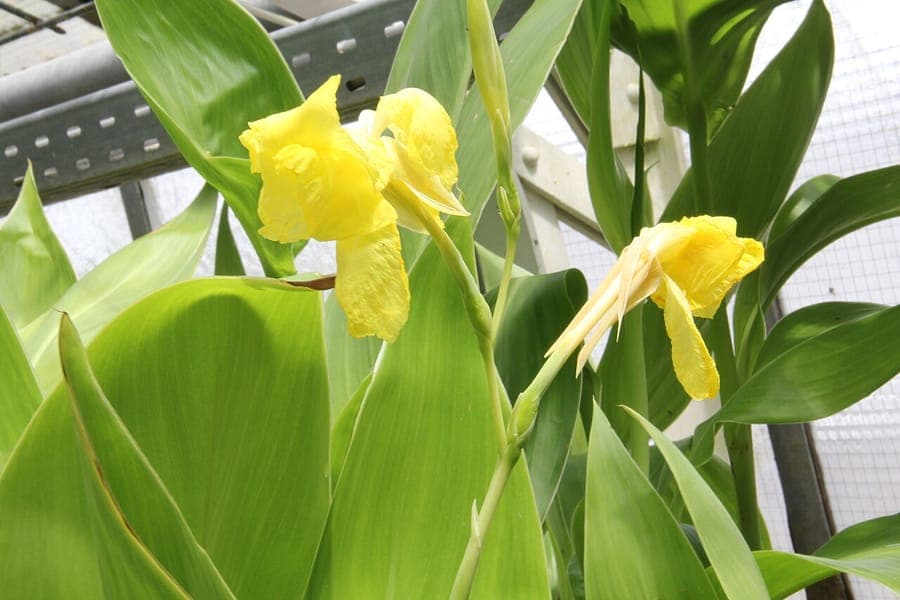
Peter A. Mansfeld / CC BY 3.0, via Wikimedia Commons
Canna flaccida: complete guide
Canna flaccida
¿Quieres ver Canna flaccida: complete guide en tu jardín?
1 minuto, sin tarjeta de crédito
Overview
Canna flaccida, known as bandana-of-the-everglades or golden canna, is a magnificent tropical plant native to southeastern United States and Texas. This spectacular canna belongs to Cannaceae family and is celebrated for its rich golden-yellow flowers and elegant foliage. It is ideal for water gardens, ponds, garden borders and container cultivation in warm climates.
Appearance and Bloom
Canna flaccida grows as a stately plant with broad, lanceolate leaves in bright to deep green. The plant reaches 60 to 120 centimeters tall. Flowers appear July through October in rich golden-yellow tones with sometimes orange accents. They stand in clusters atop strong stems. Blooms are symmetrical and striking, remain open for weeks, attracting birds and pollinators.
Ideal Location
Place canna flaccida where it receives at least six hours of direct sunlight daily. Full sun produces richest bloom color. Partial sun works well too. This plant thrives along water features, in wet borders and even in shallow water gardens (up to 15 centimeters deep). In warm climates prefer full sun; in very hot areas afternoon shade offers protection.
Soil
Canna flaccida grows optimally in rich, nutrient-dense soil full of organic matter. Add compost or aged manure during planting. The plant prefers wet to very wet soil, provided some drainage exists. In garden borders, incorporate plenty of peat moss or coconut coir for moisture retention. Along water edges and pond margins, no special soil preparation is needed. Neutral to slightly acidic pH is ideal.
Watering
This plant loves staying moist, almost tropical. Water abundantly during the growing season. In dry climates, water daily in hottest months. In wet regions, less watering is needed. This plant even grows in shallow water (5-15 centimeters deep). Drought sensitivity: avoid extreme dryness as it disrupts blooming.
Diseño gratis
¿Quieres ver Canna flaccida: complete guide en tu jardín? Crea un diseño gratis ahora.
Pruning
Remove yellowed or brown leaves continuously. After blooming, brown flowers may be removed, stimulating renewed blooming. In autumn, dead stems may be cut to ground level. The plant blooms continuously from summer until frost. In cold climates experiencing frost, cut everything to ground level to prepare for overwintering.
Maintenance Calendar
April to May: plant in full warmth; start rich feeding. June to October: regular water and feeding every two weeks. October to November: stop feeding; bloom gradually decline. December to March: minimal care; in cold climates protect soil against frost.
Winter Hardiness
Canna flaccida is frost-sensitive, but roots can survive in mild-winter climates. It is hardy to approximately minus 5 to 0 degrees Celsius. In Northern European climates, the plant must be dug up and stored frost-free, perhaps in a cool shed on dry sawdust. In containers, it can overwinter indoors. Roots can tolerate slight frost if kept dry.
Companion Plants
Combine canna with other waterside plants like Iris, Pickerel rush and Pontederia. In borders, tall forms work well as background plants. Low-growing flowers like Begonia and Impatiens provide contrast. Hosta and other foliage create interesting texture contrast. Ensure all companions share preference for moist soil.
Closing
Canna flaccida brings tropical elegance to any water garden or wet site. Its golden-yellow flowers and strong growth habit make it an unmatched groundcover along waterside. In the UK, specialist aquatic nurseries carry it. Visit gardenworld.app for design ideas with waterside plants and tropical species. In sunny wet locations, this Everglades beauty flowers until autumn frost. With rich feeding and abundant water, you'll enjoy months of vibrant blooms. Explore gardenworld.app for inspiration with water garden designs.
¿Quieres ver Canna flaccida: complete guide en tu jardín? Crea un diseño gratis ahora.
Sube una foto, elige un estilo y obtén un diseño fotorrealista con lista de plantas en menos de un minuto.
Más de 10.000 jardines diseñados
Sin tarjeta de crédito


Plantas similares
Acer pycnanthum: complete guide
Acer pycnanthum
Acer pycnanthum, the Japanese swamp maple, is a fast-growing tree with early red flowers and brilliant autumn color, ideal for damp garden settings.
Freeman maple: complete guide
Acer × freemanii
Everything about the Freeman maple (Acer x freemanii): a fast-growing shade tree with spectacular autumn colour for large gardens.
Silver vine: complete guide
Actinidia polygama
Discover silver vine (Actinidia polygama): a hardy climbing plant with silvery foliage, loved by gardeners and cats alike.