
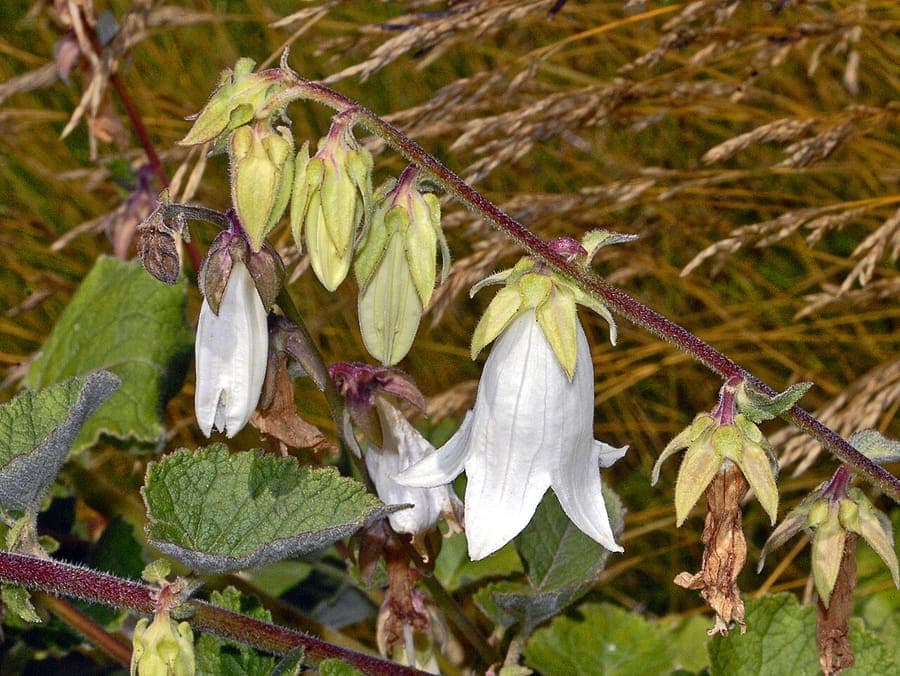
Hectonichus / CC BY-SA 3.0, via Wikimedia Commons
Campanula lanata: complete guide
Campanula lanata
¿Quieres ver Campanula lanata: complete guide en tu jardín?
1 minuto, sin tarjeta de crédito
Overview
Campanula lanata, commonly known as the woolly bellflower, is a captivating alpine plant native to the mountain regions of Serbia and Bulgaria. This plant is renowned for its extremely soft, velvety covering that adorns the entire specimen. The name "lanata" directly references this characteristic woolly texture that makes it so visually distinctive.
This mountain gem forms compact rosettes and blooms throughout summer months with delicate flowers. It's a true favorite for rock gardens and alpine settings where its small stature fits perfectly.
Appearance & bloom
Campanula lanata grows as a low, velvety mat. The leaves are small, hairy, and form tight rosette patterns. The defining feature is the dense hairiness covering the entire plant, giving it a distinctive velvety appearance. The flowers are small, funnel-shaped, and typically purple to reddish-purple in color.
From August to September, the plant reaches peak bloom with numerous small flowers rising above the foliage. It remains compact, usually no taller than 10-15 centimeters.
Ideal location
Full sun is absolutely essential for healthy growth. Campanula lanata thrives in locations with at least 6-8 hours of direct sunlight daily. In their native Balkan mountains, they grow on open meadows, so they love bright, sunny positions.
Perfect for rock gardens, terraces, and mountain faces. The plant integrates beautifully into alpine gardens and on stone paths where you can appreciate its delicate growth pattern.
Soil
Good drainage is absolutely critical. Campanula lanata cannot tolerate wet, compacted soils. Provide slightly acidic to neutral, very well-draining substrate. A mix of alpine soil, coarse sand, and gravel works excellently.
In containers, this plant thrives even better than in open ground. A potting mix of approximately 1 part garden soil, 1 part sand, and 2 parts gravel offers optimal results.
Diseño gratis
¿Quieres ver Campanula lanata: complete guide en tu jardín? Crea un diseño gratis ahora.
Watering
This mountain plant cannot tolerate water excess. Water only when the soil genuinely feels dry. During the growing season, water carefully and sparingly. After flowering and in winter, reduce watering drastically.
Pruning
Pruning is rarely necessary. After flowering, you can remove spent blooms for tidier appearance. This plant naturally maintains its attractive form.
Maintenance calendar
- Spring (March-May): Begin watering cautiously.
- Summer (June-August): Regular, sparing watering.
- Autumn (September-October): Gradually reduce watering.
- Winter (November-February): Minimal watering.
Winter hardiness
Campanula lanata is extremely cold-hardy to -10°C to -15°C. This mountain plant from the Balkans requires no special winter protection in most European gardens. The real concern is moisture excess, not cold.
Companion plants
This plant grows beautifully alongside other alpine flowers. Try it next to Silene acaulis, Dianthus glacialis, or other mountain blooms. Sedum species work well too, as they share the same drainage preference.
Closing thoughts
Campanula lanata is a fascinating plant for alpine garden enthusiasts. The velvety hairiness makes it a visual and tactile jewel. With good drainage and sunny position, this plant will thrive for many years in your garden.
Find this plant at specialized nurseries. Ask your local garden center to order it for you.
Tips from gardenworld.app
On gardenworld.app, discover how to design the most beautiful rock gardens. Check our complete guide to alpine gardening. Gardenworld.app helps you create an alpine paradise.
¿Quieres ver Campanula lanata: complete guide en tu jardín? Crea un diseño gratis ahora.
Sube una foto, elige un estilo y obtén un diseño fotorrealista con lista de plantas en menos de un minuto.
Más de 10.000 jardines diseñados
Sin tarjeta de crédito


Plantas similares
Campanula cenisia: complete guide
Campanula cenisia
Discover the delicate Mont Cenis bellflower - an alpine jewel for rock gardens. Learn how to grow this charming mountain plant perfectly with good drainage.
Carex frigida: complete guide
Carex frigida
Learn all about the icy sedge with fine needle-like leaves. This alpine sedge thrives in full sun on alpine soil with outstanding drainage and cool conditions.