
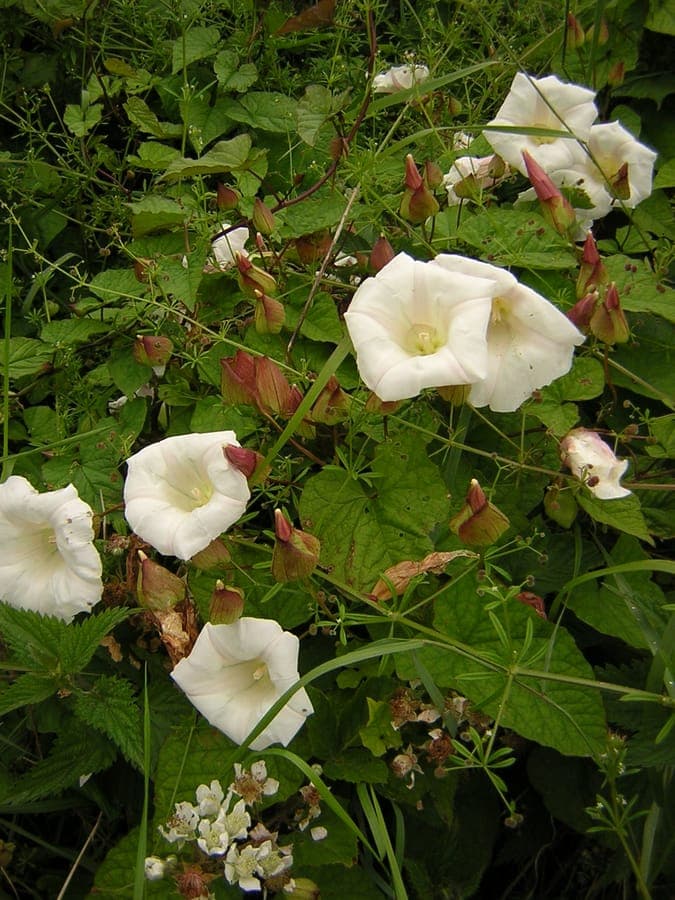
No machine-readable author provided. Aroche assumed (based on copyright claims). / CC BY-SA 3.0, via Wikimedia Commons
Calystegia silvatica: complete guide
Calystegia silvatica
¿Quieres ver Calystegia silvatica: complete guide en tu jardín?
1 minuto, sin tarjeta de crédito
Overview
Calystegia silvatica, commonly known as woodland bindweed or great bindweed, is a vigorous climbing plant from the Convolvulaceae family. This powerful climber originates from Mediterranean regions and now grows wild in many temperate climates worldwide. With its large, snow-white flowers and rapid growth, this plant adds dramatic height and texture to gardens and pergolas.
The plant proves exceptionally suited for covering large areas. It can reach several meters height in just weeks, making it ideal for fast privacy screens and vertical garden accents. The flowering period is lengthy and abundant, providing months of admirable visual impact. However, this is a vigorous grower - use proper restraint and support to keep the plant manageable.
Appearance & bloom
Calystegia silvatica displays large, heart-shaped leaves growing along strong, hairy stems. The leaves reach 10 to 15 centimeters length and feature characteristic pointed apex. The stems themselves are robust and can reach meters in a single season if unpruned.
The flowers prove the real highlight. They appear from June through October in full glory. Each bloom reaches 5 to 8 centimeters diameter and is pure white with fine pink or red veining. The trumpet-like shape is characteristic of the Convolvulaceae family. Flowers open in morning and close in afternoon on clear days.
Abundant flowering persists throughout the growing season. The combination of massive foliage with overspreading white blooms creates spectacular garden sight.
Ideal location
Calystegia silvatica thrives best in sunny to partly shaded locations. At least four to six hours of direct sunlight daily promotes optimal blooming, although the plant grows in lightly shaded conditions too. Position on sturdy support structure - pergola, wall, fence, or garden archway.
The plant demonstrates flexibility regarding position but prefers warm, sheltered spots where water quality drains well. It grows excellently against southwest-facing walls where it absorbs warmth. Ensure sufficient air circulation to prevent fungal disease.
Soil
Calystegia silvatica proves undemanding regarding soil type but thrives best in well-draining, nutrient-rich soil. The plant grows even in less productive soils, although nutrients and water availability influence growth rate. For best performance, add compost and ensure good drainage.
The plant tolerates pH values from approximately 6.0 to 8.0. When planting in heavy clay soils, add sand and organic matter to improve drainage. Rich, well-draining soil promotes faster growth and more abundant flowering.
Diseño gratis
¿Quieres ver Calystegia silvatica: complete guide en tu jardín? Crea un diseño gratis ahora.
Watering
Once established, Calystegia silvatica requires regular watering, particularly during growth and flowering periods. Water moderately when upper 2-3 centimeters feel dry. Avoid stagnant water, which causes root rot. During hot periods, supplemental watering may prove necessary.
During rainy seasons, reduce watering frequency. The plant requires moisture but tolerates drought better than waterlogging. Deep watering suits better than frequent sprinkling. Early-morning watering proves optimal.
Pruning
Pruning remains essential for Calystegia silvatica due to its vigor. Without pruning, the plant can rampage and smother nearby plantings. Prune heavily early season (spring) back to 50 percent height. This encourages bushier growth.
During growing season, monitor regularly and remove unwanted growth. Tie and direct stems along your support structure. After flowering (October-November), prune back drastically - even to ground level in harsher climates. This allows the plant to store energy in the rhizome over winter.
Maintenance calendar
Spring (March-April): plant new specimens or remove previous season growth. Apply fertilizer once. Summer (May-August): prune as needed, water regularly, monitor for disease. Autumn (September-October): enjoy flowers until frost, remove dead foliage, perform final pruning. Winter: minimal activity - plant rests.
Feeding: apply balanced fertilizer once in spring and once in early summer.
Winter hardiness
Calystegia silvatica proves reasonably winter-hardy in temperate climates. Above-ground growth dies at frost, but the rhizome survives underground. In the Netherlands, it tolerates temperatures around -5 to -10 degrees Celsius.
In very severe winters, additional protection helps. Mulch around base with 10-15 centimeters leaves or straw to protect the rhizome. The plant returns next spring and shoots rapidly.
Companion plants
Calystegia silvatica combines well with other climbers. Mix with clematis for color contrast. Combine with blue-flowering Ampelopsis for texture difference. Ivy at base for decoration.
Other possibilities: jasmine, Honeysuckle (though both vigorous - watch for competition), or more modest herbaceous climbers. Plants with different flowering periods help maintain visual interest throughout the season.
Closing thoughts
Calystegia silvatica offers spectacular choice for gardeners desiring dramatic height and rapid coverage. With its enormous white flowers and full growing strength, it adds dramatic dimension to any garden. Proper pruning and support ensures this plant genius remains manageable while delivering beauty.
Find products at specialty garden retailers. For inspiration and advice, visit gardenworld.app. With this climbing plant, you will quickly create a green paradise.
¿Quieres ver Calystegia silvatica: complete guide en tu jardín? Crea un diseño gratis ahora.
Sube una foto, elige un estilo y obtén un diseño fotorrealista con lista de plantas en menos de un minuto.
Más de 10.000 jardines diseñados
Sin tarjeta de crédito


Plantas similares
Spreading alkaliweed: complete guide
Cressa truxillensis
Full growing guide for Cressa truxillensis, the salt-tolerant groundcover of alkaline flats: location, soil, watering, pruning and winter care.
Betony-leaved bindweed: complete guide
Convolvulus betonicifolius
Full guide to betony-leaved bindweed (Convolvulus betonicifolius): origin, appearance, ideal site, soil, watering and garden uses.
Ivyleaf morning glory: complete guide
Ipomoea hederacea
Everything about Ipomoea hederacea: location, soil and climbing care. A fast-growing annual vine with blue funnel flowers for sunny walls and pergolas.