
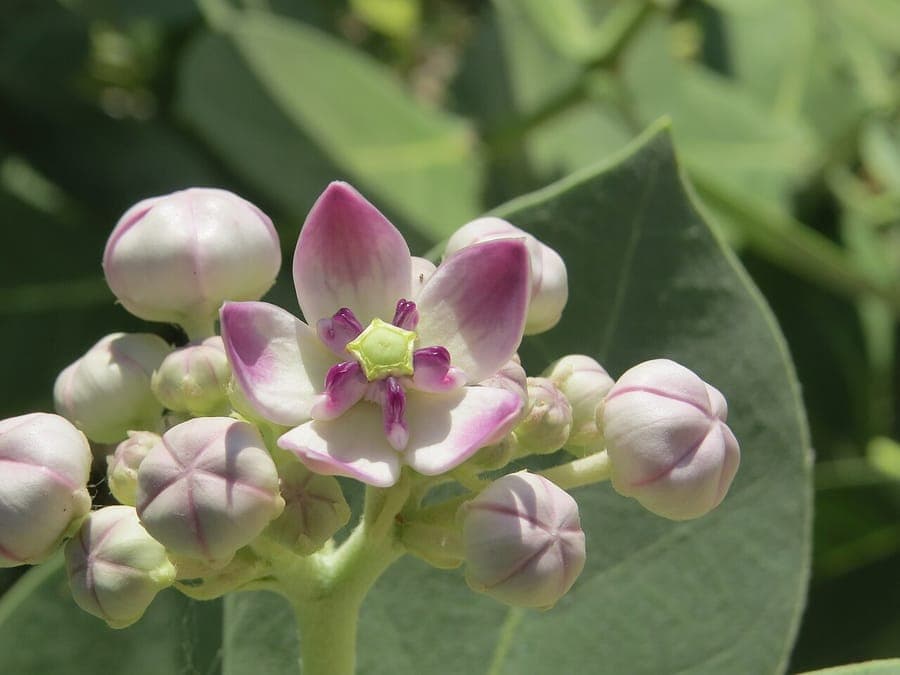
Vinayaraj / CC BY-SA 4.0, via Wikimedia Commons
Calotropis: complete guide
Calotropis procera
¿Quieres ver Calotropis: complete guide en tu jardín?
1 minuto, sin tarjeta de crédito
Overview
Calotropis procera, known as giant milkweed or apple of Sodom, is a remarkable tropical shrub celebrated for extreme drought and heat tolerance. Native to Africa, the Middle East and South Asia, calotropis thrives in the harshest arid landscapes where few plants survive. The shrub bears striking rosy-purple flowers, and all plant parts contain toxic white sap that served traditionally as insecticide and poison. For hot gardens or xeriscaping, this is an excellent choice for dramatic effect with minimal maintenance.
Appearance and blooming cycle
Calotropis procera grows as a shrub reaching 1-3 meters tall with grey-green, waxy foliage. Leaves are large and elongated, with heavy waxy coating protecting against water loss. Flowers are spectacular - rosy-purple and pink with yellow centers, arranged in dense clusters. The white milky sap throughout the plant is highly toxic and traditionally used as insecticide. After flowering, large, thick-walled seed pods develop containing hundreds of silky, wind-dispersed seeds.
Ideal location
Calotropis thrives in very hot, fully sunny locations with minimal shelter. Position on south or west-facing walls or open fields where temperatures soar. The plant tolerates extreme heat far better than most crops. In cool climates, grow in large containers positioned in full sun. Avoid shade - this is a true sun-lover. Perfect for Mediterranean or semi-arid landscapes where other plants struggle.
Soil requirements
Calotropis is not fussy about soil type. Sandy, rocky, even extremely nutrient-poor earth is accepted readily. Poor soil is actually preferred over rich earth. Excellent drainage is essential - waterlogging is fatal. Plant in sand or gravel with minimal organic matter. The plant even tolerates saline-laden soils, making it useful for coastal regions.
Watering
Calotropis is extraordinarily drought-tolerant. Once established, mature plants need water only in extreme drought. Adult plants may survive months without rain. Water young plants regularly until well-rooted (first month), thereafter sparingly. Excess water causes root rot. In containers, water minimally - only when leaves begin to wilt noticeably.
Diseño gratis
¿Quieres ver Calotropis: complete guide en tu jardín? Crea un diseño gratis ahora.
Feeding
Calotropis requires no feeding whatsoever. The plant thrives in poor soil and tolerates nutrient-limited conditions. Feeding is unnecessary and may upset the plant's equilibrium. Minimal fertilizer at planting time, then never again.
Pests and diseases
Calotropis is exceptionally resistant to pests and diseases. The toxic white sap protects the plant against most insects and animals. Some specialized insect species do feed on it regardless. Fungal problems are rare due to dry growing conditions. The plant is essentially maintenance-free from a pest perspective.
Important caution
All parts of calotropis, especially the milky sap, are highly toxic. Wear gloves when handling the plant. Do not position in gardens where children and pets roam freely. The sap causes irritation on eye contact. Some traditional medicinal applications are dangerous and not recommended without medical supervision. Never ingest any part.
Maintenance calendar
APRIL-MAY: Plant in warm soil. MAY-SEPTEMBER: Blooming period, minimal water. OCTOBER: Further reduce water. NOVEMBER-MARCH: Minimal maintenance, protect from frost.
Winter hardiness
Calotropis is not cold-hardy. The plant dies in freezing conditions. In cool climates, grow exclusively in containers and move indoors by October. Alternatively, plant in regions where winter temperatures don't fall below 5 degrees Celsius. In southern France, it may survive mild winters in very sheltered locations with protection.
Propagation
Calotropis self-seeds readily via silky seeds from thick seed pods. Collect mature pods and extract seeds onto sand. The seeds germinate easily in warm sand, making home propagation straightforward. This provides an economical way to establish multiple plants.
Closing thoughts
Calotropis is a fascinating plant for the drought-tolerant gardener. With extreme resistance to heat and dryness, it's a powerhouse for hot, dry regions. The plant's toxicity makes it intriguing but demands caution. For xeriscaping in warm regions or container culture, this is a unique choice. Plant in dry sand and neglect it - this is a self-reliant plant needing little attention.
Discover more drought-resistant plants at gardenworld.app/en - explore other hardy desert shrubs!
¿Quieres ver Calotropis: complete guide en tu jardín? Crea un diseño gratis ahora.
Sube una foto, elige un estilo y obtén un diseño fotorrealista con lista de plantas en menos de un minuto.
Más de 10.000 jardines diseñados
Sin tarjeta de crédito


Plantas similares
Asclepias speciosa: complete guide
Asclepias speciosa
Showy milkweed: striking pink-white flowers, fragrant blooms. Essential monarch butterfly host plant.
Plumeria obtusa: complete guide
Plumeria obtusa
Discover the Singapore graveyard flower: an exotic evergreen with mesmerizing white blooms and exquisite fragrance. Expert cultivation, care, and maintenance tips.
Wrightia arborea: complete guide
Wrightia arborea
Wrightia arborea, known as doodhi, is an elegant tree from South Asia with delicate white flowers. Discover how to cultivate this exotic plant.