
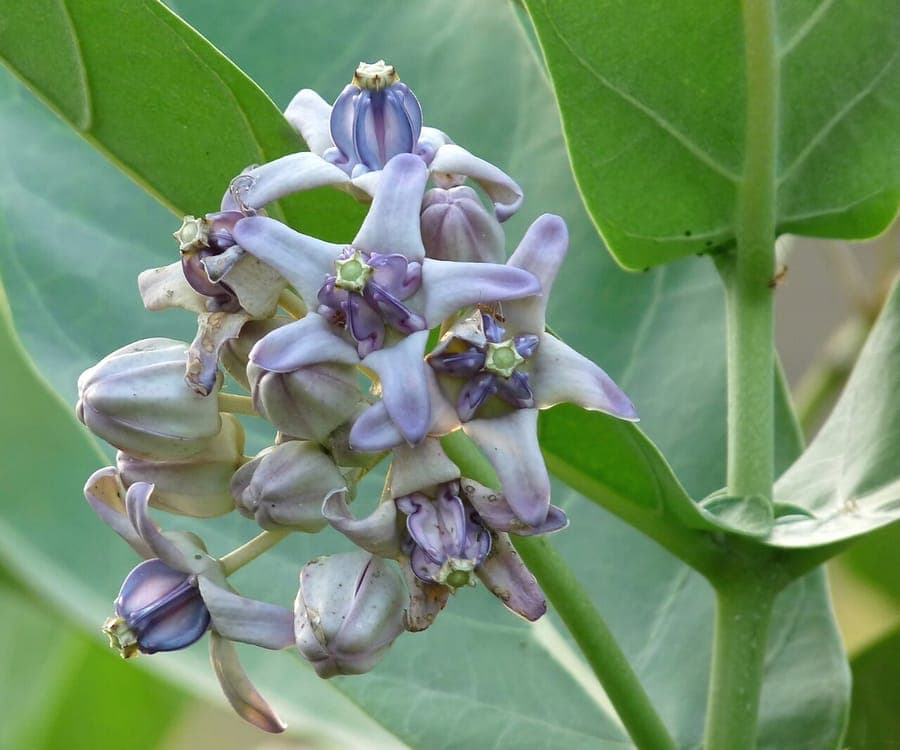
Jeevan Jose, Kerala, India / CC BY-SA 4.0, via Wikimedia Commons
Giant milkweed: complete guide
Calotropis gigantea
¿Quieres ver Giant milkweed: complete guide en tu jardín?
1 minuto, sin tarjeta de crédito
Overview
Calotropis gigantea, also known as giant milkweed or crown flower, is a spectacular shrub native to South to tropical Asian regions (from South China to Indonesia). This plant is renowned for its striking, large flowers in white to pink tones, which grow in dense, crown-like clusters. The plant can reach substantial sizes of 3 to 5 meters tall under ideal conditions. Despite its exotic appearance, Calotropis gigantea is surprisingly robust and adaptable.
Appearance and bloom
Calotropis gigantea grows as a substantial shrub to small tree with large, oval, grayish leaves that often have a pale green tint. The leaves can reach up to 15 centimeters in length and feel soft to the touch. The plant produces beautiful, double flowers in white, pink to light purple colors that grow in large, distinctive crown-like clusters. These flowers have a completely unique, exotic appearance and attract many insects. Blooming occurs throughout the growing season at regular intervals.
Ideal location
Calotropis gigantea thrives in warm, sunny locations. The plant needs at least 6 to 8 hours of direct sunlight daily to grow and flower well. In tropical and subtropical regions it can even grow in semi-shade, but full sun is preferred. The plant is most suitable for south-facing gardens and locations where heat is reflected, such as against walls.
Soil
The plant tolerates a wide range of soils, from sandy to heavy soils, as long as they are well-draining. Calotropis gigantea grows well in nutrient-rich, humus-containing soil with good drainage. A pH between 5.5 and 7.5 is ideal. The plant can even grow in poor, rocky soils. For container cultivation, use a well-draining potting soil based on clay or loam with the addition of coarse sand.
Watering
Once established, Calotropis gigantea is fairly drought-tolerant. During the growing phase (spring to autumn) water regularly so that the soil remains evenly moist but not waterlogged. Ensure water drains well. During the winter period (in temperate climates where the plant is cultivated as a houseplant), water much less. Misting the foliage helps keep the plant healthy.
Diseño gratis
¿Quieres ver Giant milkweed: complete guide en tu jardín? Crea un diseño gratis ahora.
Pruning
Calotropis gigantea can be pruned considerably to keep the form in check and stimulate bushy growth. Pruning wounds should be allowed to bleed out for several hours. The plant will then produce new shoots. After flowering, you can lightly prune the plant to promote a more compact form. Preventing overgrowth is important as the plant can otherwise become very large.
Maintenance calendar
March to April: Preparation for the growing season, light pruning of old parts. May to October: Regular watering and feeding. Blooming begins and continues. November to February: Rest period, less watering, inactive growth. However, this depends on climate; in tropical areas the plant grows year-round.
Winter hardiness
Calotropis gigantea is not winter-hardy in temperate climates. The plant cannot tolerate temperatures below 10 degrees Celsius and grows best at minimum temperatures of 15 to 20 degrees Celsius. In warm greenhouses, the plant must be brought indoors or well protected. The plant can easily be cultivated as a houseplant on a sunny windowsill.
Companion plants
Calotropis gigantea combines well with other exotic warmth-loving plants such as Plumeria (frangipani), passion flowers and Bougainvillea. Citrus plants such as kumquats and lime trees also make attractive combinations. For container cultivation it can be paired well with Adenium obesum (desert rose).
Closing remarks
Calotropis gigantea is a spectacular, exotic plant for warm greenhouses and tropical gardens or as a houseplant in temperate climates. The beautiful flowers justify the attention the plant requires. You can find young plants at specialized nurseries or online. In Germany, they are available from some specialist warm greenhouse suppliers. Enjoy this tropical beauty in your own garden. Visit gardenworld.app for more exotic plant inspiration. Discover more tips and tricks at gardenworld.app for your garden project.
¿Quieres ver Giant milkweed: complete guide en tu jardín? Crea un diseño gratis ahora.
Sube una foto, elige un estilo y obtén un diseño fotorrealista con lista de plantas en menos de un minuto.
Más de 10.000 jardines diseñados
Sin tarjeta de crédito


Plantas similares
Asclepias speciosa: complete guide
Asclepias speciosa
Showy milkweed: striking pink-white flowers, fragrant blooms. Essential monarch butterfly host plant.
Plumeria obtusa: complete guide
Plumeria obtusa
Discover the Singapore graveyard flower: an exotic evergreen with mesmerizing white blooms and exquisite fragrance. Expert cultivation, care, and maintenance tips.
Wrightia arborea: complete guide
Wrightia arborea
Wrightia arborea, known as doodhi, is an elegant tree from South Asia with delicate white flowers. Discover how to cultivate this exotic plant.