
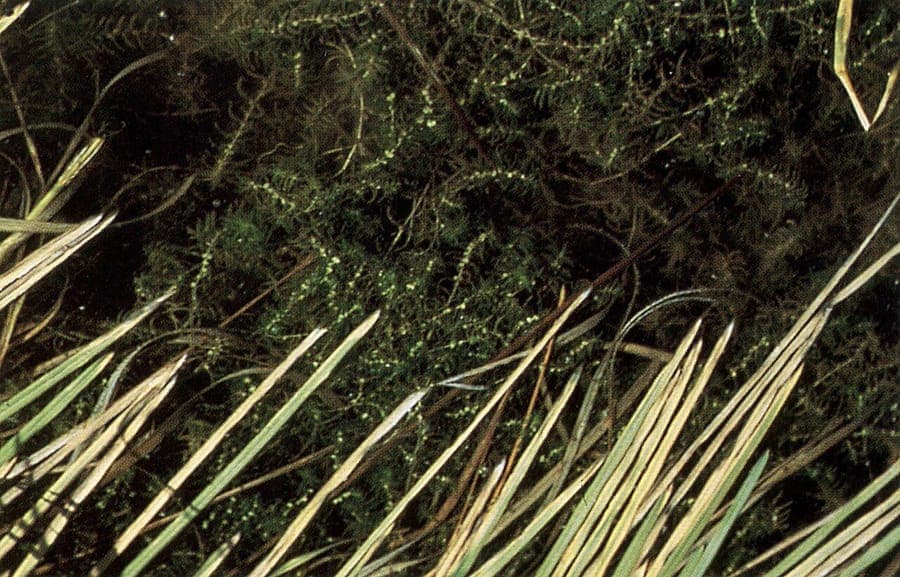
Gary Larson. USDA NRCS. 1992. Western wetland flora: Field office guide to plant species. West Region, Sacramento. Courtesy of USDA NRCS Wetland Science Institute. / Public domain, via Wikimedia Commons
Callitriche hermaphroditica: complete guide
Callitriche hermaphroditica
¿Quieres ver Callitriche hermaphroditica: complete guide en tu jardín?
1 minuto, sin tarjeta de crédito
Overview
Callitriche hermaphroditica, commonly known as Northern Water-starwort, is a unique aquatic plant from the Plantaginaceae family. This hermaphroditic water plant grows naturally in arctic and temperate regions of the Northern Hemisphere, from Alaska to Japan.
Northern water-starwort is a submerged foraging plant that adapts to changing water conditions. It reproduces through seed formation above water and underwater regeneration. For water garden designs and wet natural areas, it is an excellent choice due to its ability to adapt to environmental conditions.
The plant plays an important role in water ecosystems by producing oxygen and creating habitat for aquatic fauna.
Appearance & bloom
Northern water-starwort forms densely rooted plant material at the base of water columns. The leaves are very fine, almost hair-like, growing in opposite pairs along thin stems. Color varies from bright green to dark green depending on water depth and light conditions.
The plant can grow both submerged and floating. When floating, it forms dwarf rosette-like leaf clusters characteristic of the genus. Flowers are extremely small, barely visible, appearing above water in late autumn.
The plant mass can reach 10-50 centimeters depending on water column and light.
Ideal location
Northern water-starwort thrives in clean, nutrient-rich water with moderate to high water quality. The plant accepts full sun to partial shade, though full sun promotes faster growth.
The plant is extremely cold-hardy, growing naturally in arctic waters, reaching Greenland. Water may freeze; the plant survives under ice through its submerged growth habit.
For artificial water gardens, it works best in shallow water (20-60 centimeters) where it can breathe organically.
Soil
Callitriche hermaphroditica grows underwater and does not require traditional soil. In water gardens it can grow without substrate, floating freely in the water column.
For more structure, you can plant it in peaty-sandy substrate with limited nutrition. The plant gets nutrition mainly from the water itself (water enrichment) rather than from soil.
In nutrient-rich waters it grows faster; in clean water it grows slower but remains healthier.
Diseño gratis
¿Quieres ver Callitriche hermaphroditica: complete guide en tu jardín? Crea un diseño gratis ahora.
Watering
Watering does not apply to an aquatic plant. In artificial water gardens, water quality is however critical. Keep water clean, fresh and nutrient-rich.
Periodic water changes (30% per month) help remove waste and keep oxygen levels optimal. Without water circulation, mold can develop above water.
Pruning
Pruning is barely necessary. The plant self-regulates growth and forms natural dense masses. You can remove surplus to prevent overly dense growth.
In nutrient-rich waters, Callitriche hermaphroditica can grow invasively. Then remove moderate amounts (20-30% of biomass per month) to maintain balance.
Maintenance calendar
Spring (March-May): Add transplants. Ensure adequate light intensity. Oxygen-producing growth begins.
Summer (June-August): Maximum growth. Check water quality weekly. Remove excess growth if needed.
Fall (September-November): Growth slows. Oxygen availability begins to decline. Small amounts of plant mass continue growing.
Winter (December-February): Minimal growth under ice. Plant survives through oxygen exchange in water column.
Winter hardiness
Northern water-starwort is extremely winter-hardy, growing in arctic waters. It can survive permanent ice cover through submerged respiration. No winter protection required in the Netherlands or Belgium.
The plant tolerates very low temperatures (-15 degrees Celsius and lower in river systems).
Companion plants
Callitriche hermaphroditica works well alongside:
- Other aquatic types: Different layers of water habitat
- Bird waters: Plant provides habitat for waterfowl
- Mold killers: Helps keep water ecosystem healthy
- Floating plants: Forms micro-ecosystems together
Avoid very nutrient-rich waters (ditch waters) where it can become invasive.
Closing
Northern water-starwort is a valuable addition to water garden designs. The plant offers oxygen production, water purification and biological structure. On gardenworld.app you can integrate water-starwort into your water landscape plan.
The plant fits perfectly in natural water gardens and artificial ponds. It offers benefits for water quality and biodiversity: https://gardenworld.app/en/plant-blog/callitriche-hermaphroditica and https://gardenworld.app/en/plant-blog/water-starwort-guide
¿Quieres ver Callitriche hermaphroditica: complete guide en tu jardín? Crea un diseño gratis ahora.
Sube una foto, elige un estilo y obtén un diseño fotorrealista con lista de plantas en menos de un minuto.
Más de 10.000 jardines diseñados
Sin tarjeta de crédito


Plantas similares
White Beardtongue: complete guide
Penstemon albidus
Discover white beardtongue (Penstemon albidus) - elegant perennial with white to cream flowers. Drought-resistant, perfect for prairie and dry gardens.
Longsepal Beardtongue: complete guide
Penstemon calycosus
Discover longsepal beardtongue (Penstemon calycosus) - beautiful perennial with lilac-blue flowers. For partial shade and moist soil. Ideal for naturalized.
Penstemon cusickii: complete guide
Penstemon cusickii
Discover Cusick's beardtongue, a compact alpine flowering plant with violet-pink blooms. Perfect choice for rock gardens and water-wise landscaping.