
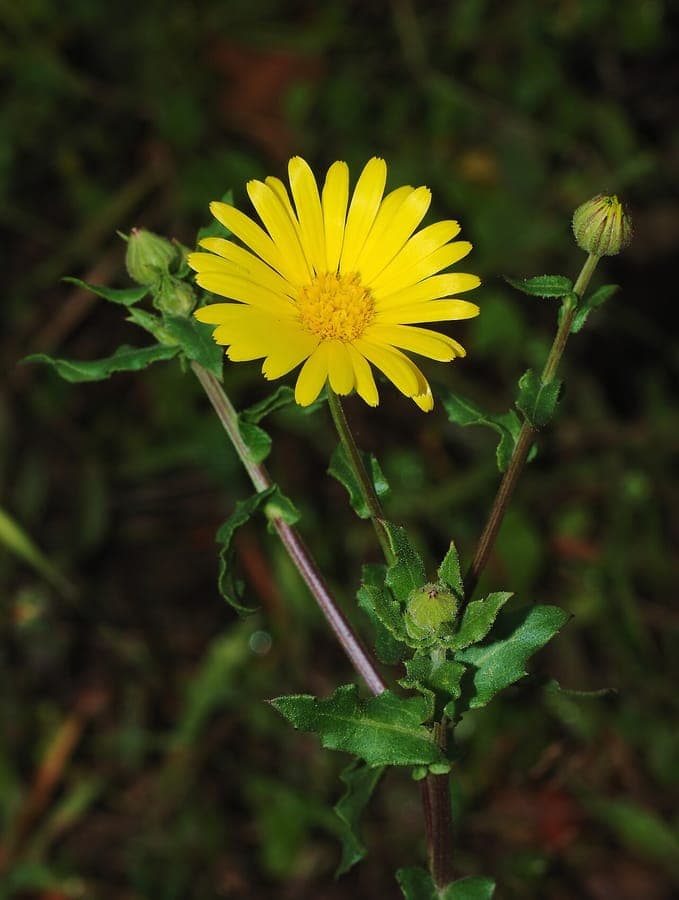
Alvesgaspar / CC BY-SA 3.0, via Wikimedia Commons
Field Marigold: complete guide
Calendula arvensis
¿Quieres ver Field Marigold: complete guide en tu jardín?
1 minuto, sin tarjeta de crédito
Overview
Field marigold (Calendula arvensis) is a charming wild plant with golden yellow flowers that has been treasured in gardens and agricultural systems for centuries. This annual plant originates from Europe and the Mediterranean region and remains valued for its ornamental appeal and practical benefits to any garden.
Appreciated throughout Europe as a useful plant for pollinator attraction and traditional applications, field marigold grows easily on various soil types and requires minimal maintenance once established.
Appearance and Bloom
Field marigold reaches 20 to 50 centimeters in height with thin, lightly hairy stems and lance-shaped leaves. The flowers are bright yellow to orange-yellow, composed of numerous small petals arranged around a central disk.
The plant blooms profusely from April through October, peaking during summer months. Each plant produces hundreds of tiny seeds that self-sow readily.
Ideal Location
This plant thrives in full sun. Provide at least six to eight hours of direct sunlight daily for optimal flowering. In partial shade the plant grows, though it will be less abundant with flowers.
Field marigold is very versatile regarding placement and grows even in challenging spots where other flowers struggle. It tolerates intense sun remarkably well.
Soil
The plant makes no special demands on soil fertility. In fact, field marigold prefers moderately fertile, well-draining soil over rich, heavy ground. A pH of 7.5 to 8.0 is ideal.
Ensure good drainage to prevent root rot. Heavy clay soils can be improved by adding sand or compost.
Diseño gratis
¿Quieres ver Field Marigold: complete guide en tu jardín? Crea un diseño gratis ahora.
Watering
Once established, field marigold is quite drought tolerant. Water regularly until the plant is well-rooted, then only during dry periods. The plant requires less water compared to other garden plants.
Excessive water can lead to disease and fungal issues. Ensure water does not contact the foliage when watering.
Pruning
Pruning is unnecessary for field marigold. However, pinching or removing spent flowers can stimulate blooming. This encourages compact growth and greater flower production by prompting the plant to generate more blooms.
You may remove faded flower heads to prevent self-seeding if desired.
Maintenance Calendar
Spring: Sow seeds directly into the soil in April or May when the soil has warmed. Summer: Water as needed, remove spent flowers for continued blooming. Fall: Allow final flowers to produce seed for next year. Winter: The plant dies after the first year; resow the following spring or allow self-seeding.
Winter Hardiness
Field marigold is an annual and does not survive harsh winters. In milder winter areas, the plant may sometimes reseed itself. Resow each spring for reliability.
The plant thrives best in warm, sunny locations. In colder regions, sow in May after the last frost.
Companion Plants
Field marigold grows well with other sun-loving plants such as sage, lavender, and bergamot. This combination attracts pollinators and creates a vibrant garden display.
Plant them in groups of three to five for stronger visual impact than single specimens. Yellow blooms pair beautifully with blue-flowering plants.
Closing
Field marigold is an affordable, easy choice for any gardener wanting color and flowers without fuss. Purchase seeds from garden centers and resow each year.
This plant brings joy and insect support to your garden, making it a worthwhile addition. Try field marigold today! Visit gardenworld.app/en for more plant guides.
¿Quieres ver Field Marigold: complete guide en tu jardín? Crea un diseño gratis ahora.
Sube una foto, elige un estilo y obtén un diseño fotorrealista con lista de plantas en menos de un minuto.
Más de 10.000 jardines diseñados
Sin tarjeta de crédito


Plantas similares
Calendula stellata: complete guide
Calendula stellata
Complete guide to Calendula stellata, the star-flowered marigold from Sicily: location, soil, watering and companion planting tips.
Korean chrysanthemum: complete guide
Chrysanthemum x rubellum
Chrysanthemum x rubellum is a hardy autumn perennial with single pink to copper flowers from August to November. Care and combinations.
Helianthus divaricatus: complete guide
Helianthus divaricatus
Helianthus divaricatus is a North American woodland sunflower with yellow summer blooms, ideal for naturalistic borders and shady edges.