
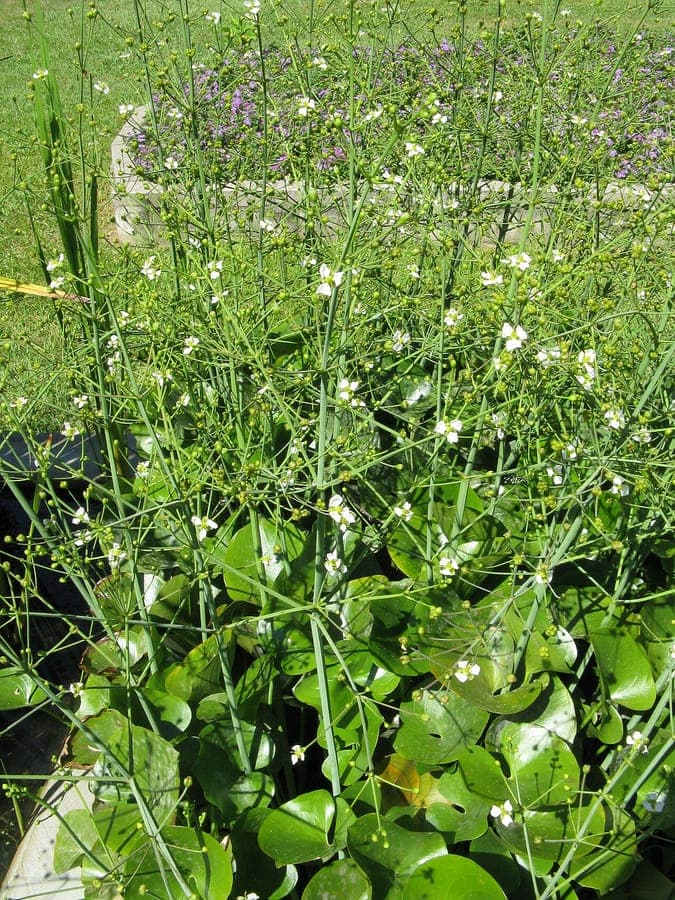
KENPEI / CC BY-SA 3.0, via Wikimedia Commons
Caldesia parnassifolia: complete guide
Caldesia parnassifolia
¿Quieres ver Caldesia parnassifolia: complete guide en tu jardín?
1 minuto, sin tarjeta de crédito
Overview
Caldesia parnassifolia, commonly known as Parnassus-leaved water plantain, is an elegant aquatic plant belonging to the Alismataceae family. Native to numerous regions spanning Europe, Asia, and Africa, this species is gaining popularity in water gardens and pond systems worldwide. With its distinctive heart-shaped leaves and delicate white flowers, this aquatic specimen adds natural charm to any water feature.
The plant thrives in shallow waters and is exceptionally valuable for natural pond ecosystems. Its widespread occurrence from France to Japan demonstrates its robust and adaptable nature. Thanks to its modest requirements and decorative value, it represents an ideal choice for gardeners seeking to enhance their water features with authentic aquatic flora.
Appearance & bloom
The most distinctive feature of Caldesia parnassifolia is its characteristic heart-shaped leaves. These leaves emerge directly from the rhizome and grow to 10 to 15 centimeters in length. They possess a deeply cordate outline with a rounded apex - a characteristic that inspired the plant's scientific name.
The stems are long and slender, allowing leaves to rise above the water surface. This elevation creates excellent visibility and forms an important decorative element in deeper ponds. In August and September, flowers emerge. They are small, white, and appear in loose clusters above the waterline. Each bloom displays typical star-shaped petals with fine delineation.
The flowering period significantly contributes to visual appeal during summer months. The delicate flowers attract gentle pollinators beneficial to aquatic ecosystems.
Ideal location
Caldesia parnassifolia thrives best in shallow waters, typically 10 to 40 centimeters deep, though it can tolerate deeper conditions. The plant prefers full sun to partial shade. For optimal growth and flowering, recommend at least four to six hours of direct sunlight daily.
The plant demonstrates considerable flexibility regarding water types. It grows equally well in nutrient-rich wetland and pond waters as in cleaner, shallow freshwater environments. This adaptability makes it ideal for diverse garden situations. Position your plant where water flow is minimal - swift-flowing water is less suitable. Natural ponds, decorative water basins, and specialized aquatic plant containers all serve as suitable locations.
Soil
Although Caldesia parnassifolia is aquatic, it benefits from nutrient-rich substrate. Sand or fine sandy silt are suboptimal. Instead, place the plant in substrate consisting of nutritious mud and organic matter. Many gardeners use rich muddy pond bottom material, which proves perfectly suitable.
When growing the plant in containers, use heavy water garden potting soil with organic content. Avoid standard potting mix, which is too light and can leach in aquatic environments. Specialized pond plant potting soil fulfills all requirements. A nutrient-rich substrate promotes stronger leaf growth and enhanced flowering.
Watering
As a fully aquatic plant, Caldesia parnassifolia requires no traditional watering. It remains permanently submerged, so drought presents no concern. However, your pond's water level must remain consistent. During hot months, evaporation becomes problematic - monitor water levels regularly and refill with fresh water as needed.
It is crucial that water never fully desiccates. During periods of extreme heat or low rainfall, supplemental water addition becomes necessary. Ensure water quality remains good - stagnant, contaminated waters prove harmful. In natural ponds, regular maintenance preserves water balance.
Diseño gratis
¿Quieres ver Caldesia parnassifolia: complete guide en tu jardín? Crea un diseño gratis ahora.
Pruning
Caldesia parnassifolia requires minimal pruning maintenance. Remove only dead or damaged leaves when observed. This enhances aesthetics and helps prevent disease. Should the plant become overgrown or occupy excessive space, gently remove select leaves.
The plant grows non-aggressively - even without pruning, it remains compact and neat. Avoid drastic pruning, as this can disrupt flowering. Allow the plant to maintain its natural form; this organic shape determines overall appeal. Periodic inspection for pests or disease surpasses intensive pruning efforts.
Maintenance calendar
The maintenance schedule for Caldesia parnassifolia proves simple. Spring (March-April): check water quality and add fertilizer via slow-release aquatic plant nutrition. Summer (May-August): monitor plant growth and anticipate August flowering. Autumn (September-October): remove dead leaves post-flowering and monitor water levels. Winter (November-February): minimal maintenance required, though water level monitoring continues.
In milder climates, Caldesia parnassifolia remains active year-round. In colder climates, above-ground growth may die in winter, but the rhizome survives underwater. Ensure water bodies never freeze solid.
Winter hardiness
Caldesia parnassifolia displays considerable winter hardiness in temperate climates. In the Netherlands, the plant tolerates temperatures around -5 degrees Celsius provided the protected rhizome remains underwater. This suitability makes it appropriate for permanent placement in Dutch ponds.
In regions experiencing severe winters, supplemental protection merits consideration. Ensure water never freezes completely to the bottom where rhizomes reside. Should your pond freeze completely, additional insulation using reed or plant materials provides help. Deeper waters (at least 60 centimeters) typically provide sufficient protection without additional measures.
Companion plants
Caldesia parnassifolia forms attractive combinations with other aquatic plants. Combine with water lilies for color variations. Caldesia's heart-shaped form contrasts beautifully with water lilies' round leaves. Bank planting with sedges and daffodils creates natural boundaries.
Other aquatic plant combinations work well: group together with water sprite, waterweed, and ludwigia. These combinations create visually attractive aquatic environments. Avoid aggressive water plants like waterpest, which can become invasive.
Closing thoughts
Caldesia parnassifolia represents a valuable addition to any water enthusiast's garden. With its heart-shaped leaves, delicate white flowers, and simple care requirements, it offers years of beauty. Whether maintaining a natural pond or formal water pool, this plant integrates elegantly into both environments.
At specialty water plant retailers, you'll find suitable aquatic plant products and expert advice. With basic consultation, you can successfully introduce Caldesia parnassifolia to your water garden. Discover more water garden inspiration on gardenworld.app and transform your pond into a thriving aquatic paradise.
¿Quieres ver Caldesia parnassifolia: complete guide en tu jardín? Crea un diseño gratis ahora.
Sube una foto, elige un estilo y obtén un diseño fotorrealista con lista de plantas en menos de un minuto.
Más de 10.000 jardines diseñados
Sin tarjeta de crédito


Plantas similares
California damsonium: complete guide
Damasonium californicum
Full guide to Damasonium californicum (California damsonium): shallow water, bog soil, care and companion plants for this rare western aquatic.
Yellow water lily: complete guide
Limnocharis flava
Discover the yellow water lily. Everything you need to know about cultivation, care and water placement.
Sagittaria subulata: complete guide
Sagittaria subulata
Discover narrow-leaf arrowhead (Sagittaria subulata), an aquatic plant for ponds and water gardens. Complete cultivation and care guide.