
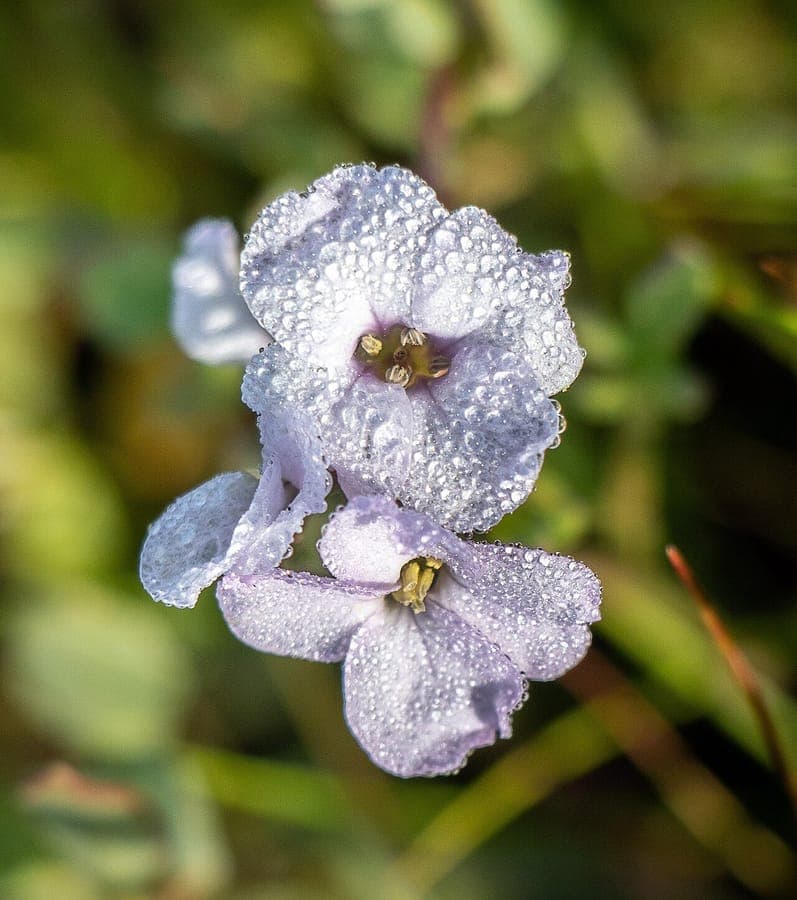
Smailtn / CC BY-SA 4.0, via Wikimedia Commons
Sea rocket: complete guide
Cakile maritima
¿Quieres ver Sea rocket: complete guide en tu jardín?
1 minuto, sin tarjeta de crédito
Overview
Sea rocket, botanically known as Cakile maritima, is a remarkable annual to biennial plant native to European and Mediterranean coasts. This member of the Brassicaceae family (which includes cabbage and radish) is extraordinarily tolerant of salt spray, sandy soils, and harsh coastal conditions. It's an exceptional choice for seaside gardens or any location with high salt exposure.
On gardenworld.app, you can generate garden designs that incorporate salt-tolerant plants like sea rocket, specifically suited for coastal landscapes.
Appearance & bloom cycle
Sea rocket grows to approximately 20-50 cm in height with distinctive fleshy, blue-green leaves. Flowers appear from May through September in dense spikes, ranging from white to bright purple. After flowering, remarkable segmented fruits develop that resemble small crosses. These distinctive seed pods disperse via seawater, naturally spreading the plant along coastlines.
Under favorable conditions, the plant may persist into a second season and grow considerably larger.
Ideal location
Sea rocket thrives in full sun locations receiving at least 6 hours of direct daily light. This plant originated on sandy, heavily salt-laden shores. Provide adequate space and ensure good air circulation around plants.
Soil requirements
Well-draining sandy soil is ideal. The plant thrives even on mineral-poor soils and tolerates pH ranges from 6.0 to 7.5. Unlike most garden plants, sea rocket requires minimal nutrients, making it perfect for depleted soils.
Diseño gratis
¿Quieres ver Sea rocket: complete guide en tu jardín? Crea un diseño gratis ahora.
Watering
In its natural environment, sea rocket requires no supplemental water once established. Mature plants can endure extended drought periods. However, young plants need consistent moisture during their first 4-6 weeks to establish properly. Avoid waterlogging, as it causes root rot.
Maintenance
Sea rocket is extremely low-maintenance. Remove dead or damaged foliage to maintain appearance. The plant requires no regular pruning, though gentle tip-back pruning in early growth can encourage bushier development.
Maintenance calendar
March-April: Direct sow seeds outdoors after final frost, or start in containers for earlier blooms. May-June: Thin seedlings to desired spacing of 15-20 cm apart. June-September: Monitor for flowers and seed development. October: Collect mature seed pods for next season.
Winter hardiness
Cakile maritima has limited cold tolerance (USDA zones 8-10). In cooler climates, it works best as an annual. However, plants readily self-seed, with new seedlings emerging the following spring.
Companion plants
Sea rocket pairs beautifully with other coastal plants like sea campion, sea aster, and marram grass. This combination creates a naturally resilient and authentic coastal garden aesthetic.
Where to buy
Sea rocket seeds are available through suppliers like garden centers across the UK and Europe. Check availability in spring, as stock depends on demand and seed production cycles.
Using gardenworld.app, you can design a stunning coastal garden where sea rocket and other resilient plants create a harmonious, low-maintenance landscape that celebrates adaptation to extreme coastal conditions.
¿Quieres ver Sea rocket: complete guide en tu jardín? Crea un diseño gratis ahora.
Sube una foto, elige un estilo y obtén un diseño fotorrealista con lista de plantas en menos de un minuto.
Más de 10.000 jardines diseñados
Sin tarjeta de crédito


Plantas similares
Brassica cretica: complete guide
Brassica cretica
Brassica cretica, the Cretan cabbage, grows wild on Aegean cliffs. Discover how to grow this drought-tolerant, yellow-flowered Mediterranean perennial.
Corsican cabbage: complete guide
Brassica insularis
Corsican cabbage is a rare Mediterranean rock cabbage with white flowers and blue-green leaves. Location, soil and winter protection.
Prostrate cabbage: complete guide
Brassica procumbens
Prostrate cabbage is a creeping North African cliff plant with yellow flowers. Discover location, soil type and winter protection.