
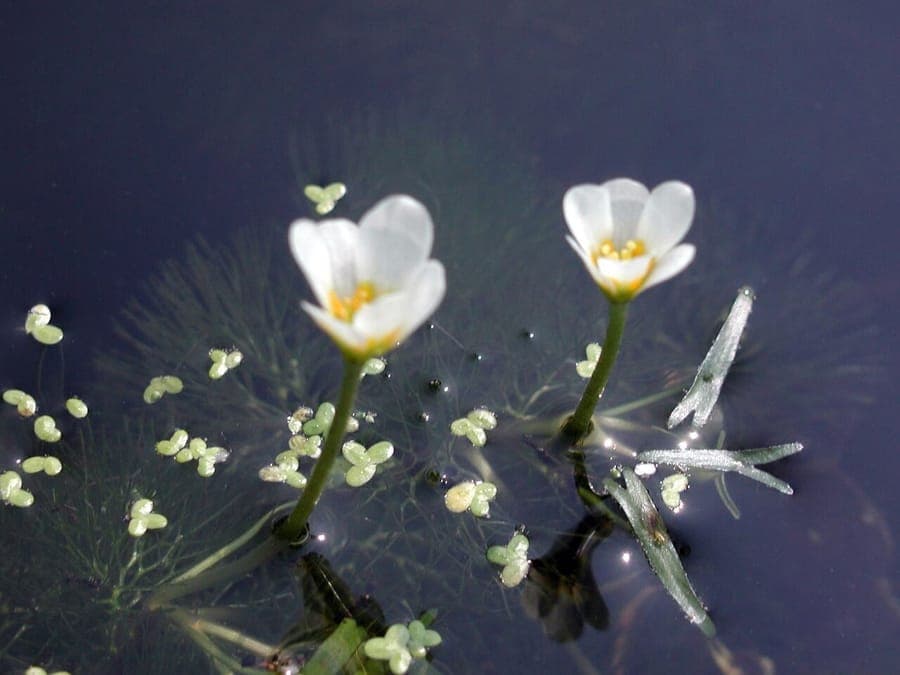
Leslie J. Mehrhoff, University of Connecticut, Bugwood.org / CC BY 3.0, via Wikimedia Commons
Carolina water-shield: complete guide
Cabomba caroliniana
¿Quieres ver Carolina water-shield: complete guide en tu jardín?
1 minuto, sin tarjeta de crédito
Overview
The Carolina water-shield (Cabomba caroliniana) is an elegant, submerged aquatic plant in the Cabombaceae family, native from central and eastern USA to Central America, Brazil, and Argentina. A popular aquarium plant, it features fine, feathery leaves and slender growth creating delicate underwater structure. Widely used for aquarium decoration and water garden aesthetics.
Appearance and bloom cycle
Carolina water-shield is a submerged plant with very fine, feathery leaves arranged densely along slender stems. Leaves are so delicate they appear almost grass-like. White to pale yellow flowers can emerge above water in optimal conditions, especially during summer. The plant reaches 12-24 inches height, growing upright and slender forms.
Ideal location
Carolina water-shield thrives in well-lit aquatic environments. For aquaria: minimum 8-10 hours light daily (can be artificial). For ponds: prefers part-shade with 5-6 hours direct sunlight. Slow growth in shade. Temperature: 15-30°C (ideal 18-25°C).
Soil requirements
In aquaria: prefer nutrient-rich substrates: sand with organic amendments, or specialty aquarium substrate. For ponds: normal pond bottom. Good nutrient availability promotes growth. CO2 injection significantly improves growth in aquaria. pH: 6.0-7.5 ideal.
Watering/Water quality
Weekly water changes of 25-50% in aquaria. Clean water is essential; high nitrate levels promote algae growth. In ponds: regular filter cycling. Prevent stagnant water. Soft water is preferred, though the plant tolerates varied conditions.
Diseño gratis
¿Quieres ver Carolina water-shield: complete guide en tu jardín? Crea un diseño gratis ahora.
Pruning
Regular pruning promotes dense, bushy growth. Pinch stem tops to encourage branching. Remove long, irregular stems. In aquaria, pruning may be needed monthly. This plant responds well to pruning.
Maintenance calendar
January-March Slower growth in winter, less pruning needed. April-May Growth resumes, more pruning for structure. June-September Peak growth; regular pruning every 2-3 weeks. October-December Slowing growth.
Winter hardiness
Carolina water-shield is not winter hardy in cold climates. USDA zones 9-11. In temperate climates, only suitable for heated aquaria or warm ponds. Will die in cold winters outdoors. Indoor aquaria only in temperate areas.
Companion plants
Combine in aquaria with other fine-textured material: ludwigia, rotala, alternanthera. Works well with open water space. Prefers foreground to midground position. Leaving bottom clear of plant material often looks better.
Final thoughts
Carolina water-shield is an elegant plant for heated aquaria and tropical ponds, especially prized for its fine, decorative foliage. At gardenworld.app, discover how aquatic elements enhance garden design. This low-maintenance plant requires regular attention but offers beautiful structural interest. Source from aquarium specialists.
Want to learn more about aquarium plants? Visit gardenworld.app for garden design integrating water elements and aquatic features.
¿Quieres ver Carolina water-shield: complete guide en tu jardín? Crea un diseño gratis ahora.
Sube una foto, elige un estilo y obtén un diseño fotorrealista con lista de plantas en menos de un minuto.
Más de 10.000 jardines diseñados
Sin tarjeta de crédito


Plantas similares
Acer pycnanthum: complete guide
Acer pycnanthum
Acer pycnanthum, the Japanese swamp maple, is a fast-growing tree with early red flowers and brilliant autumn color, ideal for damp garden settings.
Freeman maple: complete guide
Acer × freemanii
Everything about the Freeman maple (Acer x freemanii): a fast-growing shade tree with spectacular autumn colour for large gardens.
Silver vine: complete guide
Actinidia polygama
Discover silver vine (Actinidia polygama): a hardy climbing plant with silvery foliage, loved by gardeners and cats alike.