
Paul K from Sydney, Australia / CC BY 2.0, via Wikimedia Commons
South American jelly palm: complete guide
Butia capitata
¿Quieres ver South American jelly palm: complete guide en tu jardín?
1 minuto, sin tarjeta de crédito
Overview
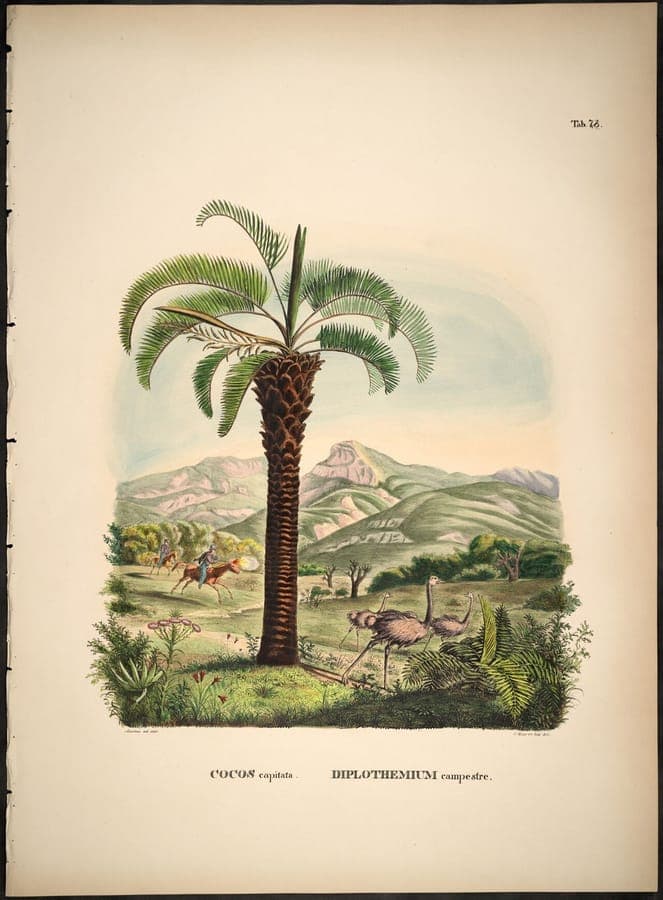
Butia capitata, commonly known as South American jelly palm, pindo palm, jelly palm or pindo, is a fascinating palm from the Arecaceae or palm family. This palm naturally occurs in Brazil, particularly in Bahia, Goiás, and Minas Gerais. The palm is known for its beautiful form, small yellow flowers, and small, edible fruits that taste like pineapple.
The jelly palm is hardier than many other tropical palms and can grow outdoors in temperate climates, though frost protection may be needed. The palm is perfect for those wanting to add an exotic touch to their landscape.
Appearance and bloom
Butia capitata grows in an elegant, columnar form with a thick, rough trunk covered with leaf remains. The palm can reach 5-10 meters in ideal conditions and achieve a diameter of up to 4 meters. The feather-compound leaves are green to gray-green and have beautiful, lush texture.
The blooming period features small, yellow, fragrant flowers that open in clusters. The resulting fruits are yellow to orange, about the size of grapes, and can be eaten raw or processed into jam. They taste like pineapple and papaya.
Ideal location
Butia capitata grows best in fully sunny locations receiving at least 6 hours of direct sunlight daily. The palm can also grow in partial shade, though growth will be less robust and fruit set may decline. Provide shelter from strong, dry winds that can cause leaf damage.
The palm works beautifully in Mediterranean, subtropical, and tropical garden designs. It can also serve as a solitary accent plant. In a container, the palm can be kept indoors in a sunny location.
Soil
Butia capitata grows well in normal to sandy soils. The palm is not very demanding and can function on various soil types as long as drainage is good. For container cultivation, a mixture of palm soil, sand, and compost is ideal (ratio 3:1:1).
The palm prefers soils with a pH between 5.5 and 7.5 and tolerates acidic soils well. Ensure good drainage; waterlogging can lead to root rot and foot rot.
Diseño gratis
¿Quieres ver South American jelly palm: complete guide en tu jardín? Crea un diseño gratis ahora.
Watering
When Butia capitata is actively growing, water regularly, especially during the growing season. In summer, keep the soil moist but not waterlogged. In winter, watering can be reduced, particularly for potted plants.
For plants growing in the ground: water regularly during dry periods. For potted plants: ensure water drains well; don't leave water standing in the pot. Regular misting can be beneficial.
Pruning
Butia capitata requires minimal maintenance regarding pruning. Remove only dead or damaged leaves as you notice them. Leave old leaf remains on the trunk; they help protect the tree against frost.
Female plants can be pruned somewhat if you want to limit fruit formation.
Maintenance calendar
Spring (March-May): Water heavily as the palm begins to leaf out. Begin monthly feeding.
Summer (June-August): Water regularly. Misting can help in dry periods. Monthly feeding.
Autumn (September-October): Gradually reduce watering. Reduce feeding.
Winter (November-February): Minimal water for established plants. Potted plants minimal water. Apply protection in very cold periods.
Winter hardiness
Butia capitata is reasonably winter-hardy for a tropical palm. The palm can tolerate temperatures down to about -7 to -10 degrees Celsius, though leaf damage may occur. In very severe winters, young plants may be fatally affected.
In northern Netherlands and Belgium, we recommend protecting young plants with mulch or leaves in winter. Adult, established trees can overwinter outdoors, but protection is beneficial.
Companion plants
If you enjoy Butia capitata, you might also appreciate:
- Trachycarpus fortunei (Chusan palm)
- Phoenix canariensis (Canary Island date palm)
- Chamaerops humilis (European fan palm)
These palms have similar growing and care requirements and add exotic texture to garden designs.
Closing
Butia capitata is a beautiful, relatively hardy palm that adds beauty and exotic appeal to temperate gardens. With careful placement and winter protection, it's possible to grow this fascinating palm outdoors. The benefits of its beautiful form and edible fruits make it worthwhile.
Perfectly suited for gardenworld.app garden plans!
For more information and plant availability, see specialized garden centers.
¿Quieres ver South American jelly palm: complete guide en tu jardín? Crea un diseño gratis ahora.
Sube una foto, elige un estilo y obtén un diseño fotorrealista con lista de plantas en menos de un minuto.
Más de 10.000 jardines diseñados
Sin tarjeta de crédito


Plantas similares
Needle palm: complete guide
Rhapidophyllum hystrix
Everything about the needle palm: the world's hardiest palm, suitable for gardens in temperate climates down to USDA zone 7b.
Saw palmetto: complete guide
Serenoa repens
A complete guide to saw palmetto (Serenoa repens), the iconic fan palm from Florida and the southeastern United States, prized for its toughness.
Puerto Rican hat palm: complete guide
Sabal causiarum
Grow Puerto Rican hat palm successfully. A majestic fan palm with tropical presence suited to sheltered Mediterranean-style gardens.