
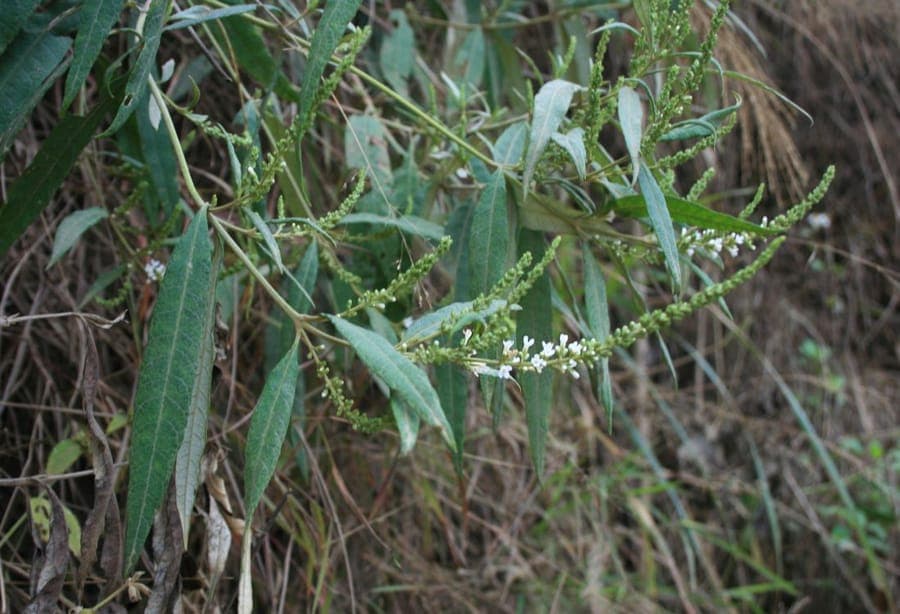
Franz Xaver / CC BY-SA 3.0, via Wikimedia Commons
Asian butterfly-bush: complete guide
Buddleja asiatica
¿Quieres ver Asian butterfly-bush: complete guide en tu jardín?
1 minuto, sin tarjeta de crédito
Asian butterfly-bush is a beautiful fast-growing flowering shrub native to tropical and subtropical Asia, ranging from central and southern China through Southeast Asia to the Philippines and Indonesia. The plant is known for its exceptional continuous blooming and remarkable attraction to butterflies, bees, and other beneficial insects. This prolific flowering characteristic makes it an excellent choice for gardens designed to support pollinator populations. The plant has become widely cultivated throughout warm-climate regions globally due to its reliability and ornamental value.
Overview and background Buddleja asiatica belongs to the Scrophulariaceae family, a plant family including snapdragons and foxgloves. It forms a medium to large shrub reaching impressive dimensions quickly when conditions are favorable. The plant grows rapidly, increasing 1-2 meters annually in young plants, and can reach 2-4 meters tall within a few years under optimal conditions. This is a semi-evergreen plant that retains leaves in milder climates but may lose foliage if exposed to sustained temperatures below 5 degrees Celsius. In regions with regular frosts, it can be treated as a deciduous shrub that regenerates from the base each spring.
Appearance and bloom characteristics The plant has linear, lance-shaped green leaves that can reach 10-15 centimeters in length, arranged alternately along the stems. The leaves have a fine texture and form light, airy foliage that creates dappled shade beneath the canopy. The overall appearance is delicate and feathery despite the substantial size of mature plants. Flowers appear in long, pointed clusters called panicles that are typically white to cream-yellow, sometimes with hints of pale purple. Individual flowers are tiny, barely 3-4 millimeters across, but are packed so densely into the panicles that the clusters appear as continuous columns of color. These flower clusters can be 15-30 centimeters long and appear continuously throughout the growing season from spring through autumn, a remarkable display spanning 6-8 months in warm climates. The flowers emit a delicate fragrance that attracts a wide range of pollinators.
Ideal location and site selection Asian butterfly-bush grows best in full sun, where it develops its most compact form and achieves the heaviest flowering. The plant can also grow in partial shade, but this results in less branching and more sparse blooming, plus reduced flowering intensity. At least 6 hours of direct sunlight daily is ideal for premium performance. In very hot climates exceeding 35 degrees Celsius, afternoon shade may provide some protection from excessive heat stress during the hottest months. The plant is equally suited to open garden locations, mixed borders, or specimen plantings where its flowering display can be fully appreciated. Wind protection helps preserve the delicate flowers.
Soil requirements and preparation The plant is highly tolerant of soil types, demonstrating why it thrives in diverse habitats across Asia and beyond. It grows equally well in sandy, clay, and loamy soils, adapting readily to available growing media. The plant prefers well-draining soil but can also grow in less ideal conditions as long as waterlogging is avoided. pH between 6.0 and 7.5 is optimal, though the plant adapts to soils slightly outside this range. Poor, compacted urban soils can be improved with amendments of compost or aged manure, which also provide slow-release nutrients for the heavy flowering demands of this species. No special soil preparation is strictly necessary, but pre-planting enrichment promotes faster establishment and more robust growth.
Watering and moisture management Water regularly and thoroughly during the establishment period, typically for the first growing season after planting. Supply water weekly or biweekly depending on rainfall and temperature conditions. After the plant has developed an extensive root system, usually after 12 months, the plant is fairly drought-tolerant due to its deep, penetrating roots. Water during very dry periods, particularly during blooming seasons, to maintain flower production and prevent stress. In subtropical regions with regular rainfall, supplemental watering may not be necessary after establishment. Container-grown plants require more frequent watering than garden-planted specimens. Mulching around the base conserves moisture and moderates soil temperature.
Pruning and shaping strategies Buddleja asiatica can be pruned heavily in early spring to maintain desired form and encourage more vigorous branching. Pruning to half the plant's height stimulates multiple new shoots, creating fuller, more compact specimens. Pruning also promotes fuller blooming by redirecting energy to new flowering wood. Remove weak, crossing, or damaged stems while pruning. Annual pruning maintains shapeliness and prevents the plant from becoming leggy or overgrown. Spent flower panicles can be removed for tidiness, though this is optional and doesn't significantly affect subsequent flowering. The plant recovers quickly from severe pruning, sprouting new growth vigorously.
Maintenance calendar and seasonal care January-February: Spring pruning to half height; remove winter-damaged stems; clear debris around base March-May: Growth period; regular watering biweekly; apply balanced fertilizer monthly; watch for pests June-August: Peak blooming period; apply slow-release fertilizer or feed biweekly with liquid fertilizer; deadhead if desired September-October: Continued blooming; reduce fertilizer frequency; prepare for potential frost in cool-winter regions November-December: Minimal maintenance; reduce watering; prepare frost protection in marginal climates
Winter hardiness and cold tolerance Buddleja asiatica is not fully hardy in cold climates with regular hard freezes. In most parts of northern Europe, the plant can suffer significant damage in severe winters with sustained temperatures below -5 degrees Celsius. In southern regions with mild winters, the plant can survive with frost protection such as mulch mounding and frost cloth wrapping. In regions with regular hard freezes, grow the plant in large containers that can be moved to protected locations such as unheated greenhouses, conservatories, or against south-facing walls. Straw mulch or frost cloth applied in autumn provides emergency protection in borderline climates.
Companion plants and garden combinations Good combinations include Caryopteris (bluebeard) for complementary blue color, Sambucus (elder) for bold foliage contrast, Vitex (chaste tree) for similar blooming characteristics, Lagerstroemia (crepe myrtle) for summer-long color, and Ilex (holly) for winter structure. In warm climates, combine with Plumbago, Salvia, and Lantana for continuous color schemes. Underplant with shade-tolerant perennials like Hostas and Liriope for layered garden designs. The delicate foliage allows light penetration for underplantings.
Propagation and multiplication Asian butterfly-bush propagates easily from semi-ripe cuttings taken in late summer or autumn. Cuttings root readily in moistened seed compost with bottom heat, developing roots within 3-4 weeks. Seed propagation is possible but produces variable results regarding plant characteristics. Mature plants develop adventitious shoots from the base, allowing division of established specimens, though cuttings are generally preferred for faster, more reliable propagation.
Closing remarks Asian butterfly-bush is a fast-growing, continuously blooming shrub perfect for warm gardens seeking long-season color and pollinator attraction. The extended blooming period from spring through autumn provides unparalleled visual interest and garden ecology support. With regular pruning and feeding, it offers years of continuous blooming and rapid growth. Many nurseries in warm climates stock this popular plant. For more information on warm-climate garden design and butterfly gardens, visit gardenworld.app.
¿Quieres ver Asian butterfly-bush: complete guide en tu jardín? Crea un diseño gratis ahora.
Sube una foto, elige un estilo y obtén un diseño fotorrealista con lista de plantas en menos de un minuto.
Más de 10.000 jardines diseñados
Sin tarjeta de crédito


Plantas similares
Naio: complete guide
Myoporum sandwicense
All about naio or bastard sandalwood (Myoporum sandwicense): a Hawaiian coastal tree, its uses, cultivation, and role as a tough windbreak in mild gardens.
Oriental Mullein: complete guide
Verbascum orientale
Complete guide to Oriental Mullein (Verbascum orientale): placement, soil, watering, pruning and garden design tips.
Buddleja marrubiifolia: complete guide
Buddleja marrubiifolia
Woolly butterfly-bush from Texas and Mexico. Shrub with soft, hairy leaves and orange-red flowers. Hardy to -5C. Blooms summer-fall. Drought-tolerant and low-maintenance plant.