
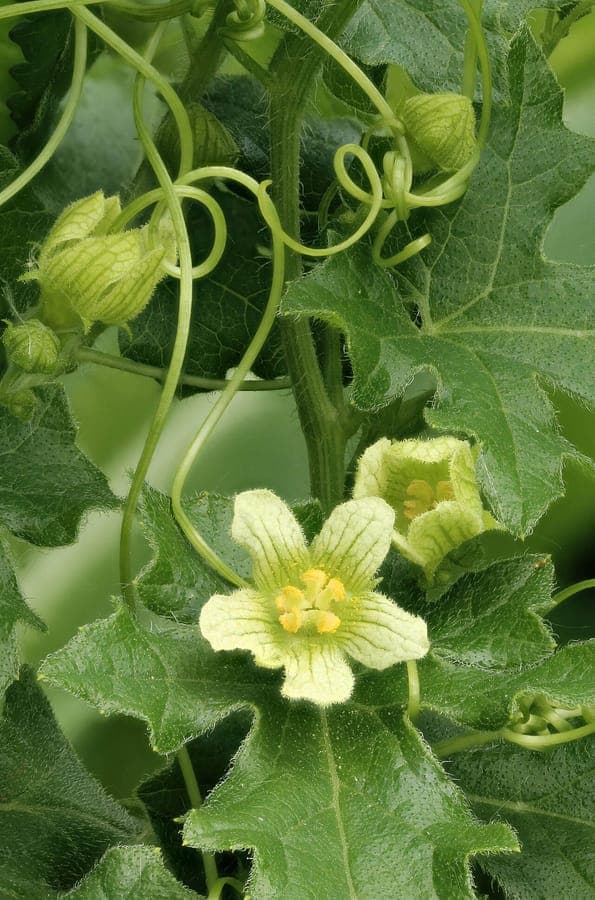
janetgraham84new / CC BY 2.0, via Wikimedia Commons
Cretan Bryony: complete guide
Bryonia cretica
¿Quieres ver Cretan Bryony: complete guide en tu jardín?
1 minuto, sin tarjeta de crédito
Overview
Bryonia cretica, known as Cretan bryony, is a dynamic and vigorous climbing plant that thrives in warm, dry regions across southern Europe, North Africa, and Central Asia. This plant belongs to the gourd family (Cucurbitaceae) and shares with relatives the characteristic of rapid, tendril-forming growth. While relatively unknown in northern gardens, for those seeking Mediterranean architectural style and wild, green elements, it is an indispensable addition.
The plant grows as a climbing or scrambling vine, anchoring itself via spiral tendrils that wrap around support structures. Once mature, it can extend many meters, ideal for covering pergolas, screens, arches, and other vertical surfaces. The plant is not winter-hardy in cooler climates, but thrives seasonally and can be overwintered as a container specimen.
Appearance and Bloom
Bryonia cretica is characterized by its dark green, compound foliage with five-lobed leaves. Each leaf measures approximately 5-10 cm across, imparting a fine, refined appearance. The green color remains attractive throughout the growing season without significant discoloration.
The flowers are modest yet elegant, greenish to light yellow in color. They appear in clusters and bloom prolifically during summer months (May through August). Male and female flowers are separate on the same plant, ensuring fruit production when cross-pollination occurs.
The fruits are highly striking: glossy round berries that first appear green and transition to bright red or orange-red by September-October. These berries persist long on the plant and are exceptionally attractive to birds, making the plant invaluable for supporting wildlife.
Ideal Location
Bryonia cretica thrives in full sunlight. Select a position receiving a minimum of 6-8 hours direct sun daily. The plant also feels at home in very warm, stony terrain, reflecting its Mediterranean origin. Protection from harsh wind is welcome, though the plant tolerates wind reasonably well.
The plant excels in:
- Sunny pergolas and garden archways
- Trellises and espaliers
- Screens against unwanted views
- Rooftop and green roof gardens (in containers)
- Mediterranean and xeriscaping gardens
- Warm, sheltered wall corners
Its vigorous growth makes it particularly suitable for rapidly covering large vertical surfaces. With regular support, it can reach 3-4 meters in height during a single season.
Soil
Bryonia cretica thrives in well-draining soil with a pH between 6.5 and 8.0. The plant feels comfortable in moderately fertile soil and tolerates poor soils well. The most important factor is adequate drainage; waterlogged soil causes root rot.
Success depends on proper moisture cycling. In very dry regions, additional organic matter helps. Sand and gravel are not problematic; the plant thrives even in semi-desert climates. Once established, add composted material annually around the base to replenish nutrients.
Watering
Once established (after 4-6 weeks), Bryonia cretica can thrive without supplemental watering for extended periods. Water is primarily needed during extreme drought in the initial growing months. Once firmly rooted, rainwater usually proves entirely sufficient.
In container cultivation, more frequent watering becomes necessary, especially in warm months. Ensure water drains properly and never stagnates in pots. In very warm regions, weekly watering may be required during growth periods.
Drip irrigation or soaker systems help achieve efficient water use.
Diseño gratis
¿Quieres ver Cretan Bryony: complete guide en tu jardín? Crea un diseño gratis ahora.
Pruning
Pruning helps maintain Bryonia cretica within bounds and encourages attractive form. Perform light pruning in early spring (February-March) to stimulate new growth and denser branching.
Remove dead or damaged tendrils promptly. Should the plant exceed desired boundaries, more aggressive pruning in May proves helpful. Avoid excessive pruning, which can reduce flowering and fruit production.
For container specimens, the plant can be cut back entirely in autumn prior to overwintering.
Maintenance Calendar
March-April: Spring inspection and gentle pruning for shape. Begin watering if not receiving regular rainfall. Install supporting structure for young growth.
May-June: Full growth and flower formation. Guide growth along support structures. Water regularly during dry spells.
July-August: Continued flowering. Monitor for unwanted side growth. No fertilization needed.
September-October: Red berry formation. Enjoy the spectacular color display. Minimal intervention required.
November-February: Winter preparation. For container cultivation, relocate to a protected location. Minimal maintenance.
Winter Hardiness
Bryonia cretica is not winter-hardy in northern and central regions. It survives winter outdoors only in the warmest Mediterranean locations. In cooler climates, treat it as an annual or container plant.
When overwintering in containers is desired, place the plant in a light, dry, frost-free location (minimum 5degC). In temperate zones, potted specimens can overwinter under frost protection in a greenhouse or sheltered shed.
In very warm protected locations (south-facing walls), the plant might occasionally survive, though this remains uncertain.
Companion Plants
Bryonia cretica pairs beautifully with:
- Lavender (Lavandula) at the base
- Silver sage (Artemisia) for silvery contrast
- Roses (Rosa) varieties for color accents
- Oregano (Origanum) for herbal interest
- Sedums for groundcover
- Clematis varieties for dual flowering effect
- Wisteria for purple contrasts
When both plants share similar growing requirements, an impressive blooming display results.
Conclusion
Bryonia cretica is an excellent choice for those wishing to enjoy Mediterranean flora in warm, protected gardens. The combination of rapid growth, elegant foliage, delicate flowers, and bird-attracting berries makes it an exceptionally versatile ornamental plant.
See this plant from specialized online suppliers or Mediterranean garden centres. Once properly positioned and provided with adequate support, you will enjoy rapid, lush growth. For more ideas about Mediterranean garden adaptations and vertical planting, visit gardenworld.app for professional garden designs tailored to your local climate. Order online from trusted suppliers and enjoy this spectacular climber in your garden.
Visit gardenworld.app for inspiration on integrating this plant into your personalized garden design.
¿Quieres ver Cretan Bryony: complete guide en tu jardín? Crea un diseño gratis ahora.
Sube una foto, elige un estilo y obtén un diseño fotorrealista con lista de plantas en menos de un minuto.
Más de 10.000 jardines diseñados
Sin tarjeta de crédito


Plantas similares
Kiwano: complete guide
Cucumis metuliferus
Everything about growing kiwano: location, soil, watering, and harvesting this striking African horned cucumber with spiny orange fruits.
Sponge gourd: complete guide
Luffa aegyptiaca
Full guide to growing sponge gourd (Luffa aegyptiaca): sowing, care, harvesting edible fruits and drying natural loofah sponges in your garden.
Cucumis prophetarum: complete guide
Cucumis prophetarum
Wild cucumber is a fascinating climbing plant with remarkable spiky fruits. Learn how to grow this exotic annual from seed to harvest for decorative interest.